Commercial Tornado Damage Roof Repair in Murfreesboro, TN
Murfreesboro tornado roof repair starts with safe access, a roof-section inspection, temporary protection, and photos tied to the building.
Commercial Tornado Damage Roof Repair
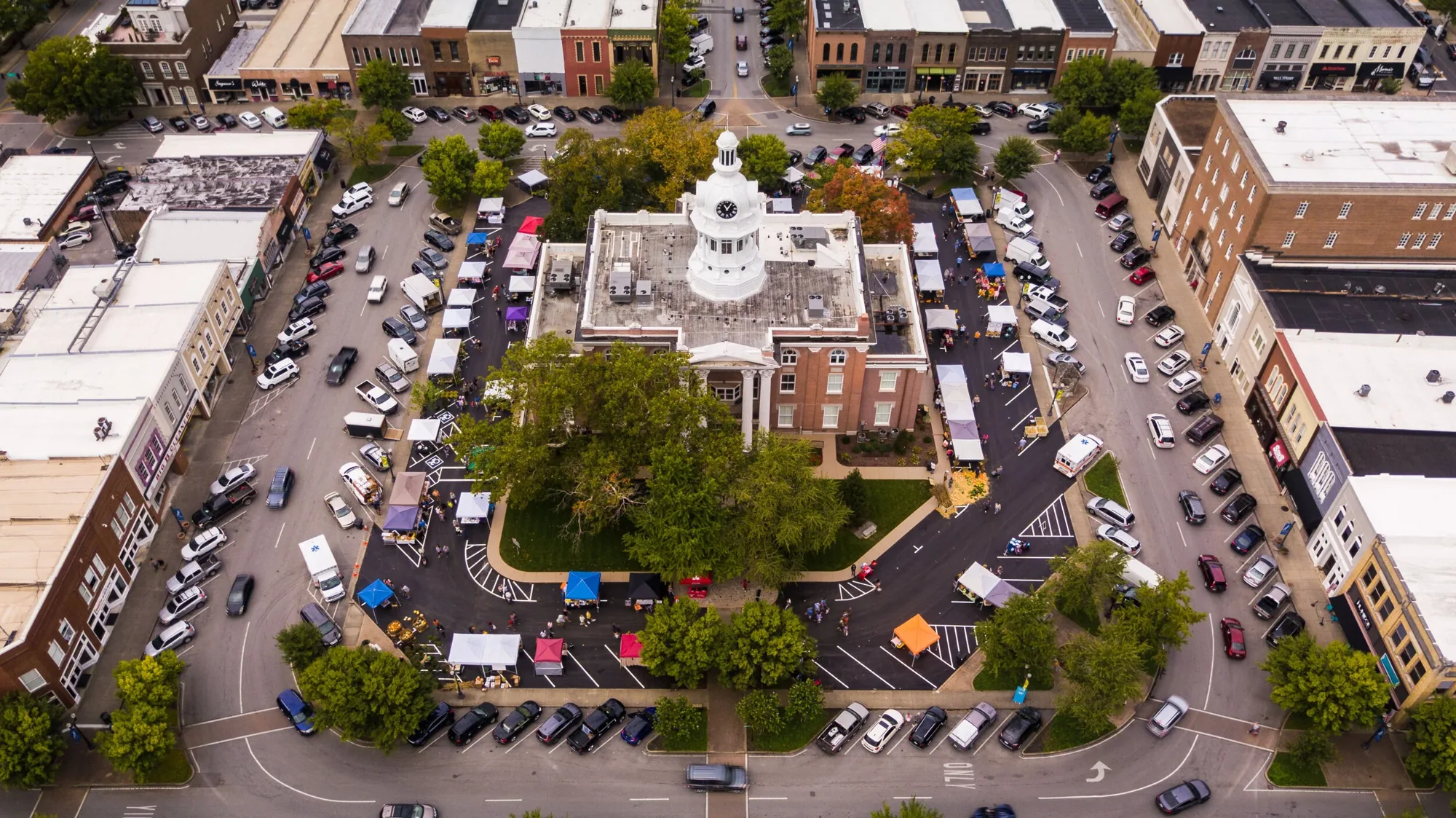
A tornado report can help set the inspection date, but the roof still has to be walked section by section. In Murfreesboro, TN, we first confirm safe access, then check perimeter metal, membrane attachment, curbs, vents, drains, and any opening reported inside. The National Weather Service documented a July 2024 EF-0 path across Murfreesboro and a 2009 EF-4 event affecting Rutherford County and the city. Those events describe regional hazard history, not the condition of a particular building. The repair follows the visible roof and deck findings.
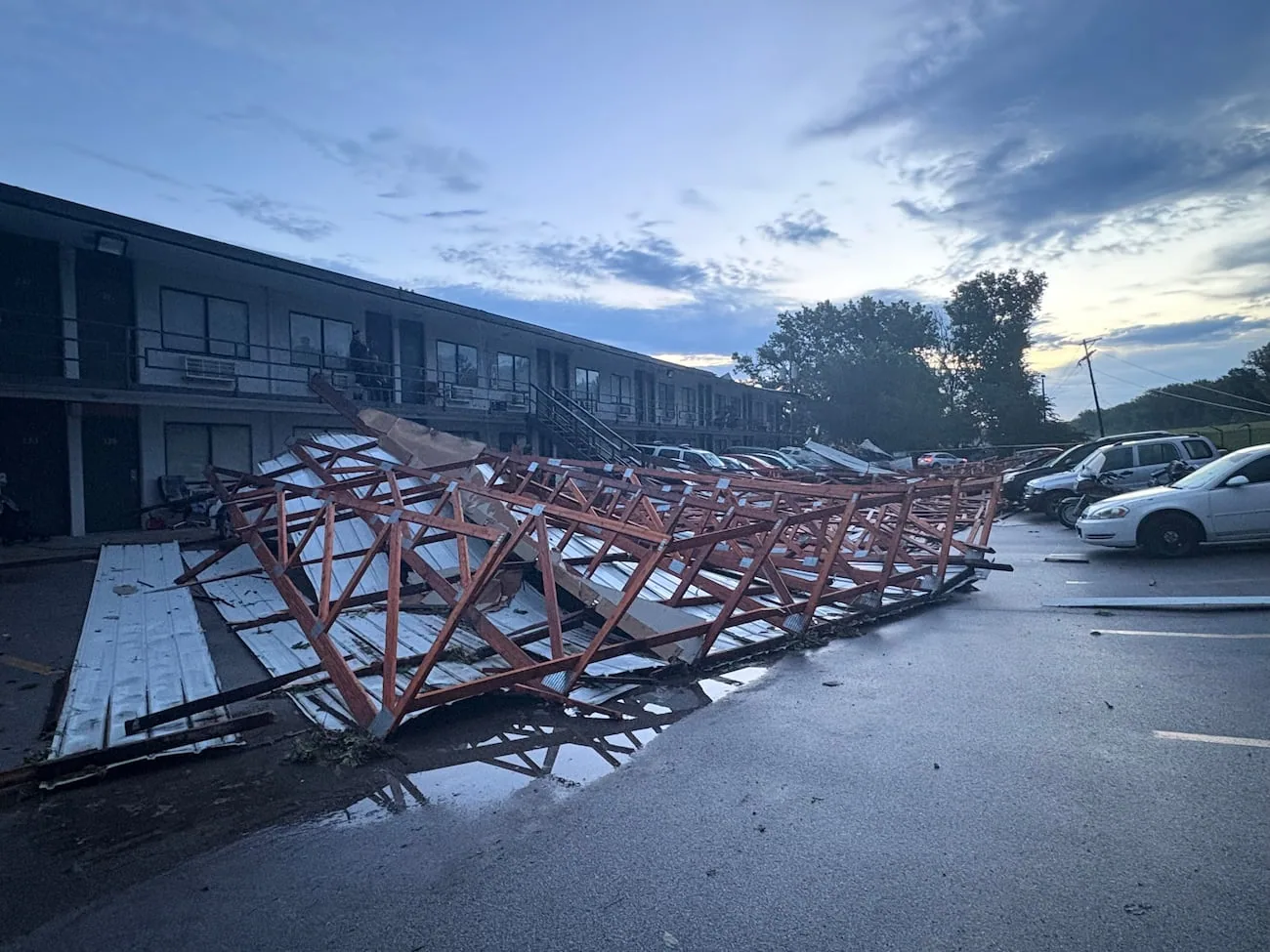
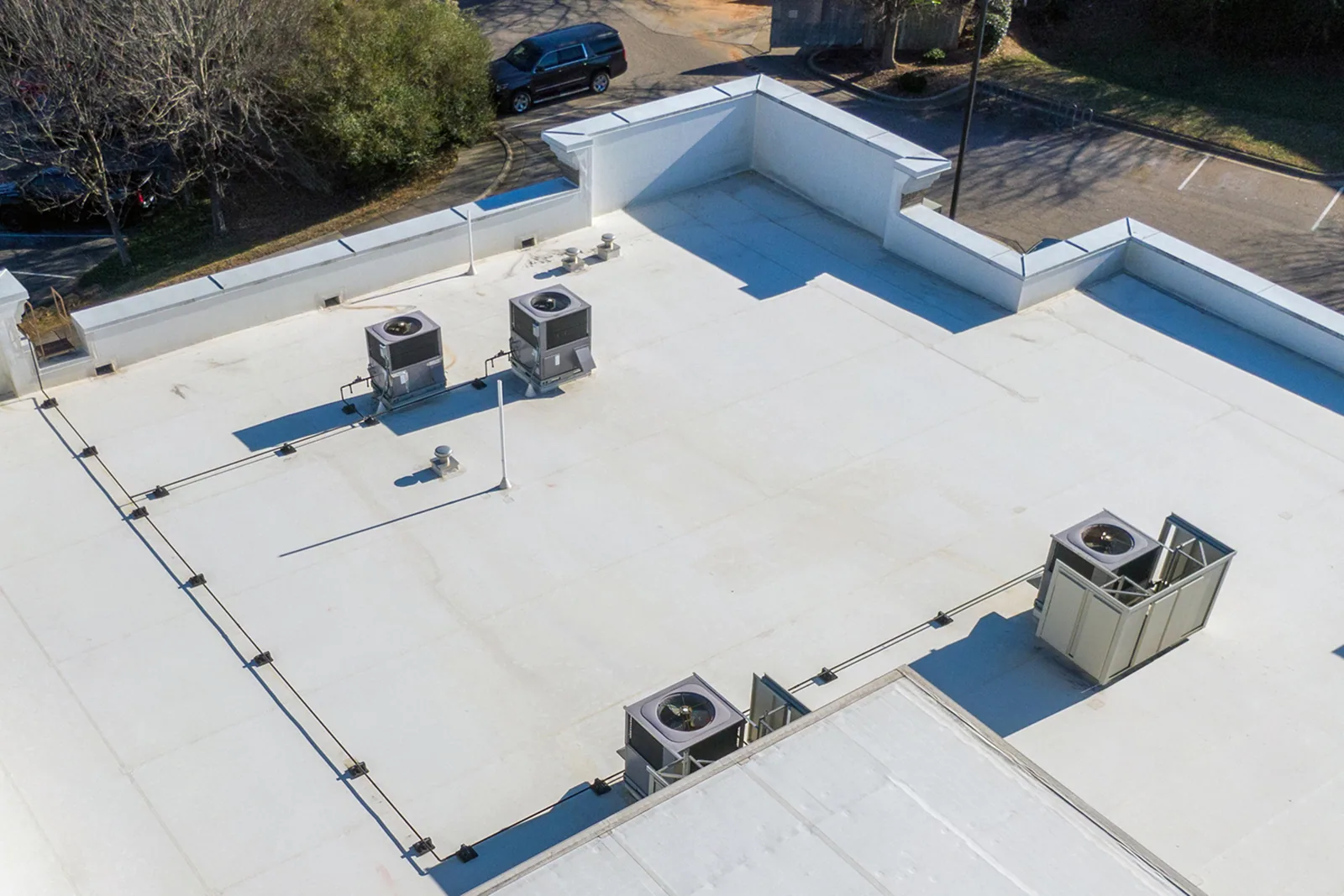
Wind may lift edge metal, move equipment screens, scatter debris, or open a seam without leaving a single obvious hole. Water can travel along insulation before it appears indoors. We mark each concern on a roof plan, photograph the reference point, and record whether testing is needed. If the roof is open, temporary protection limits additional exposure until the permanent boundary can be confirmed. The owner receives a separate record of observed damage, temporary work, and any area we could not safely inspect.
Clear the access route first
Loose metal, broken glass, downed lines, and damaged equipment can make the normal roof path unsafe. The property contact confirms that responders or structural personnel have released the area and identifies any remaining exclusion zone. We inspect only where access is permitted. If part of the roof cannot be entered, we document the limit and do not treat that section as cleared. Interior staff should report active leaks and isolated rooms so protection can be set without exposing occupants to debris or an open ceiling.
Material staging also needs a controlled area. Murfreesboro's regional route network includes I-24 and US 231, but delivery access and arrival time depend on the specific property's gate, traffic plan, and loading window. We confirm those details with the site contact. The first work zone stays small enough to protect exposed material and keep drains, fire lanes, and necessary equipment access available. Any temporary cover is photographed and assigned a follow-up step before the crew leaves.
Inspect edges and attachments
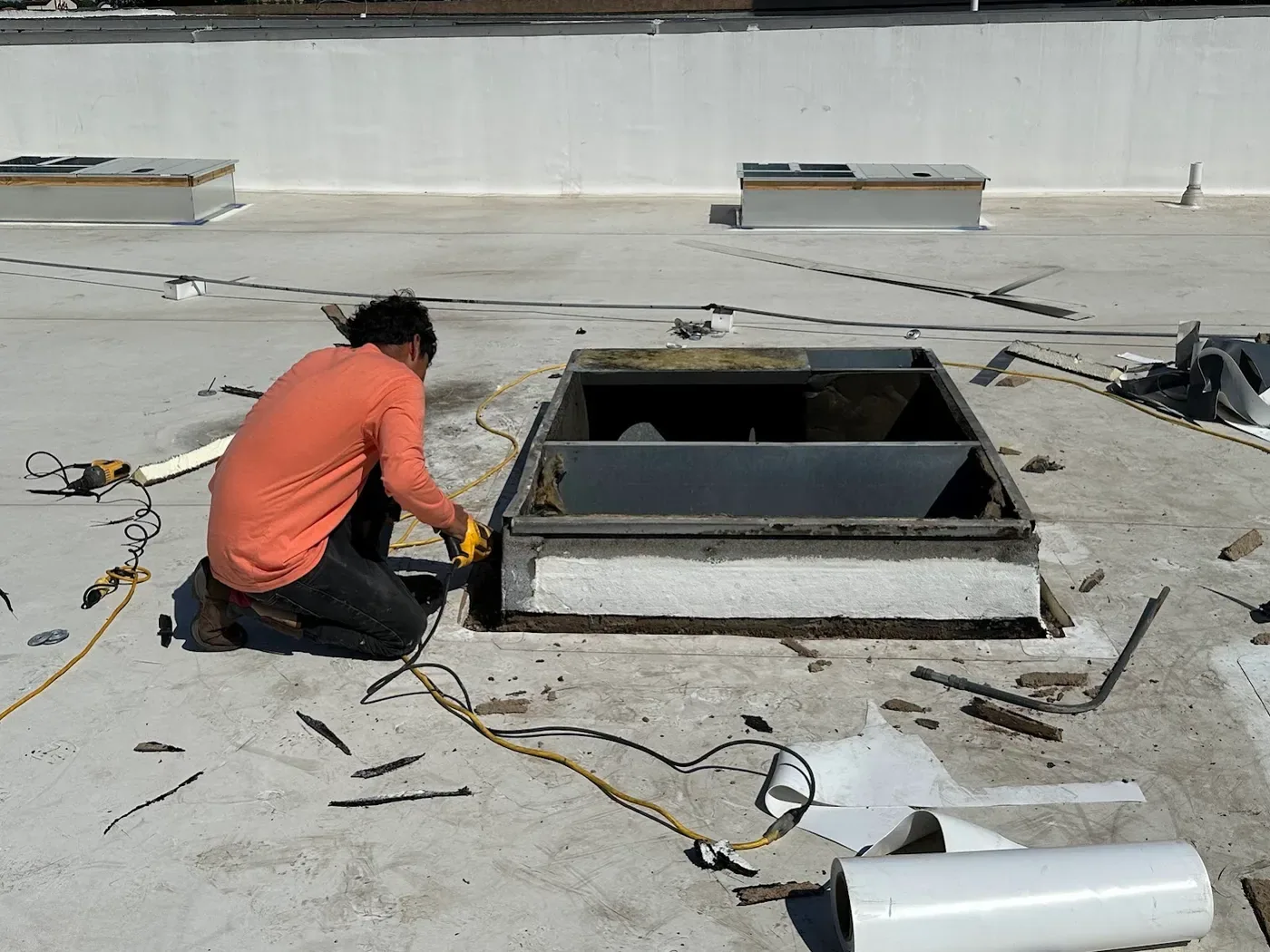
We walk corners, parapets, fascia, coping, edge cleats, and roof-to-wall terminations before looking across the field. Fasteners that have backed out, metal that has shifted, or a membrane that pulled from its termination may show where the load reached the assembly. We check mechanical curbs and rooftop equipment for movement, then inspect flashing at pipes, skylights, and screens. The record identifies each affected roof section and whether the surrounding sheet remains bonded.
The July 2024 event crossed Murfreesboro on a 3.38-mile track with estimated maximum winds of 75 mph; the wider NWS account describes tree, siding, and minor roof damage. A May 2009 EF-4 tornado also affected the county and city. We use these documented events as context for a prompt property inspection, not as proof of damage at any address. A wind-damage roof walk and a commercial inspection can be scoped around the same roof plan.
Follow the leak to the roof opening
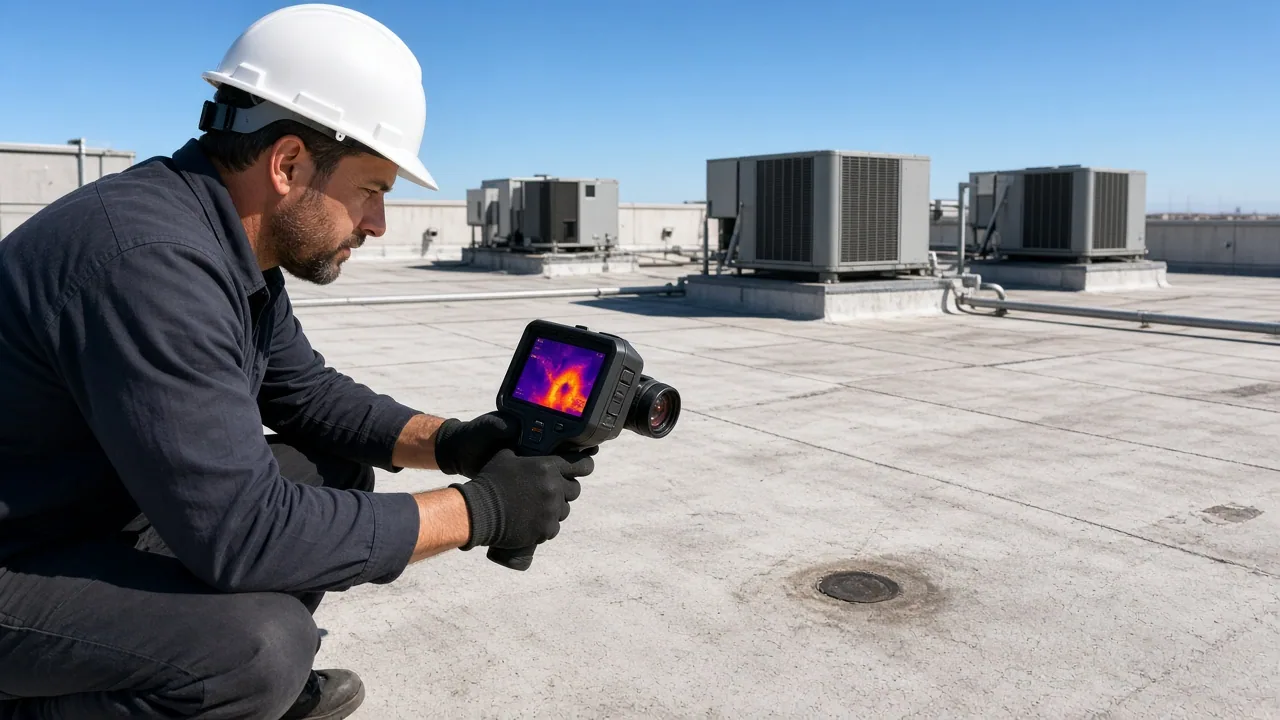
A ceiling stain does not point straight up to the entry. Water may follow a deck flute, insulation joint, beam, or conduit. We compare the reported room with roof seams, penetrations, drains, and older repairs. If moisture is suspected, scanning can help choose a test area; a cut or core confirms the assembly where required. We agree on the location with the owner, protect the room below, record the layers, and close the test opening before leaving.
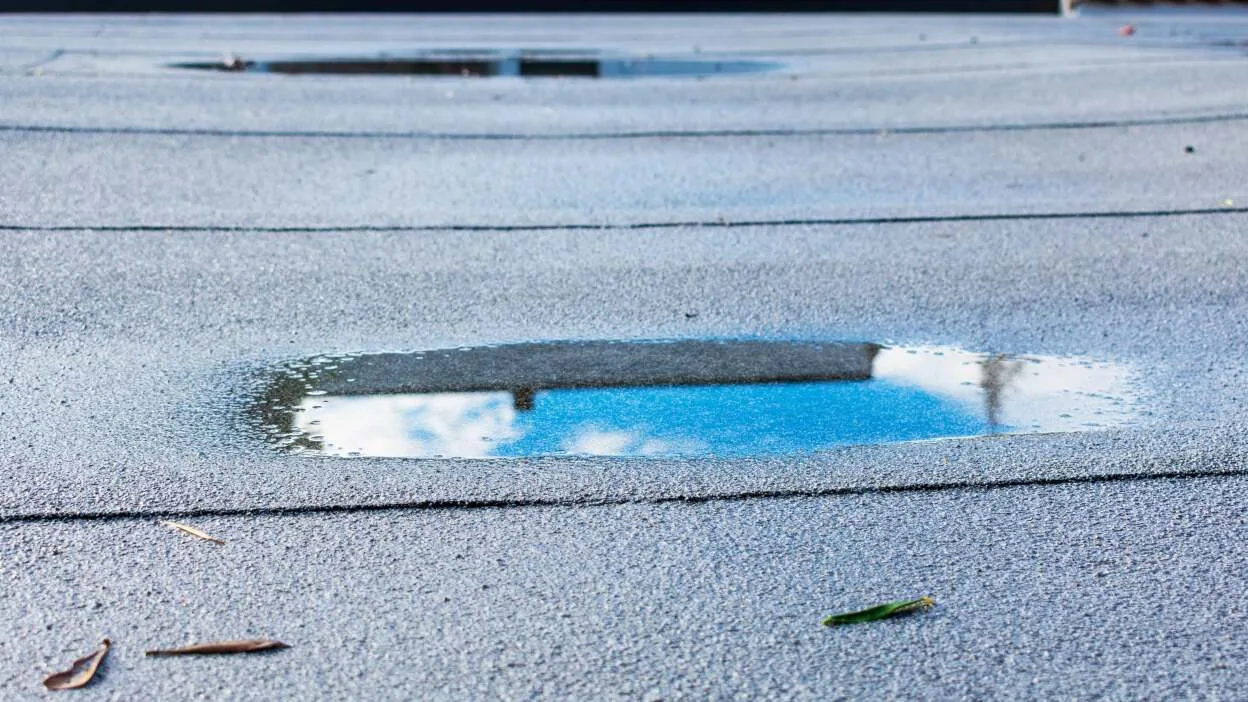
When an opening is active, the crew installs a temporary dry-in that can be secured and revisited. The work log shows its location, material, and any surface still exposed. A storm can leave several separate paths, so the crew keeps each repair boundary distinct. If the water collects in a low area, we evaluate the drainage condition; if a curb or wall transition moved, the scope may include flashing repair. Both findings are recorded apart from field membrane damage.
Choose the repair after the assembly is known
A localized patch can work where the surrounding sheet, insulation, and deck remain sound. A lifted edge may need new metal attachment and a membrane tie-in, while a displaced curb can require a more extensive detail replacement. Widespread openings, wet insulation, repeated attachment loss, or a compromised deck may call for a section replacement or reroof. We identify the material system and determine how much roof must be opened before recommending a method.
We compare repair, recover, and replacement using layer count, moisture, deck condition, drainage height, and the building's remaining operations. A recover must not trap wet material or leave drains and edges below the required height. We list what the proposed work includes and what still needs testing. For penetrations opened by debris, we mark a separate puncture repair so it is not lost inside a broad storm line item.
Phase the work by roof section
Large properties may need unaffected areas to remain accessible to equipment service or building operations. We divide the work by roof section, agree on staging and loading windows, and identify the route to each opening. The crew protects drains, equipment, and exposed transitions as work advances. If weather interrupts the installation, the open area is secured, the remaining exposure is recorded, and the site contact receives the next check point before the team demobilizes.
Timing depends on safe access, deck clearance, removal depth, material availability, and current weather. Murfreesboro's climate normals record regular precipitation and nights at or below freezing, so a dry-in and tie-in need a suitable work window. The long-term averages do not forecast the repair day. We check current conditions and follow the system installation limits. For occupied properties, an occupied-building sequence can set work zones, interior protection, and reopening criteria.
Tie photos to the repair boundary
The closeout record includes the roof-plan location, pre-work condition, opened assembly where tested, completed repair, and remaining items. We record whether the repair is temporary or permanent, what material was installed, and where the tie-in ends. Claim documentation can use those dated photos with the owner's storm and interior records. We do not infer a cause from a stain or a storm path alone. The record separates observed damage from a conclusion that requires additional investigation.
A final walk checks seams, edges, penetrations, drains, and any temporary measure left for a defined interval. Loose debris is removed and each roof section is returned to the condition agreed with the property contact. A condition report can carry remaining concerns into the asset file. For work in the Blackman area, the same route and photo labels keep the record tied to the actual building, not a storm headline.
Commercial Roofing Questions
Does the July 2024 tornado report mean every Murfreesboro roof needs repair?
No. It describes a path and impacts in the wider event. We inspect the roof, attachment, metal, and deck at the property and document the conditions present there.
Can the crew inspect while debris remains on the roof?
Only after the site contact confirms safe access and any exclusion zones. We do not cross unstable areas to complete a photo set.
What happens if part of the roof cannot be inspected?
We record the access limit, protect any exposed opening we can reach safely, and list the area for a later inspection after it is cleared.
How do you separate a temporary dry-in from permanent repair?
The report labels the temporary material and its boundary, then lists the inspection or replacement step needed to complete the permanent work.
Which records help with a storm claim?
A roof plan, dated condition photos, repair records, interior leak locations, and the property owner's storm information help keep each roof finding traceable.
Related Roofing Work
More commercial roofing work connected to Commercial Tornado Damage Roof Repair in Murfreesboro.
Arrange a post-tornado roof walk
Share the authorized access contact, roof plan, and reported leak areas. We will inspect the available sections, protect active openings, and return a photo-based repair scope.