
Wind Damage Commercial Roof Repair in Murfreesboro, TN
Commercial wind damage repair in Murfreesboro starts with a roof walk, temporary protection, and a repair boundary tied to the assembly and deck.
Wind Damage Commercial Roof Repair
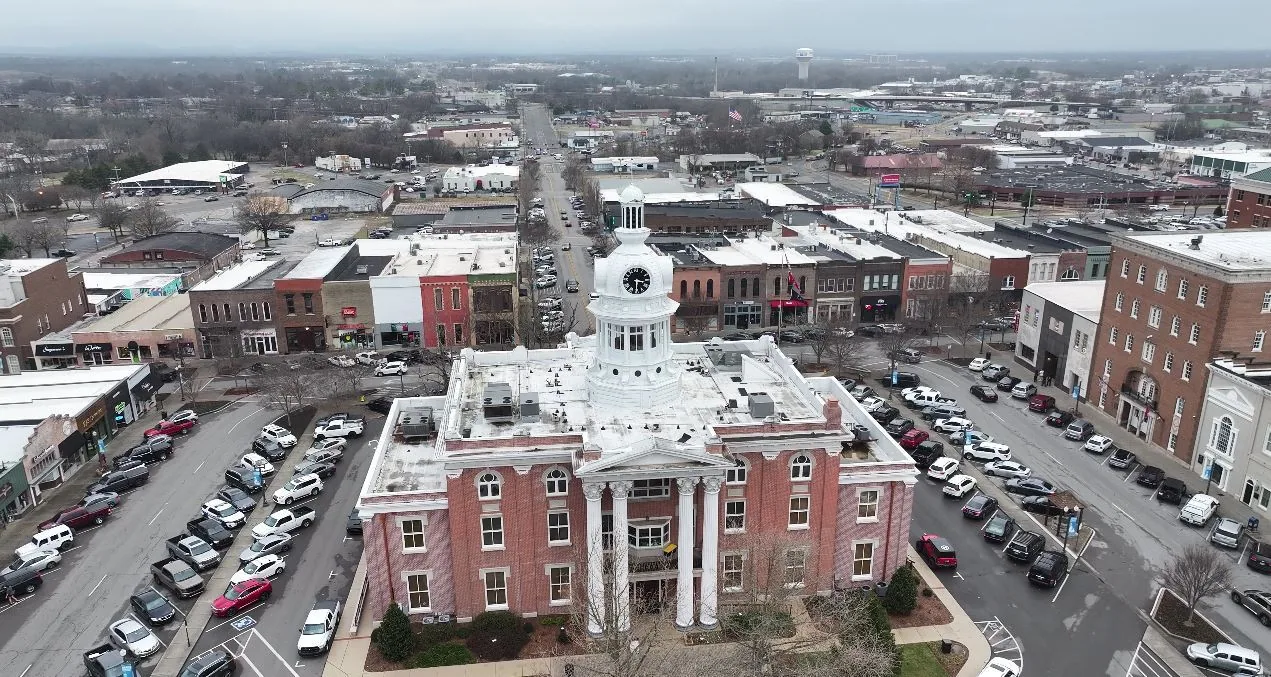
Loading doors, rooftop equipment, and a loose perimeter detail can turn a wind report into an operating issue. On a Murfreesboro, TN commercial roof, we begin by marking the affected section and checking whether the membrane, edge metal, flashing, or deck moved. The July 2024 EF-0 tornado crossed Murfreesboro, and the wider event included minor roof damage. That history gives a reason to inspect after a reported event, not a conclusion about any one property. We document what is accessible and protect open areas before setting the permanent repair.
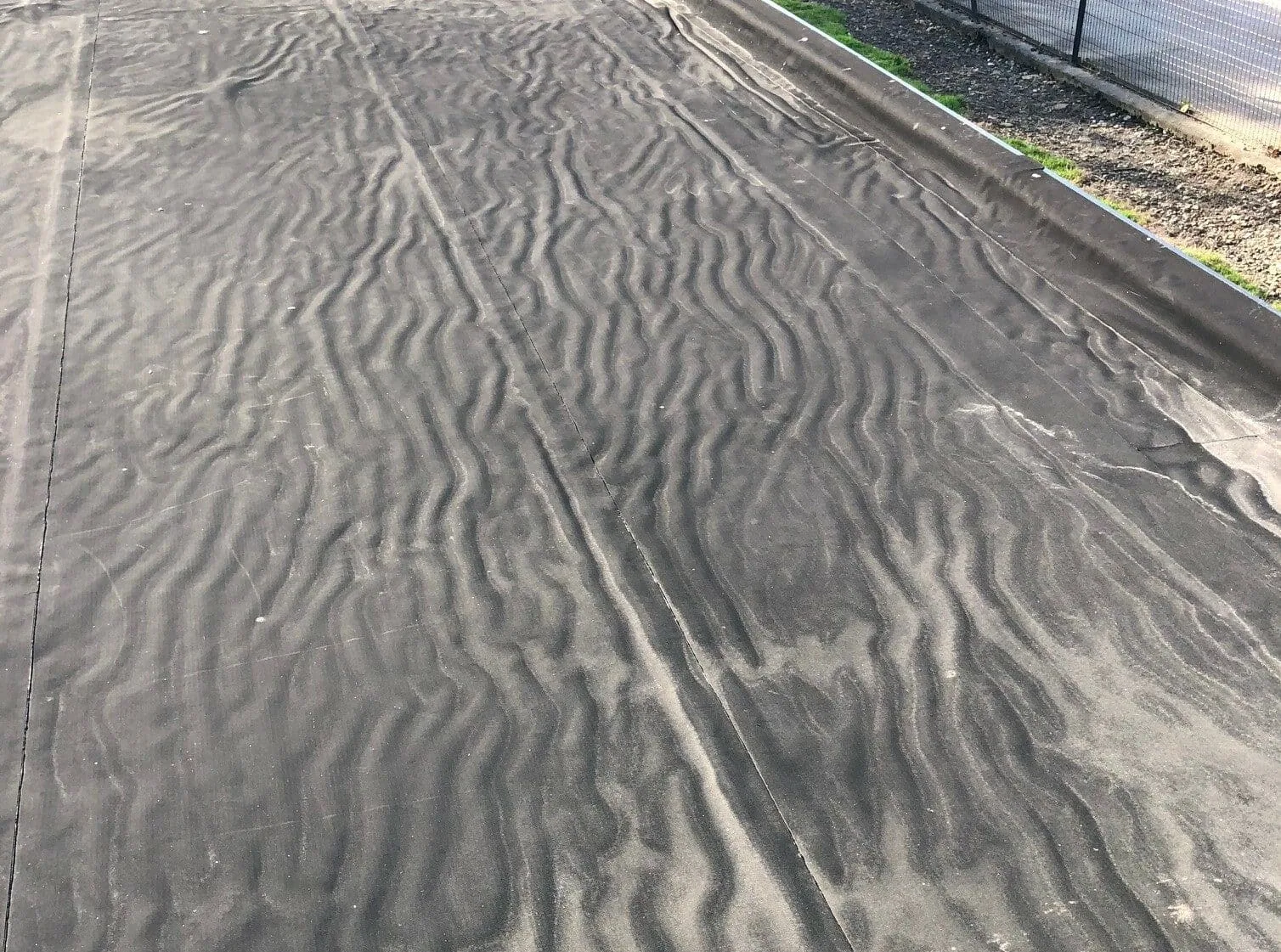
Wind can lift a corner, pull a termination, loosen coping, or push debris across a roof without leaving one obvious opening. A leak may show up inside well away from the entry point. We compare the exterior condition with the interior report, trace drainage paths, and photograph each concern. The repair boundary follows what the membrane and substrate show. If the deck, insulation, or attachment needs a closer look, we identify that check before pricing a patch, recover, or replacement.
Walk the edge before the field
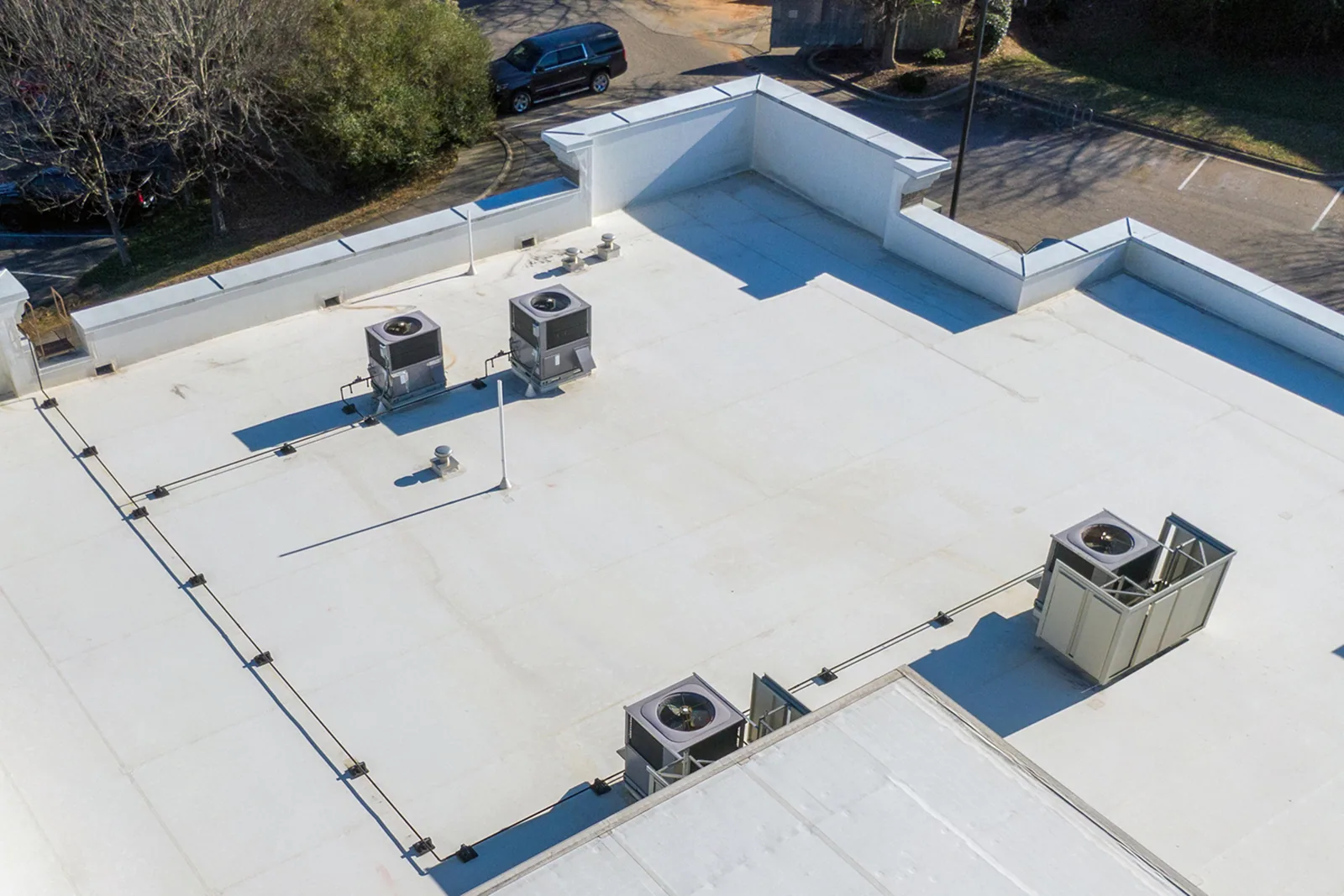
The perimeter takes a different load than the center of a roof. We inspect coping, fascia, edge cleats, terminations, corners, and transitions to walls, then record any lifted or distorted metal. A secure field sheet does not settle an edge detail if the attachment below it has moved. We also check equipment curbs, skylight frames, pitch pans, and pipe flashings for openings that may have widened under movement. Each photograph gets a location and repair record so the owner can compare the finding with interior leaks or a storm report. If a larger section needs review, the roof inspection records the assembly, deck, and moisture checks together.
The National Weather Service documented a July 2024 tornado path across Murfreesboro and reported minor roof damage within the broader event. It also documented a 2009 EF-4 tornado affecting Rutherford County and Murfreesboro. Neither account identifies the condition of a particular building. We use the event context to understand why a timely walk matters, then base the work on this roof: loose fasteners, split seams, displaced edge metal, punctures, wet insulation, or a sound assembly that needs only localized repair.
Trace water to an opening
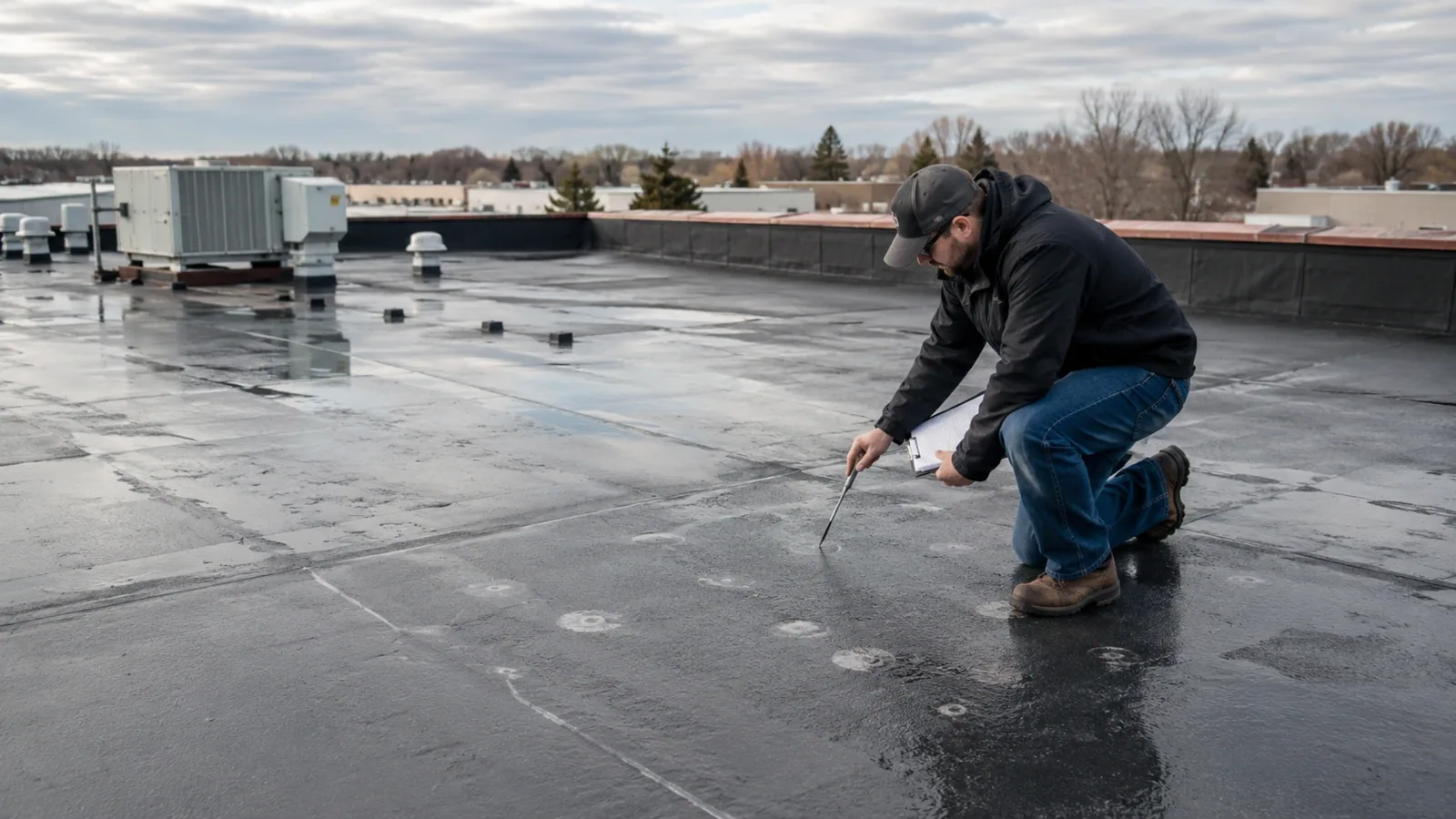
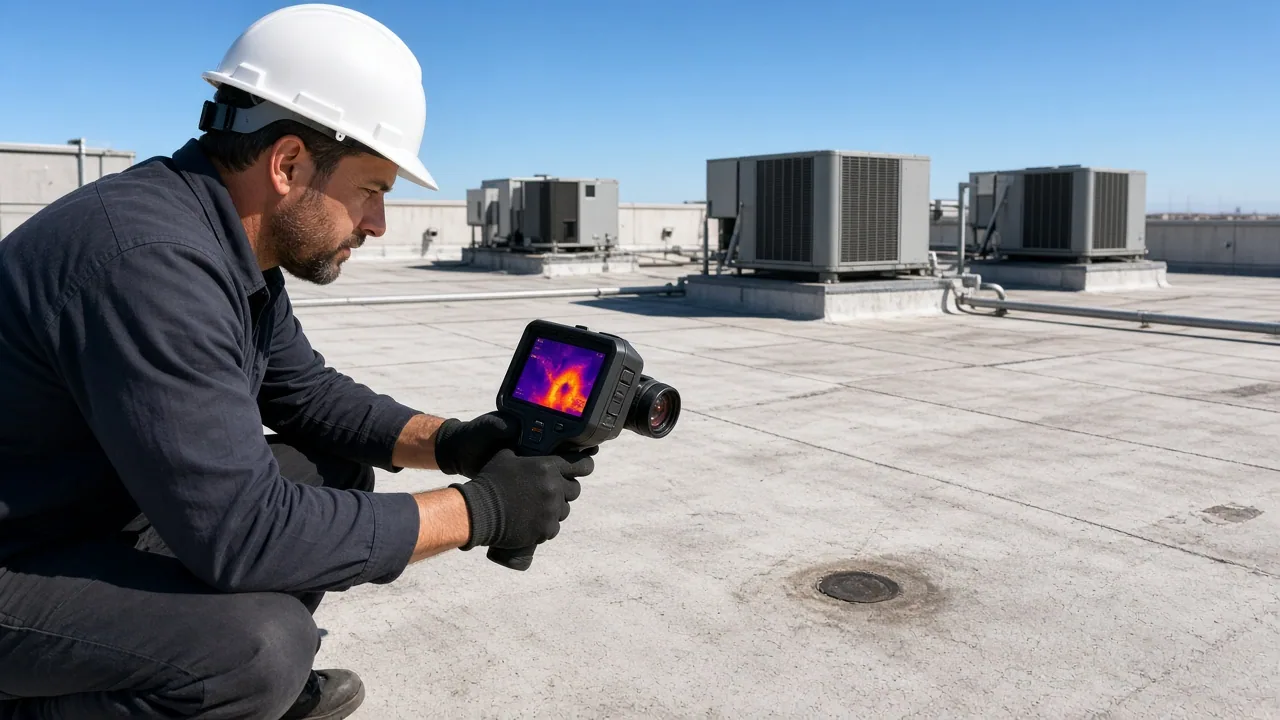
A ceiling stain is an interior clue, not a roof map. Water can travel along a deck, insulation joint, structural member, or conduit before it reaches a room. We compare the reported location with roof seams, drains, curbs, penetrations, and prior repair edges. Where access permits, we check moisture around the suspected path and distinguish a surface mark from a wet roof assembly. If a test cut is needed, we agree on its location and protection plan, then document the layers and deck condition before closing it.
Murfreesboro's NOAA station normals show frequent measurable precipitation across an average year. That makes a temporary opening and its tie-in important to close before the next rain, but the climate record does not establish damage at a specific address. We inspect the actual water path and outlet. If wind-driven debris has blocked a drain, we clear the route where included in the scope and check the surrounding membrane. If a seam or flashing is open, the repair must connect sound material on every side.
Keep the opening covered
When water is entering or material is loose, the first task is to limit exposure without hiding a larger problem. Our response line is staffed around the clock, including holidays. We confirm who can authorize roof access, identify a safe route, and set a work zone that keeps people away from debris or an unprotected opening. Temporary membrane, a compatible patch, or a secured cover may be appropriate for a short interval. The method depends on wind, rain, roof height, attachment, and the condition around the damage. For active entry, we can arrange emergency roof stabilization while the permanent scope is being checked.
Temporary protection needs a clear boundary and a return plan. We mark the covered area, photograph the surrounding details, and record what remains exposed. The building contact receives the location, the material used, and any access restriction that affects follow-up. On properties with active deliveries, I-24 and the US 231 corridor are part of the regional movement network, so staging and arrival windows should be confirmed with the site contact rather than assumed. We keep the work zone small and the roof opening closed at shift end.
Choose a repair that reaches sound material
A patch is useful when the surrounding sheet is attached, clean enough for the repair system, and supported by a dry, stable substrate. We remove loose material only as needed to reach a sound boundary, prepare the surface, and tie the repair into the existing assembly. If fasteners have backed out or the edge termination has failed, replacing the visible patch alone may leave the same load path untouched. We identify the attachment or metal work that belongs in the repair and list separate conditions for a later decision. A documented storm-damage repair keeps immediate protection and permanent work distinct.
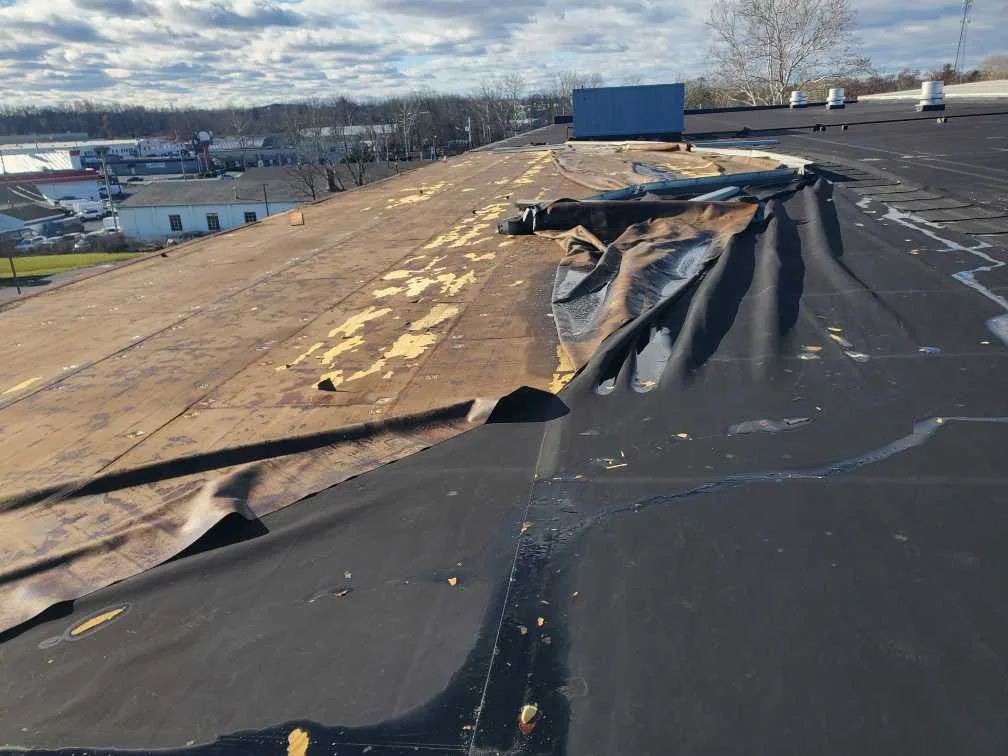
Broader lifting, wet insulation, repeated seam openings, or a compromised deck can shift the choice toward a section replacement or full reroof. We inspect whether a recover is compatible with the existing layers, drainage height, and edge conditions before recommending it. The report separates confirmed damage from areas that still need testing. An owner can then compare immediate stabilization, a bounded permanent repair, and a larger scope without treating a storm date as proof that every roof section failed. Where the split follows a field lap, we check whether seam repair can reach a secure tie-in.
Leave a usable damage record
Wind repairs often involve several trades and decisions: roof access, interior protection, mechanical equipment, and a claim file may all need the same location details. We label photos by roof section, record the observed opening and repair limit, and record materials and any excluded area. If a claim is being prepared, the owner can use dated images and a plain description of the work completed. A puncture repair or membrane replacement is recorded as its own boundary, apart from edge work. The record distinguishes visible movement, moisture findings, and work that remains pending.
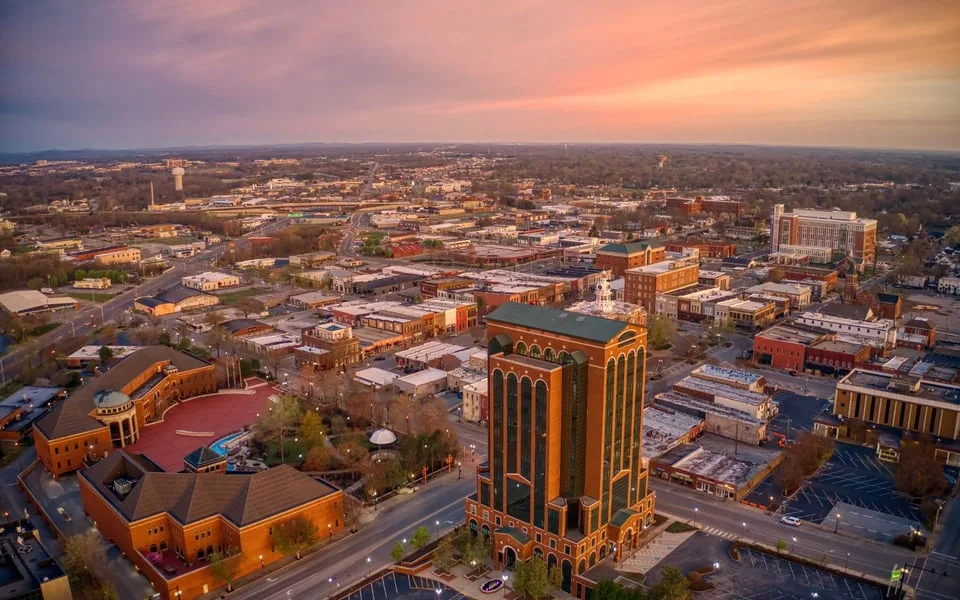
For a large roof, the plan can be divided by elevation or work zone so operations continue in unaffected areas. We coordinate the loading window, protect penetrations, and close each tie-in before a weather hold. A final walk checks the patch edge, terminations, drains, and temporary protection scheduled for removal. The closeout photos should show both the repair and its nearby reference points. That gives the facility lead a practical basis for tracking the next inspection or adding a section to a capital plan. For a broader urban setting, see how we plan commercial roof work in Downtown Murfreesboro.
Commercial Roofing Questions
Does the July 2024 tornado report prove my roof was damaged?
No. It describes a wider event across Murfreesboro. We inspect the roof section, attachment, flashing, and deck at your property before defining a repair.
Can a loose edge be repaired without replacing the whole roof?
It can when the field membrane and substrate remain sound and the perimeter can be secured to a stable boundary. We check the metal, cleat, and attachment before setting that limit.
What should happen while the permanent work is being planned?
We cover active openings, identify remaining exposure, and give the site contact a return plan. The temporary measure stays separate from the final repair scope.
Will a ceiling stain show where wind opened the roof?
Not by itself. We compare the room location with roof seams, penetrations, drains, and the deck path, then document any test area needed to confirm moisture.
What changes the repair schedule after a storm?
Roof access, safe weather, material availability, wet insulation, and the repair boundary all affect timing. We confirm the work window and protect each open tie-in before a hold.
Related Roofing Work
More commercial roofing work connected to Wind Damage Commercial Roof Repair in Murfreesboro.
Set a wind-damage roof walk
Share the building contact, reported roof section, and access window. We will inspect the perimeter and field, document temporary protection, and provide a repair scope tied to the assembly.