Cold Storage Roofing in Murfreesboro, TN
Protect cold-storage work in Murfreesboro. We check insulation, seams, drains, and penetrations, then phase repairs around temperature controls and loading.
Cold Storage Roofing
A cold-storage roof has to keep weather outside without exposing temperature-controlled rooms during repair. At a Murfreesboro, TN facility, we start with the affected zone, the insulation layers, and the service routes above refrigeration equipment. Water at a ceiling or panel joint can travel from a curb, drain, or roof seam, so we trace the path before opening the assembly. The work plan names the area below, the temporary protection, and the point where each shift leaves the roof dry.
Murfreesboro industrial areas include food production, distribution, warehousing, and shipping uses. That mix does not define a particular freezer building. We confirm where cold rooms, loading doors, and controls sit, then locate roof drains, penetrations, and prior patches. A small flashing failure may need a contained repair. Wet insulation or a vapor-control problem can require a broader investigation before any new layer goes.
Keep the Insulation Boundary Visible
Cold rooms make moisture migration a roof and interior concern. We inspect the membrane, insulation joints, deck, and penetrations around the reported area. A ceiling stain may not line up with the roof opening, especially when water moves through layers before reaching a panel. Test cuts show what is wet and where it stops. We record the core by roof section and distinguish the insulation condition from any refrigeration or wall-panel issue below.
Murfreesboro has warm-season days at or above 90 degrees and roughly 89 nights each year at or below freezing. Those shifts make perimeter transitions and drainage details worth checking, but they do not diagnose a particular roof. We inspect the actual laps, curb corners, and low points, then compare test results with the building's use. Warehouse roof work may share dock constraints, while distribution center roofing handles the sort and receiving sequence separately.
Seal Every Route Through the Roof
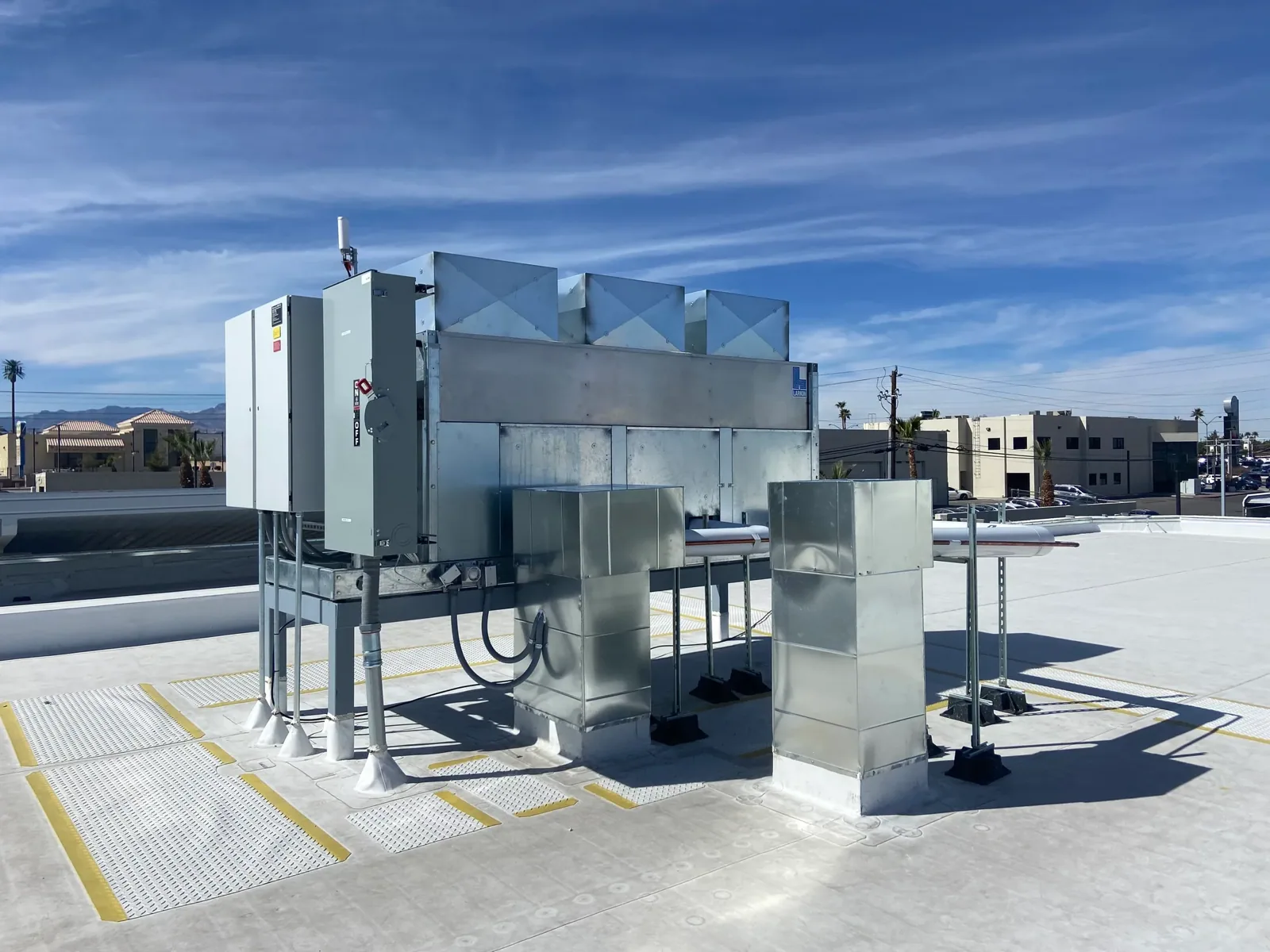
Refrigeration piping, exhaust, electrical conduit, and equipment curbs interrupt the roof field. We check the flashing where each penetration meets the membrane and look for movement, open corners, loose fasteners, or sealant that has separated. A roof repair cannot correct a pipe leak or failed refrigeration joint, so we mark which trade owns each condition. If equipment must be lifted or isolated, the facility and mechanical team confirm the timing before the roofer cuts the curb detail.
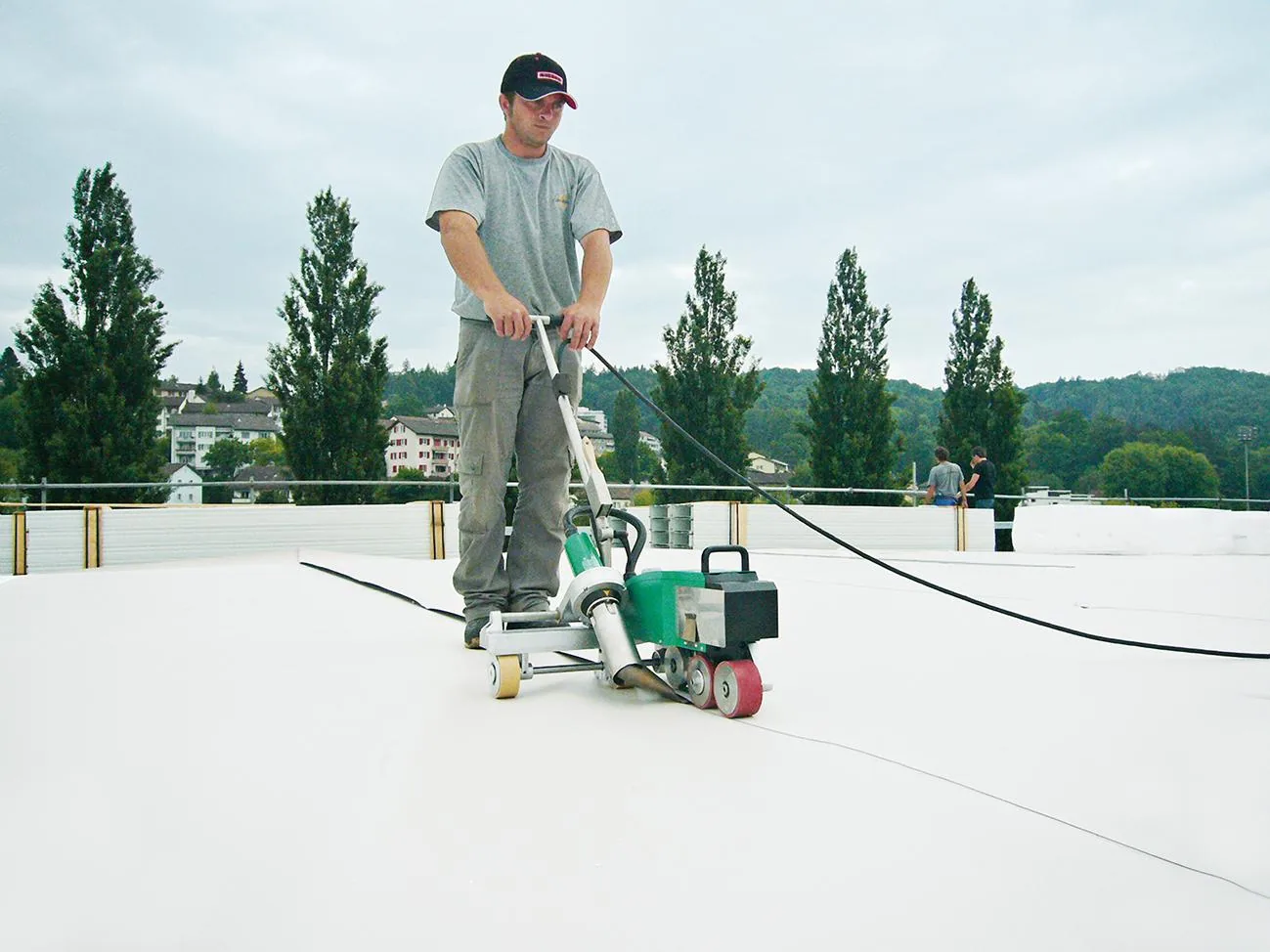
A sealed opening still needs a compatible tie-in to the existing assembly. We identify whether the membrane is welded, adhered, or another system before selecting material. The penetration flashing scope can address the roof transition, and curb and support work can separate roofing from equipment changes. On a confirmed single-ply roof, a PVC repair depends on a clean weld field and the right detail around the opening.
Give Meltwater and Rain a Clear Route
A freezer roof still sees exterior rain, debris, and temperature movement. We trace each drainage path from the field to the drain or scupper, checking for low spots, clogged bowls, damaged overflow routes, and loose flashing. Water held near a curb can reach the insulation even when the interior room stays cold. The inspection records the outlet condition and the roof slope separately, because clearing debris will not correct a low area that keeps water against a seam.
Murfreesboro averages 55.92 inches of precipitation per year, with measurable rain on 134.5 days. That pattern makes outlet checks useful in the roof record, while the property walk shows how a specific roof drains. A drain and scupper repair can address damaged outlets, while a tapered insulation review may be needed if the confirmed low point has no path to the drain.
Phase Work Around Temperature Controls
Before removal, identify the room below, product-protection rules, alarm contacts, and equipment that cannot be interrupted. We set a protected work zone and agree on the hour when a section can be opened. Tear-off stays within the amount that can be closed the same shift. If a weather hold starts, the crew has a dry-in boundary and a clear route to secure the area without crossing active loading or refrigeration service paths.
Medical-commercial and office-park settings sit along Medical Center Parkway. Nearby, Phase II will widen a developed stretch from Thompson Lane to the Fountains at Gateway to six lanes. The corridor setting does not identify any cold-storage property's access. We use the actual site entrance and operating rules to place material. Murfreesboro commercial roof coverage and occupied-building phasing both require a property-level work window and handback plan.
Compare a Contained Fix with Layer Removal
One open seam with dry surrounding insulation can support a local repair. Wet cores across multiple sections, soft deck, or a recurring vapor path can change the decision. We show the test locations, measured removal limit, and any work that remains with another trade. A recover belongs in the comparison only after test cuts show dry insulation and a sound deck. We then measure the added build-up against freezer curbs, equipment supports, drains, and edge transitions before the owner selects that scope.
One planned access change affects New Salem Highway between Old Fort Parkway and Veterans Parkway. That corridor project may affect road conditions, but the facility's loading calendar and approved delivery route determine material timing. We identify those constraints before setting a start date. A local repair can isolate an immediate opening; broader removal can be scoped when moisture or deck findings extend beyond that detail. The assembly inspection decides which proposal fits.
Document the Dry-In and Handoff
At closeout, photos should show the repair boundary, the finished flashing or seam, and each test cut before it was sealed. We label the section, materials, preparation, and conditions left for follow-up. The facility contact gets the location of the work zone and any roof area that could not be inspected. Those details help the next maintenance visit distinguish a completed roof repair from a room or refrigeration issue that needs another trade.
Share the roof plan, temperature-control restrictions, reported leak location, and delivery hours before the inspection. We will trace the opening, test layers where needed, and return a written scope that keeps roofing limits clear. For a cold room with an active production schedule, the handback matters as much as the repair: tell us which doors and routes must remain open, and we will plan each roof section against that operating boundary.
Commercial Roofing Questions
Can a cold room stay in service during roof repairs?
Usually, when the work can be isolated above the affected area and the facility can protect the room below. We confirm temperature controls, product safeguards, alarm contacts, and the section that can be opened and dried in during one shift.
How do you tell whether insulation is wet?
We choose test locations from roof conditions and reported water paths. A cut or core shows the insulation and deck at that point; a thermal pattern can help direct testing but does not replace it.
Could a roof leak come from refrigeration piping?
Yes. We inspect the flashing and roof transition while the mechanical team checks pipe joints or equipment. The work record identifies which condition belongs to each trade before the opening is closed.
Does a new membrane fix moisture in the old assembly?
No. We map wet layers and define removal before installing another system. Covering wet insulation can leave the cause and damage in place, so the scope needs test results and a measured boundary.
What should we clear before the roof crew arrives?
Set the access route, dock window, equipment restrictions, and protection rules with the facility lead. We confirm the room below the work area and keep the approved material staging path separate from active service traffic.
Related Roofing Work
More commercial roofing work connected to Cold Storage Roofing in Murfreesboro.
Plan a Cold-Storage Roof Inspection
Send the roof plan, affected room, reported leak time, and temperature-control limits. We will trace the roof layers, coordinate the work window, and return a repair or replacement scope with documented boundaries.