Commercial Roofing for Real Estate Investors in Murfreesboro, TN
Murfreesboro investors need roof decisions tied to diligence, leases, and capital timing. We document each asset and price repair and replacement options.
Real Estate Investors
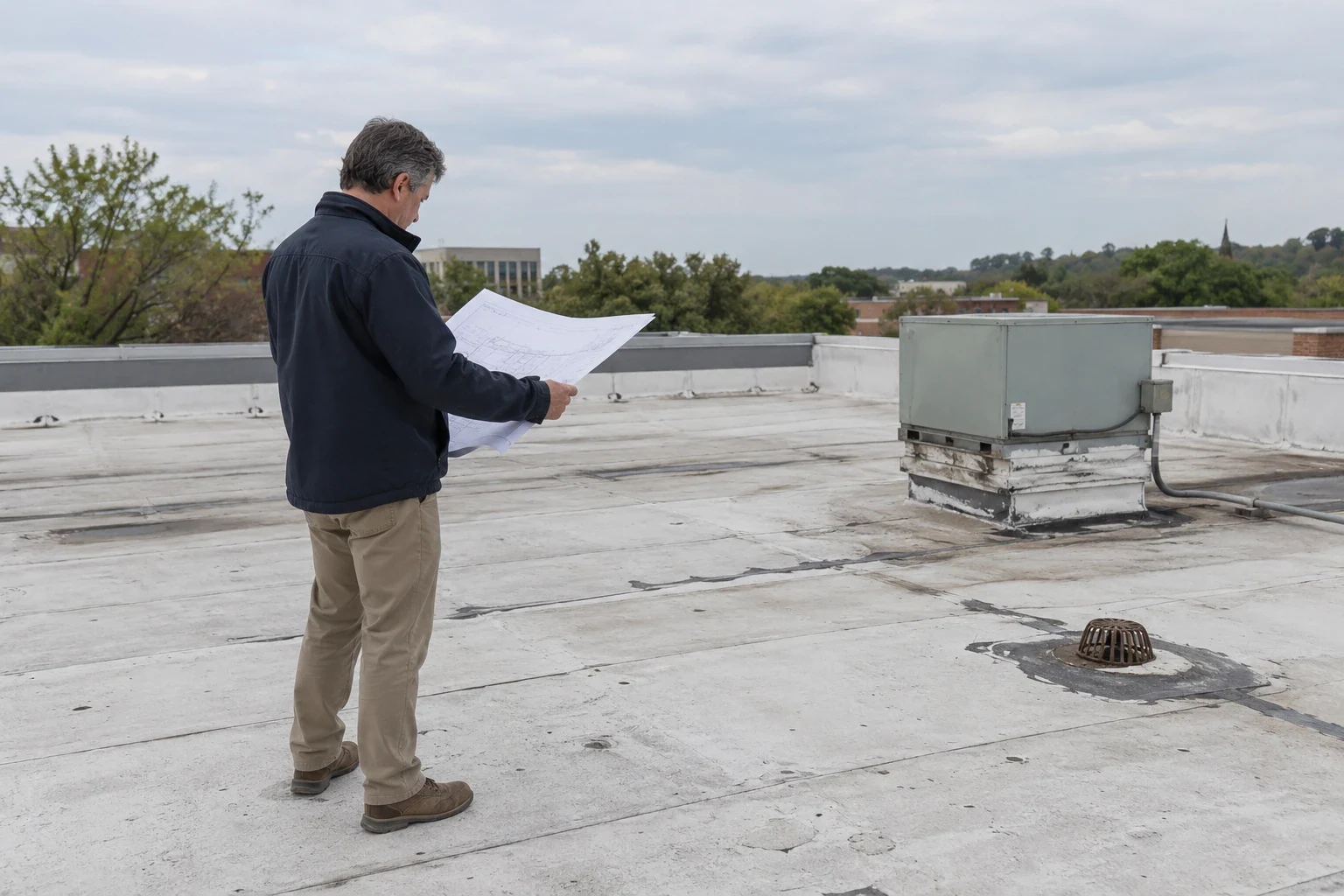
Before closing, refinancing, or approving a capital plan, an investor needs to know what the roof condition actually supports. In Murfreesboro, TN, we inspect the assembly, map visible defects, test suspect areas when needed, and price repair, recover, and replacement as distinct choices. A roof label in a diligence file is not a condition finding. The report should identify the building, access limits, and any area that could not be confirmed.
Murfreesboro is part of the Nashville-Davidson-Murfreesboro-Franklin metropolitan region, and Franklin’s 2025 development report lists 39,959 existing dwelling units. Those facts describe the wider property market, not a particular asset. We focus the decision on the roof in front of us. A due-diligence roof survey records what is observed and what remains open.
Separate Observed Condition from Assumption
We identify membrane, insulation, deck, edge metal, drains, penetrations, and prior repairs. Test cuts can show whether concealed layers are wet, while a visual walk cannot settle every hidden condition. We mark the limits of the inspection and price any expanded testing separately. That gives an acquisition team a clean list of confirmed repairs, potential exposure, and access constraints before contingencies are removed.
A Murfreesboro asset may sit among office, medical, technology, industrial, or commercial uses in the city's growth categories. That range makes the use and roof assembly worth confirming at every property. For a warehouse asset, dock access can affect sequencing; a multi-tenant office roof requires a different occupant plan. We keep each building's price and scope attached to its own findings.
Put Leaks and Deferred Work in Order
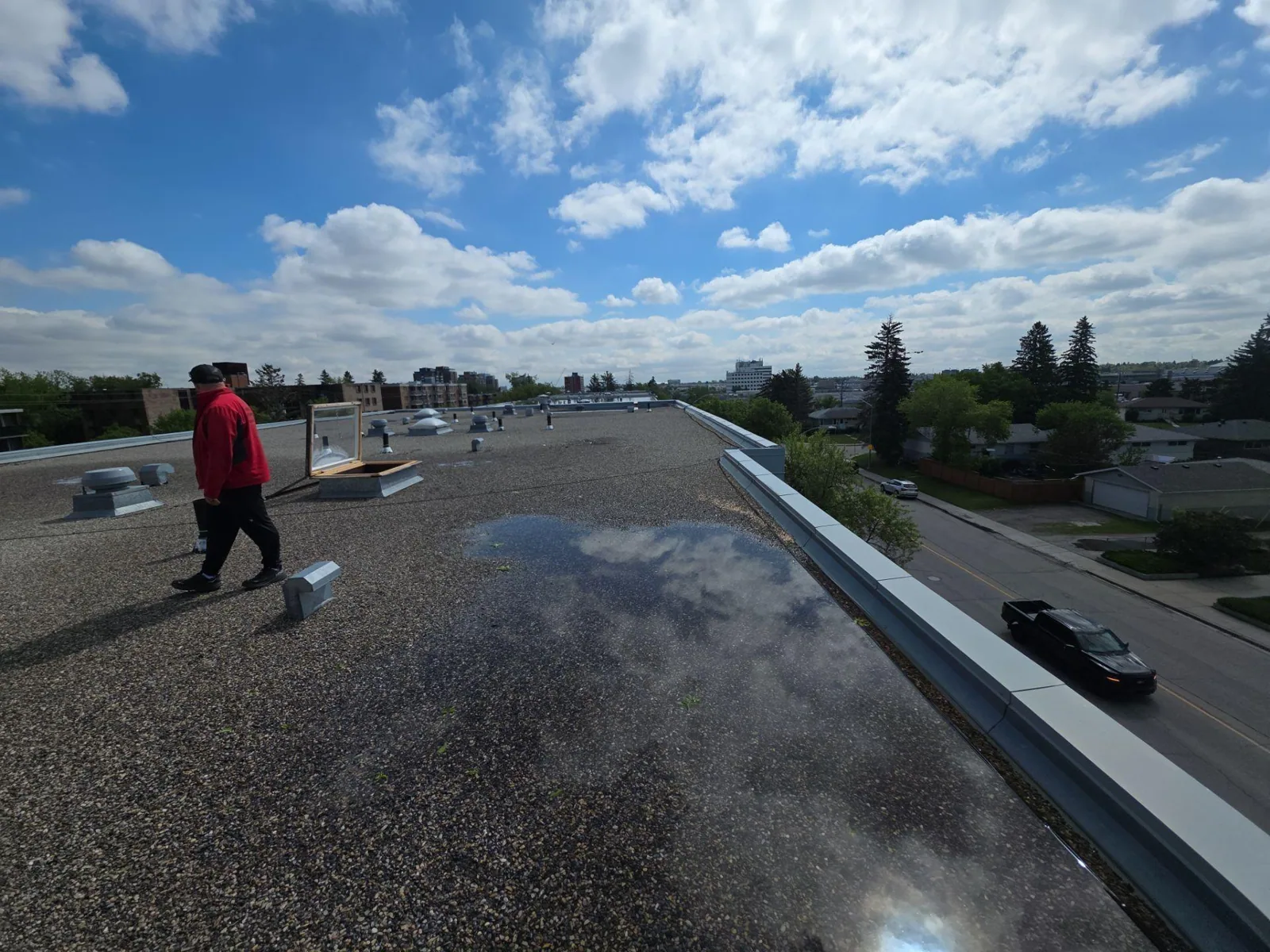
An active leak needs temporary protection and a permanent repair boundary. A recurring stain may indicate that water traveled beyond the roof entry point, so we inspect uphill at seams, walls, curbs, and drains. We record which rooms or tenants reported water, but the repair area follows the roof test. A local patch, wet insulation removal, and broader system work are itemized separately so the investment committee can see the trade-off.
At Murfreesboro 5 N, yearly precipitation averages 55.92 inches across 134.5 measurable-rain days. For an owner, the useful question is whether the property's outlets clear and whether moisture returns in the same zone. Drain repair addresses the outlet detail; moisture mapping can guide test locations. A leak repair scope should state how far the known condition extends.
Compare Near-Term Repair with Roof Renewal
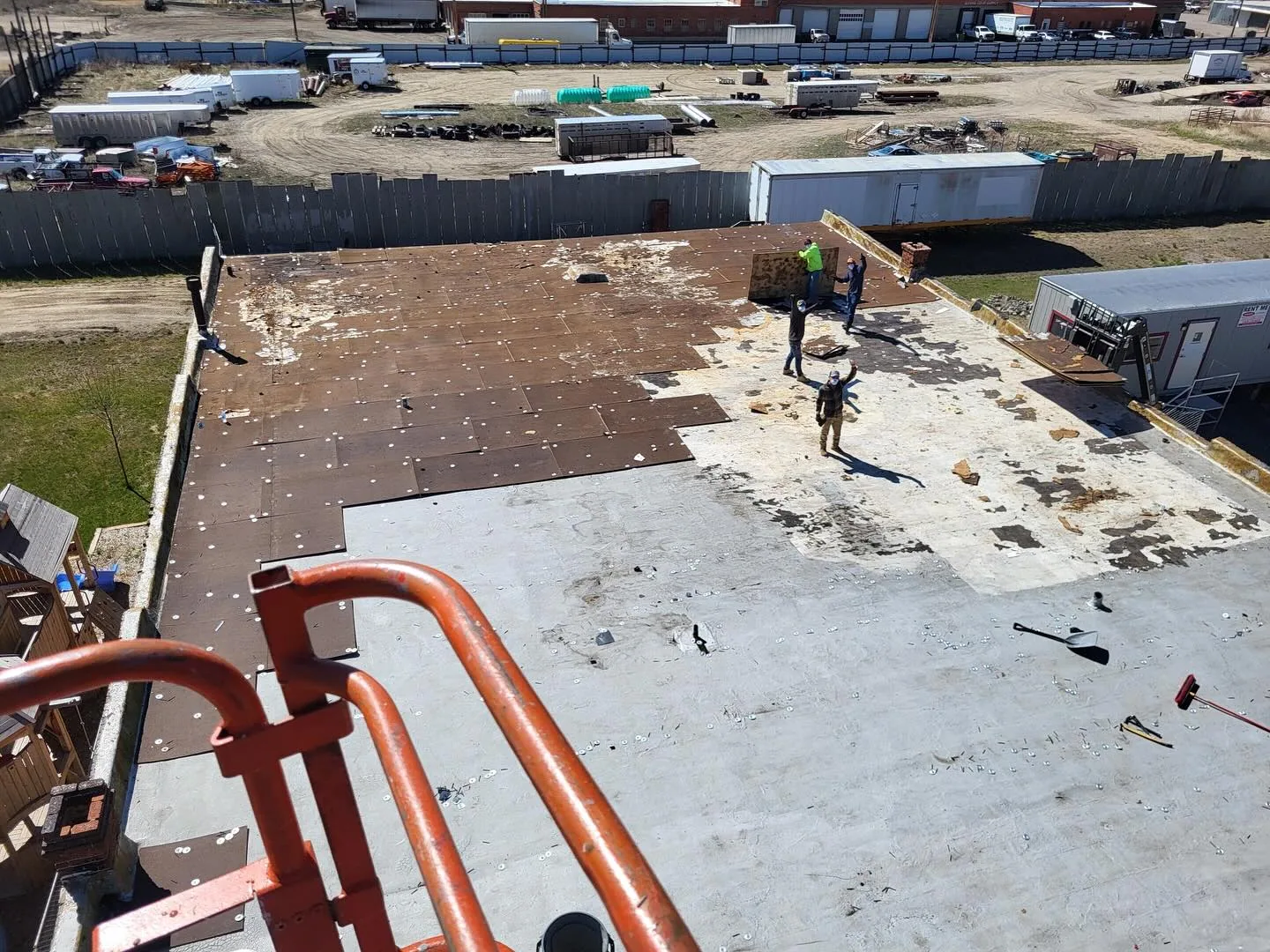
A repair can be the right capital move when the field around it remains attached, test areas are dry, and the deck supports the detail. Repeated seam failure or widespread wet insulation can make a larger section more economical to evaluate. We show removal limits, tie-ins, drainage changes, and any equipment work that affects the schedule. If a recover is possible, added height at drains and doors needs review before it is treated as a lower-disruption option.
A roof capital plan can sequence urgent water control and longer-term replacement by property. The replacement scope lists assembly, removal, insulation, and tie-in work. For an occupied apartment asset, resident access shapes staging. These choices are priced against the actual roof and the period an asset can release for construction.
Plan Around the Property’s Local Access
Material deliveries and lift placement should be checked against the site entrance, service route, and tenant hours. Planned improvements include Thompson Lane, Greenland Drive, and New Salem Highway, so a current access check matters more than an old direction sheet. We confirm the gate and delivery restrictions with the property contact. If a tenant needs a notice or a loading area must stay open, the scope identifies the work window and alternate route.
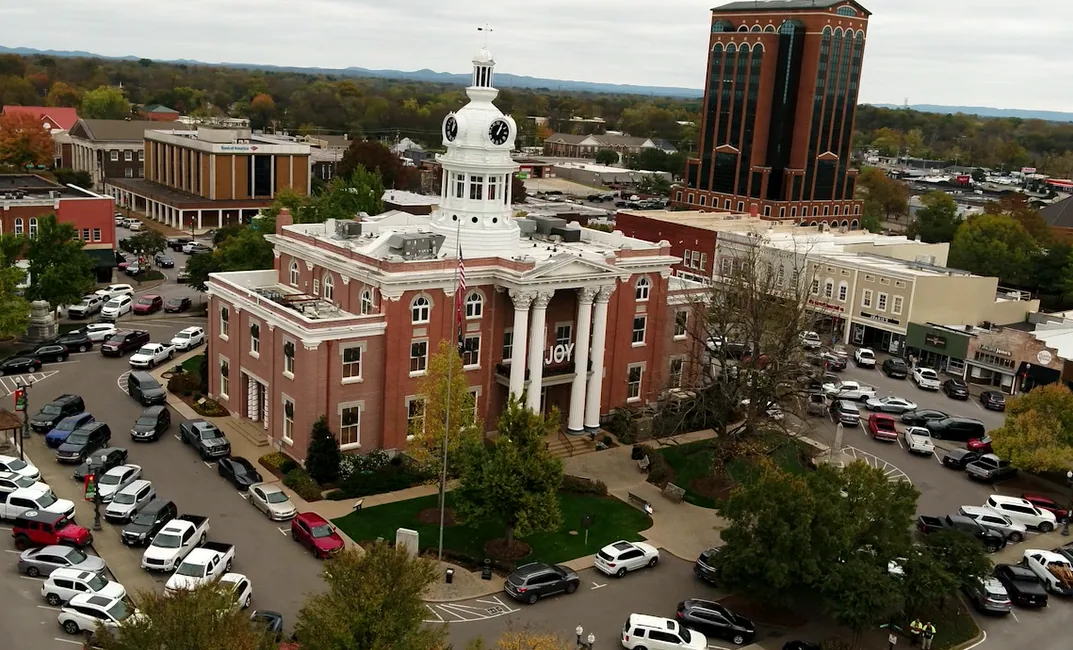
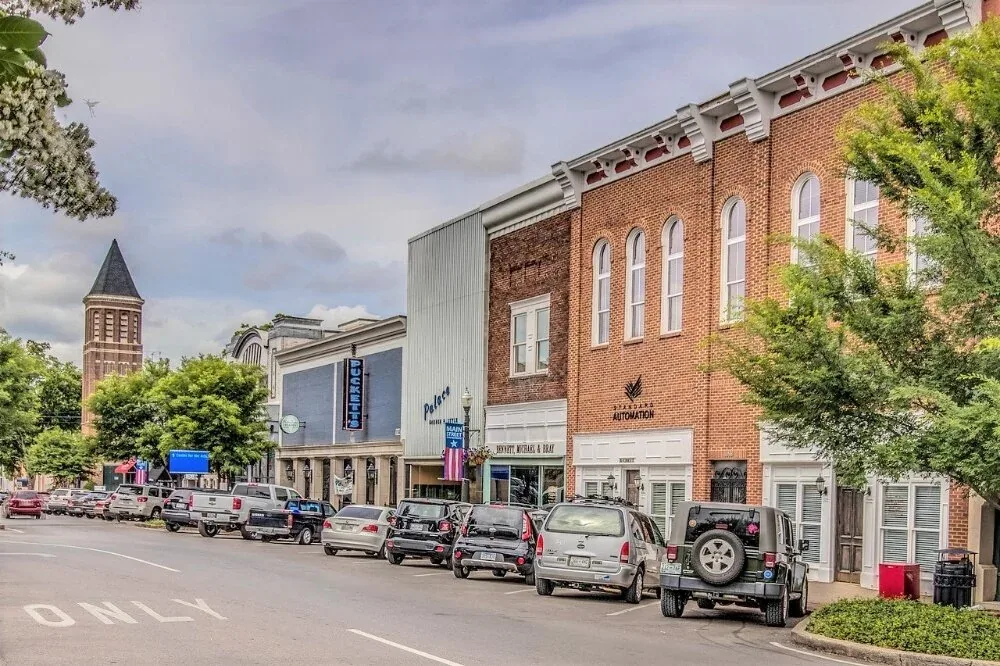
The East Main Street Historic District is part of a downtown mix that includes commercial, residential, civic, school, and open-space uses. That context is useful when planning a city-grid property, but it does not define an individual building. Roof work near East Main still begins with the property's actual staging space and roof access. A management handoff can keep tenant reports attached to the asset record.
Keep Event Damage in a Separate File
After hail or wind, we photograph the roof grid, perimeter, penetrations, and active leaks. The report distinguishes new openings from older wear and lists temporary protection apart from permanent repair. That gives an owner a record to use with an adjuster or lender without implying that one storm changed every roof on a portfolio. The inspection also records areas that were inaccessible or need a test cut.
On May 26, 2024, hail reports around Murfreesboro included 1.25 inches four miles west-southwest and 1.75 inches two miles west. The locations and measurements set local weather context; the subject roof determines whether damage exists. A hail inspection ties photos to a marked area, while condition reporting organizes findings for ownership review.
Use the Same Record Format Across Assets
Portfolio comparisons work when each inspection names the roof section, system, repair boundary, access limit, and follow-up. We can use the owner's asset ID and keep photos linked to each building. Similar-looking roofs are not automatically the same age or assembly. The condition matrix can show a current leak, deferred repair, test area, or routine maintenance item without assigning a replacement date that the inspection cannot support.
For a REIT with tenants on different schedules, we group field work by system only after each site is mapped. TPO roof review applies where the installed membrane is TPO, and general-contractor coordination can address sequencing on a planned renovation. The investor gets a scoped list with assumptions visible and the next field action clear.
Give Ownership a Decision-Ready Scope
The final scope should show what is repaired, what remains, what requires testing, and what would change the price. We include dated photos, marked roof plans, observed assembly, and a schedule basis. If the deck is not visible, we name the contingency instead of presenting it as a measured condition. That format lets ownership compare bids and keep the diligence record consistent after the property changes hands.
Send the asset list, roof plans, lease or access restrictions, inspection history, and known leak reports. We will return findings by building, with immediate protection and capital work separated. If conditions change during removal, we document the newly exposed layer and submit a change scope before extending the work. The next decision can be made from the same boundary used in the field. If ownership changes, the asset file still shows the date of inspection, the conditions confirmed, and the work that remains. That record gives the new team a clear baseline rather than a verbal estimate of roof life.
Commercial Roofing Questions
Can a roof survey support an acquisition decision?
Yes. We identify the assembly, visible conditions, test results, access limits, and items that need follow-up. Concealed layers stay qualified until an opening or test confirms them.
How do you estimate remaining roof life?
We report observed condition and recurring failures, but do not assign a useful life without enough system and maintenance evidence. A documented test or repair history can narrow the capital comparison.
What should an investor compare in repair and replacement bids?
Compare removal limits, insulation assumptions, tie-ins, drainage changes, equipment coordination, access windows, and contingencies. We keep those items separate so bids use the same roof boundary.
Can portfolio roofs be priced together?
We can coordinate mobilization, but each property receives its own inspection and scope. Group pricing is considered only when system, access, and work conditions align.
How is storm damage separated from deferred maintenance?
We mark each finding by roof area, photograph it, and distinguish new damage from existing deterioration. Temporary protection and permanent work appear as separate scope items.
Related Roofing Work
More commercial roofing work connected to Real Estate Investors in Murfreesboro.
Request an Investor Roof Review
Send asset plans, access notes, inspection files, and known leak reports. We will return roof findings and repair, recover, or replacement options tied to each property.