Commercial Roof Condition Reports in Murfreesboro, TN
Get a marked, photo-supported commercial roof report in Murfreesboro. We connect each finding to a roof section, repair boundary, and next check.
Commercial Roof Condition Reports
A photo of a roof leak is not a work scope until someone can find the same seam, drain, or curb on the building. In Murfreesboro, TN, our written condition reports tie each observation to a roof section, marked location, date, and recommended next check. We record what is visible, where access stopped, and whether a repair, test cut, or broader evaluation is justified. The property team gets a field record that can support maintenance, budgeting, or a contractor handoff.
We review any available roof plan, prior repair records, and the site's access rules before the walk. The Murfreesboro 5 N climate normal records 55.92 inches in an average year, with measurable precipitation on 134.5 days. That station history makes drain observations worth recording, but cannot establish how an individual outlet performs. The report should describe the actual drain, overflow, slope, or tie-in inspected. A documented hail or tornado event can prompt a timely inspection; only roof findings belong in the condition record.
Record the Roof That Is There
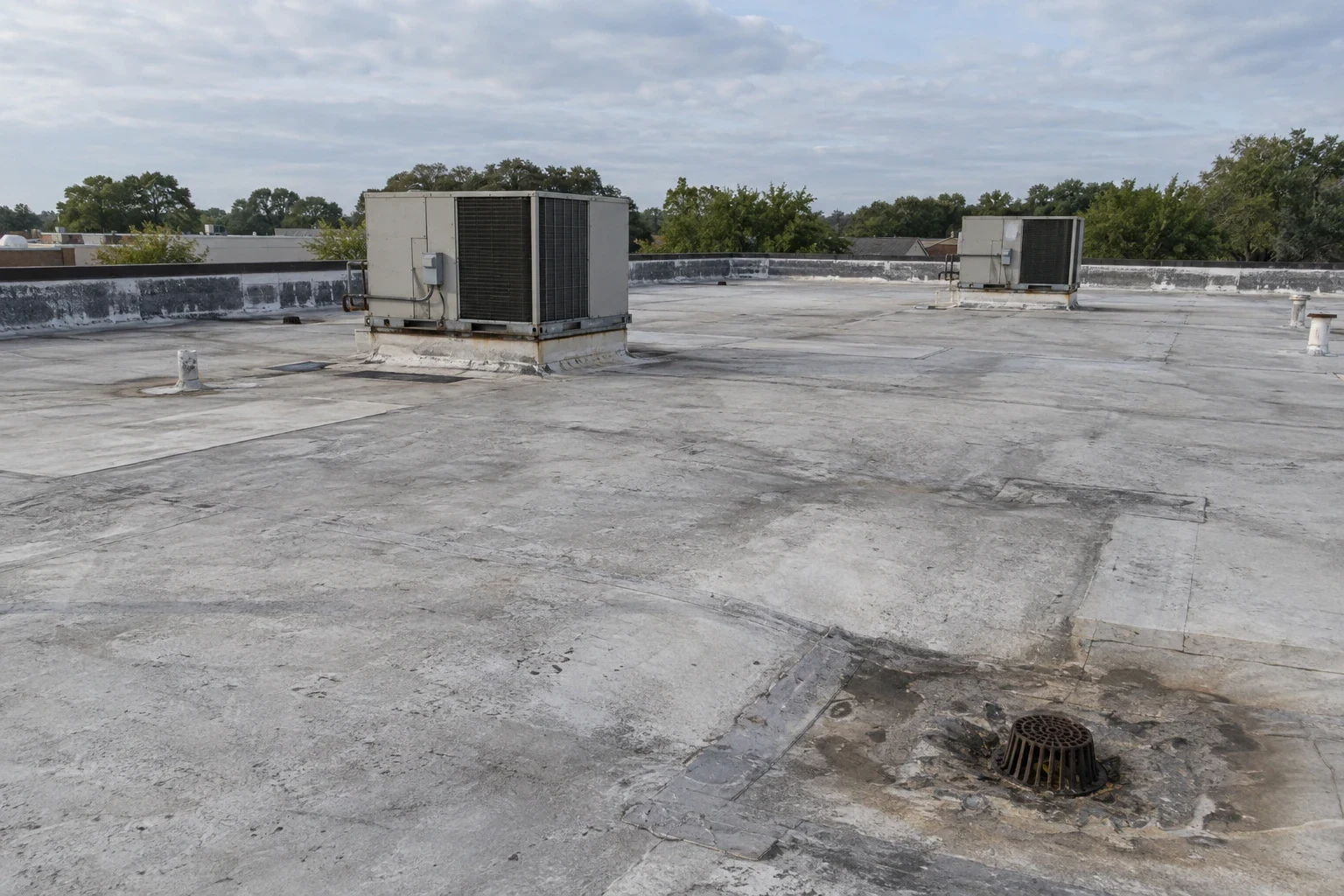
We identify roof sections by a name the facility team can use, then record the visible system, perimeter, penetrations, equipment, and drainage. If an addition has a different membrane or deck height, it receives its own entry. We do not assign a roof type from color alone. Manufacturer markings, project records, and field details may help identify the assembly; if uncertainty remains, the report says so and recommends the next check.
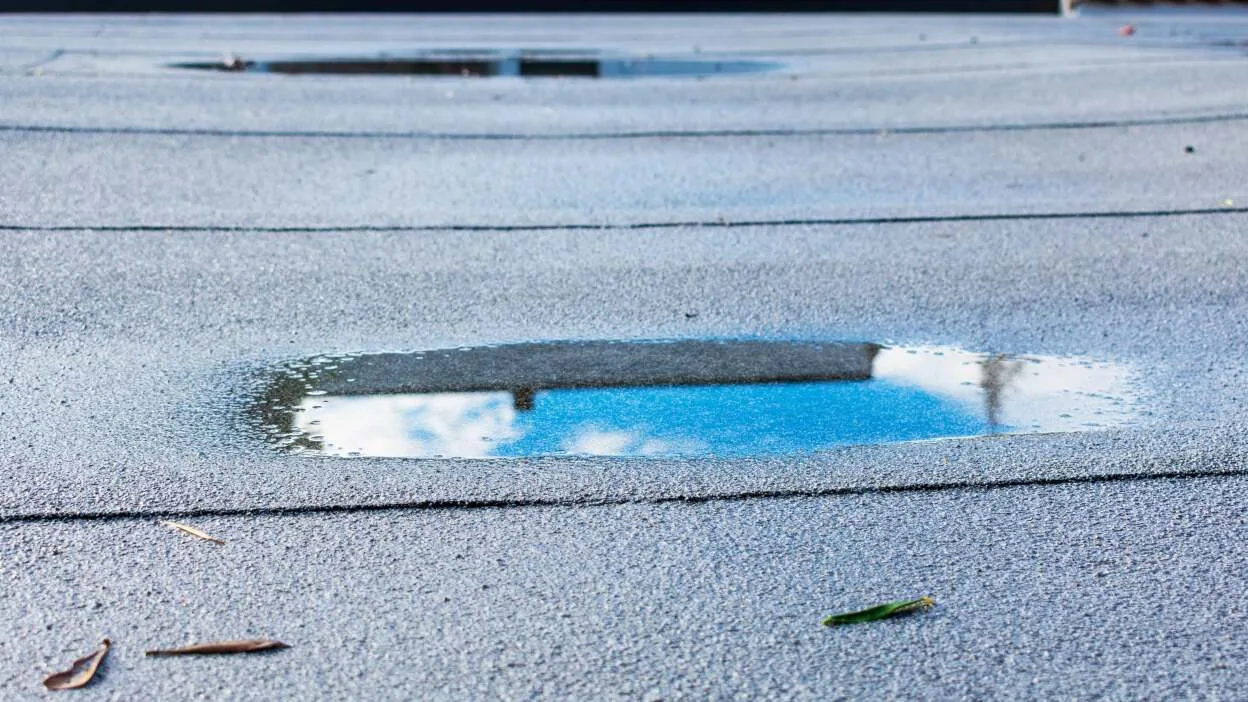
For each section, the records can cover seam condition, flashing, edge metal, curb transitions, surface damage, ponding evidence, and interior leak reports supplied by the owner. A roof plan with callouts is more useful than a photo collection without locations. A commercial roof inspection can include a hands-on walk, while drone imagery may help view high or obstructed areas. We distinguish an image review from a close inspection of the membrane. Each notation identifies whether it is an observation, an owner-reported symptom, or a recommended test. That distinction helps a facility lead decide whether to schedule a repair now or gather more information before approving a larger project.
Connect Photos to Findings
Each photo needs a purpose. We label the roof section and show the condition in context, then take a closer view when it helps explain a crack, open seam, damaged fastener, or displaced flashing. A reference image can show a sound adjacent area. The written record names what the image supports and what it cannot establish, such as concealed insulation moisture or deck condition.
In the Medical Center Parkway corridor, active commercial and medical-office settings can make access timing important. We confirm the roof entry and any restricted route with the site contact, then photograph only the roof work area. Roadway widening is planned between Thompson Lane and the Fountains at Gateway; that does not tell us how an individual building is accessed. We record the property's confirmed loading and roof-access window. A corridor roof walk remains grounded in the specific building rather than the road project.
Separate Repair From Investigation
The report should make the next action clear. A localized puncture in sound membrane can support a repair recommendation with a boundary. Repeated wet areas, a soft deck, or a recurring leak at multiple seams may call for moisture testing or a test cut before the repair scope is fixed. We identify the roof section and show which condition led to each recommendation. A dated follow-up record closes the loop after repair or testing before the roof work is closed. A broad statement such as “replace roof” needs findings that support its extent. A report can also show the location of the interior symptom beside the roof finding, without drawing a direct line between them unless the evidence supports it. We record whether the affected section was dry during the visit and whether a return check is needed after rain.
We list urgent water-control work separately from planned maintenance and capital options. If wet insulation is confirmed, the report identifies the sampled area and proposes how far to investigate; it does not extend one test result across an untested roof. If the deck is hidden, structural condition stays unknown until opened. A drainage-related repair may be appropriate where the outlet or slope is the cause, while a recover evaluation needs a dry, secure base and adequate height at curbs and edges.
Use the Report Across Different Sites
East Main's historic district sits within a downtown mix of shops, public uses, residences, schools, and parks. An occupied block can have limited staging, shared entrances, and neighboring properties close to the work area. The report can record those constraints when confirmed during the visit, so an estimator can plan protection and access. A downtown roof report still identifies the particular building, section, and observed condition.
At office and business-park properties near Veterans Parkway, multiple buildings may share a campus-style setting and open space. A finding at one roof should not be carried to another building without inspection. We number the sections and record where an equipment curb, drain, or flashing detail differs. The owner can then compare conditions across the portfolio without flattening meaningful differences. Pair the report with a section-based roof record for follow-up, and use maintenance visits to check recurring locations.
Issue a Record That Can Be Acted On
A useful report ends with the next inspection, repair, or decision rather than a pile of images. We summarize the priority, location, recommended scope, and any access or testing needed. Repair photos can be added after the work so the record shows the exposed condition, installed detail, and final boundary. If a repair is deferred, the report can identify what to watch and when the owner should request another visit.
We keep observations separate from assumptions. A water stain indoors may help identify a room to investigate, but the entry point can be elsewhere. A weather report may explain why the owner called, but it cannot confirm roof damage. At the Historic Bottoms district or along Thompson Lane, local context helps set access questions; the condition record remains about the roof inspected. For a purchase or refinancing review, a roof survey can organize the findings and visible limitations. Send the plan, prior photos, leak locations, and site contact. We will return a marked report that supports the next roof decision.
Commercial Roofing Questions
What makes a roof report useful to a property manager?
It names the building and roof section, marks each finding, includes dated photos, and separates repair work from further investigation. That lets the team assign a work order to a location it can find.
Can photos show whether insulation is wet?
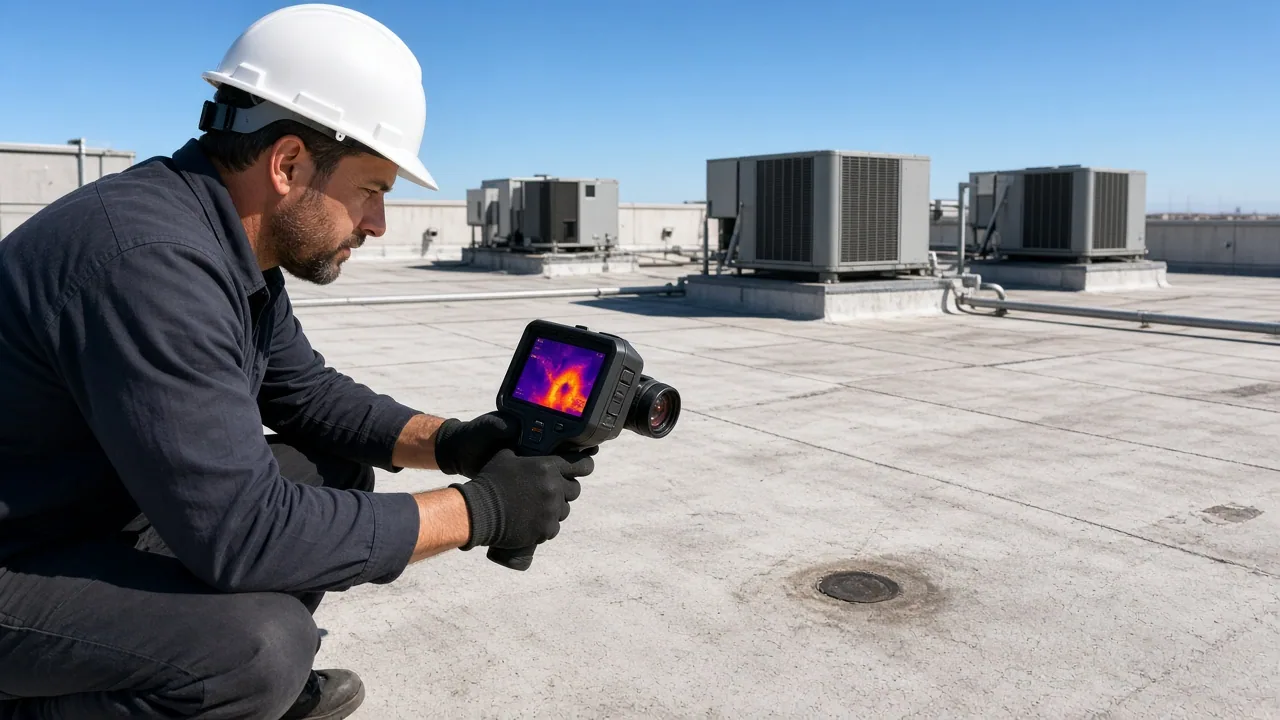
No surface photo settles concealed moisture. We can recommend infrared review, test cuts, or another appropriate check, then report the results by the areas examined.
Will a report state that the entire roof needs replacement?
Only if the inspected conditions support that extent. We identify recurring defects, moisture distribution, attachment, and deck findings, then separate confirmed issues from areas that still need testing.
Do you include a repair price in the condition report?
The report can identify repair boundaries and priorities. We can prepare a separate scope and estimate when the owner wants the work priced, with assumptions and concealed conditions shown clearly.
Can the report include areas we could not reach?
Yes. We mark the limit, explain the access issue, and list what is needed for a complete check. The record does not treat an unseen section as inspected.
Related Roofing Work
More commercial roofing work connected to Commercial Roof Condition Reports in Murfreesboro.
Request a Roof Condition Walk
Send the roof plan, prior repair records, reported leak locations, and access contact. We will inspect the planned sections and return marked findings with photos and next actions.