
KEE Roofing in Murfreesboro, TN
KEE roofing in Murfreesboro needs compatible welds and sound transitions. We identify the membrane, inspect the deck, and set repair or replacement limits.
KEE Roofing
A KEE membrane is a PVC alloy, so the exact sheet and weld behavior matter at every repair. On a commercial roof in Murfreesboro, TN, we first confirm whether the installed membrane is KEE, standard PVC, or a different single-ply system. A label on an old submittal is useful, but the field condition, thickness, surface, and existing seam determine how the repair is made. We inspect the roof section before choosing materials.
Heat, exhaust, movement, and prior coatings can change how the surface accepts a new weld. We check seams, penetrations, edge terminations, drains, and test areas where the membrane has changed texture or pulled back. The owner receives a defined repair boundary, a replacement choice if defects repeat, and closeout photos of the completed work.
Confirm the Membrane Before Welding
KEE and PVC share a thermoplastic weld process, but the alloy and specific sheet can affect the preparation and settings. We look for manufacturer markings, project records, repair labels, and consistent field details. When identification remains uncertain, a small trial weld on compatible material helps establish whether the surface can bond. We do not bridge an uncertain substrate with a patch and assume it will hold. The cutback must reach sound sheet that matches the selected repair method.
A PVC roof system may appear similar in the field, while TPO seams use a different membrane formulation. We identify the actual material before ordering repair stock or adjusting a welder. The result is a patch that follows the sheet already installed, rather than a mixed detail chosen only by color.
Set a Clean Weld Boundary
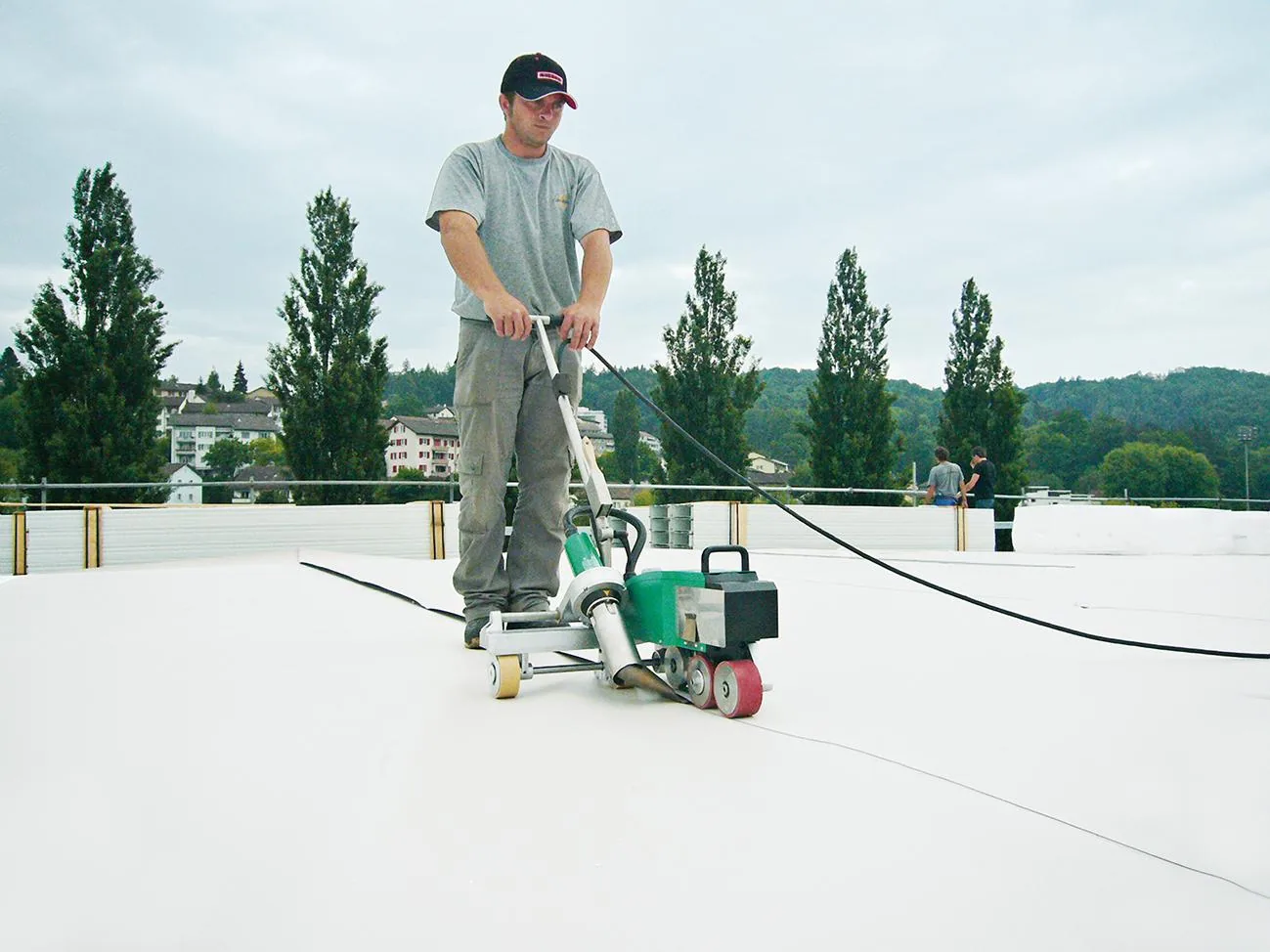
We inspect each lap for edge lift, dirt, fishmouths, open channels, and movement at a termination. A weld that is narrow or inconsistent can leave a path beneath the visible seam. The repair starts with cleaning and surface preparation, then a test weld where required. After the weld cools, we check continuity and probe the edge with the appropriate method. The patch extends beyond the failure onto material that is clean and bondable.
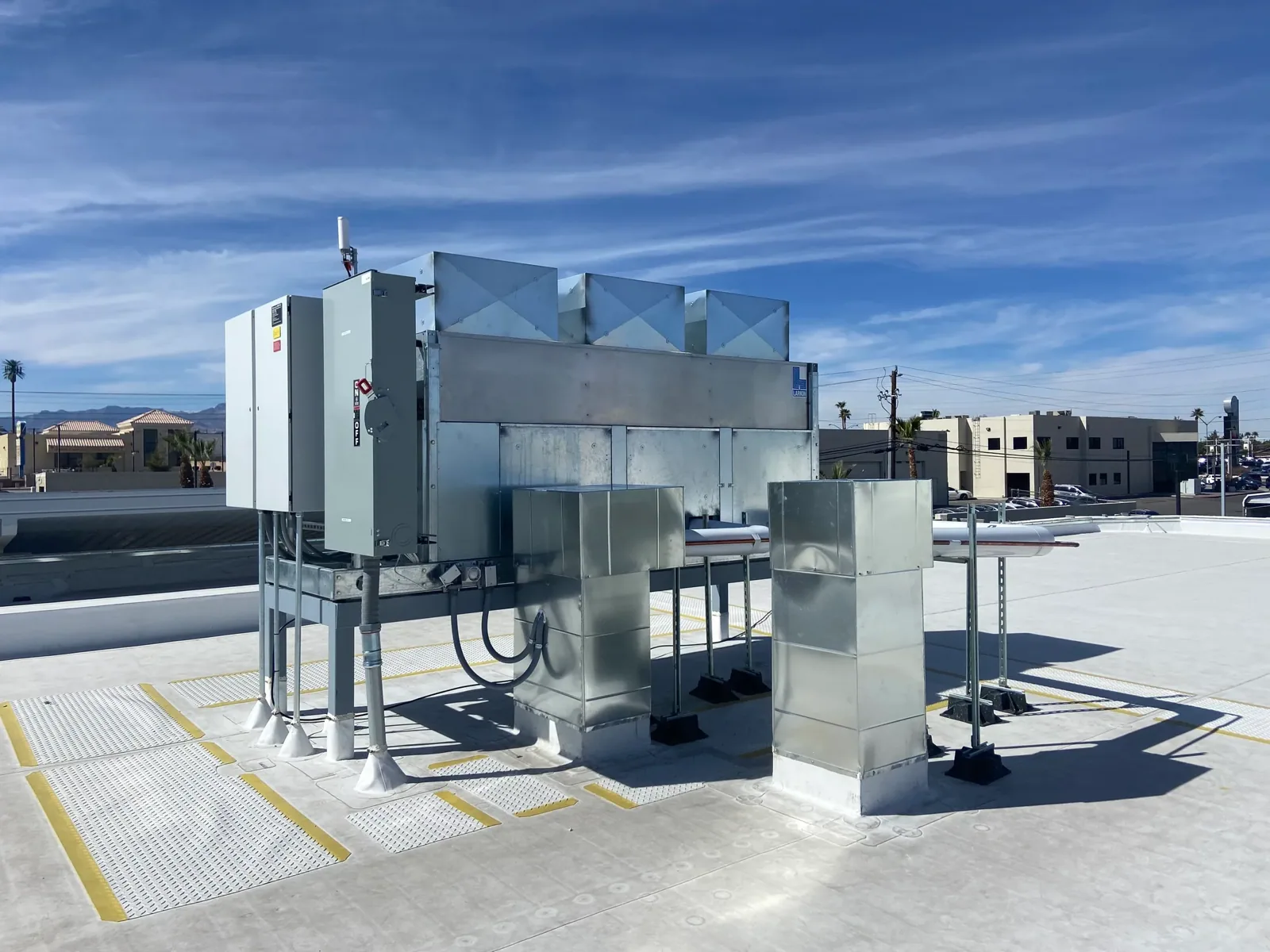
At rooftop equipment, corners and vertical transitions take more movement than a flat field. A curb can flex as the structure and equipment cycle through temperature changes. We check the flashing, support framing, and adjoining membrane rather than sealing only the visible split. The curb and support detail can be coordinated with the membrane repair where mechanical work affects the roof opening.
Check the Surface Near Equipment
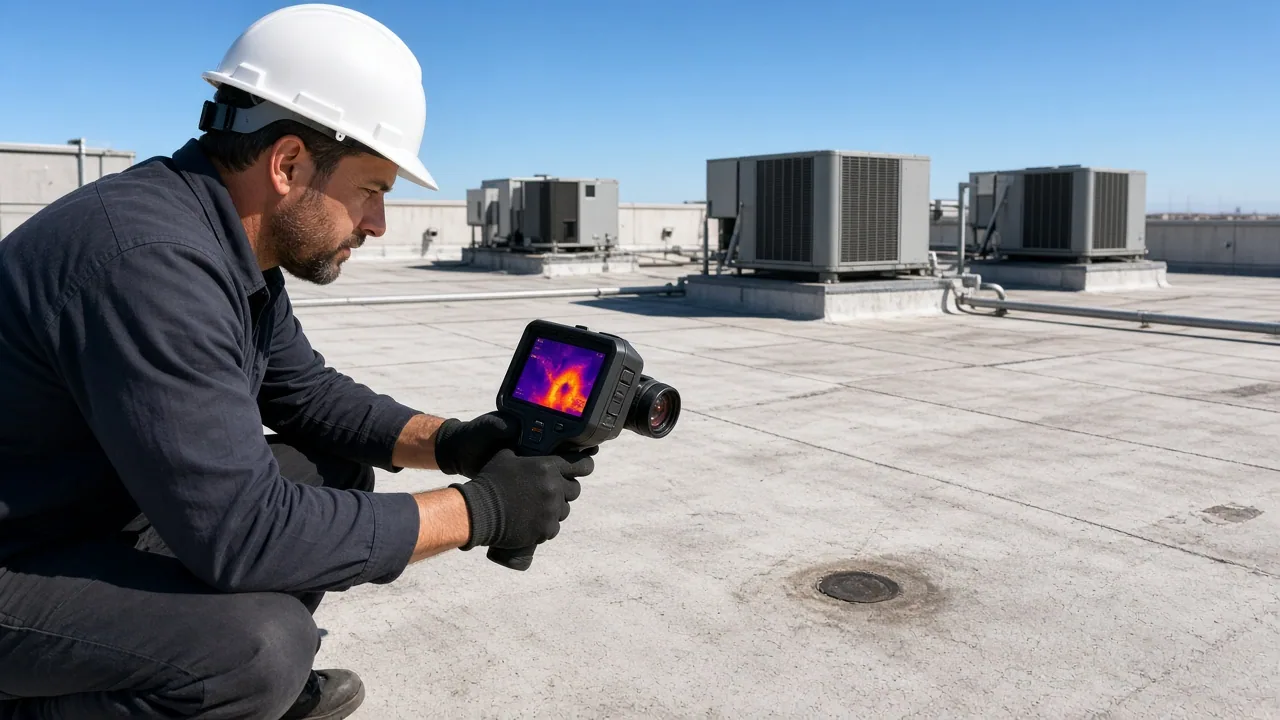
Exhaust, maintenance traffic, and stored materials can leave residue or wear at specific zones. We inspect fan discharge areas, walk paths, pipe penetrations, and spots where service crews turn or set tools. If the membrane has a coating or cleaner residue, a compatibility test comes before new material. The roof walk maps the affected area and records whether the condition is limited to the surface or continues into the insulation beneath it.
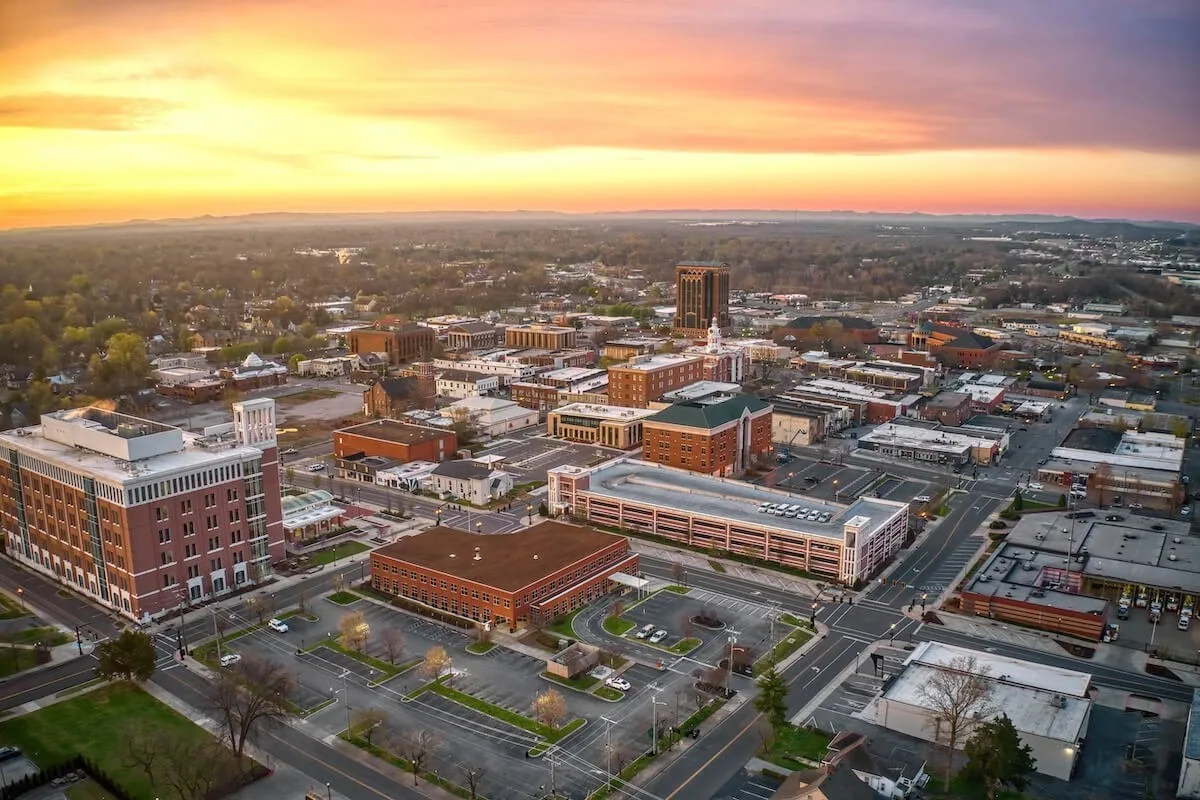
Murfreesboro land-use planning includes medical-commercial and office-park settings as well as industrial uses. That context changes which equipment and access questions we ask, but it does not identify a particular roof assembly. Near the Middle Tennessee Boulevard corridor, we inspect the actual rooftop equipment and service path before setting a weld or patch boundary. A roof inspection can document those details before a larger scope is priced.
Keep the Drainage Path Open
Water that stays around a curb or drain can expose a weak seam repeatedly. We check the slope, drain bowl, scupper, overflow, and any cricket that directs water across the KEE field. If ponding comes from a depressed deck, a new surface patch will not change the low point. We mark outlet changes separately from membrane repairs and verify that a proposed recover would not raise the finished surface above the drain or wall termination.
The Murfreesboro 5 N normals span warm summer highs and recurring freezing minimums. For a KEE seam, that range informs the installation window; actual membrane bond, drainage, and edge condition guide repair. That broad climate range puts expansion, contraction, and drainage details on the inspection list; it does not diagnose a roof. On a building in the Veterans Parkway corridor, we use the roof measurements and outlet condition to set the work zone. A drain repair may need to accompany the membrane work when the outlet itself is damaged.
Choose a Repair Limit That Holds
A localized KEE repair works when the surrounding membrane remains attached and the weld can reach clean, compatible sheet. A wider area may be justified when the same seam defect repeats, the material has become brittle, or water has affected insulation in several places. We show those areas on a roof plan and separate test results from assumptions. If a test cut finds wet material, the affected layer is removed to a measured boundary before the assembly is closed.
A recover needs a stable, dry base, suitable attachment, and enough height at curbs, edges, and drains. If those conditions do not hold, replacement gives the crew a direct view of the deck and lets the new KEE system start from a prepared substrate. The overlay decision should follow test cuts and elevation checks, while dated roof photos preserve the findings for the asset file.
Return the Repair Record
We photograph surface preparation, trial welds where used, finished seams, patches, and each termination before leaving the roof. The closeout names the membrane identified, repair locations, material used, weather window, and any test opening that changed the scope. If a transition could not be reached safely, it remains listed as an open inspection item. That distinction gives the facilities team a clear next step instead of a false completion point.
Timing and cost change with access hours, the number of test cuts, wet insulation removal, deck repairs, and how many roof sections can close in one shift. We separate those drivers in the scope. If a seam opens during the work, we protect the area, photograph what is exposed, and get direction before extending the repair beyond the agreed boundary.
A roof plan marked by section helps the next service visit find the same welds and drains. Check the repaired area after mechanical work, a severe weather report, or any change to rooftop equipment. The next inspection should compare the patch edge and adjacent field for movement, water, or new surface damage. Send the roof plan, system records, prior repair photos, and access window. We will verify the KEE sheet and return a repair or replacement scope tied to the observed condition.
Commercial Roofing Questions
How can you tell KEE from standard PVC?
We check submittals, labels, sheet details, and the field surface. If records do not settle the identification, a compatible trial weld helps confirm how the material accepts repair before a larger patch is installed.
Can KEE be heat welded?
Thermoplastic KEE/PVC membranes use heat-welded seams. The temperature, speed, preparation, and sheet compatibility still need a field check so the weld reaches the installed membrane cleanly.
What if the KEE surface is coated?
We identify the coating and test compatibility before welding or applying a patch. Residue or an incompatible layer can weaken the bond, so preparation may need to reach clean membrane first.
Will a KEE repair fix water around a drain?
Only when the membrane detail is the cause. We inspect the outlet, overflow, slope, and deck elevation together. A blocked or low drain may require separate correction before the surface repair is closed.
When does KEE need replacement instead of a patch?
Repeated seam separation, brittle sheet, wet insulation, or a weak deck can make a local repair too narrow. We map the conditions and show the repair limit beside a broader replacement option.
Related Roofing Work
More commercial roofing work connected to KEE Roofing in Murfreesboro.
Identify the KEE Assembly
Send the roof plan, system submittals, repair history, and access window. We will identify the sheet, test suspect welds, and write a repair or replacement scope with a marked boundary.