
Commercial Roofing in Nolensville, TN
Commercial roof repair and replacement in Nolensville, TN. Tie the scope to storm findings, drainage, deck condition, and the property's work window.
Nolensville
A commercial roof in Nolensville needs a scope tied to its actual assembly and operating schedule. We begin at the access point, locate the reported leak or damaged area, and trace the nearest drainage path, seams, penetrations, and edges. The first walk separates visible conditions from areas that need a closer test. That gives the owner a repair boundary to review before a crew opens the membrane or prices replacement.
Proposed Rocky Fork improvements connect Rutherford and Williamson counties and include Nolensville as a partner community. The corridor concept runs from the county line toward McEwen Drive in Franklin, with a proposed four-lane section, turn lanes, sidewalk, and multiuse path. That regional connection is useful when planning material arrival and site access, but it does not establish a particular property's route or building use. We confirm those with the facility contact.
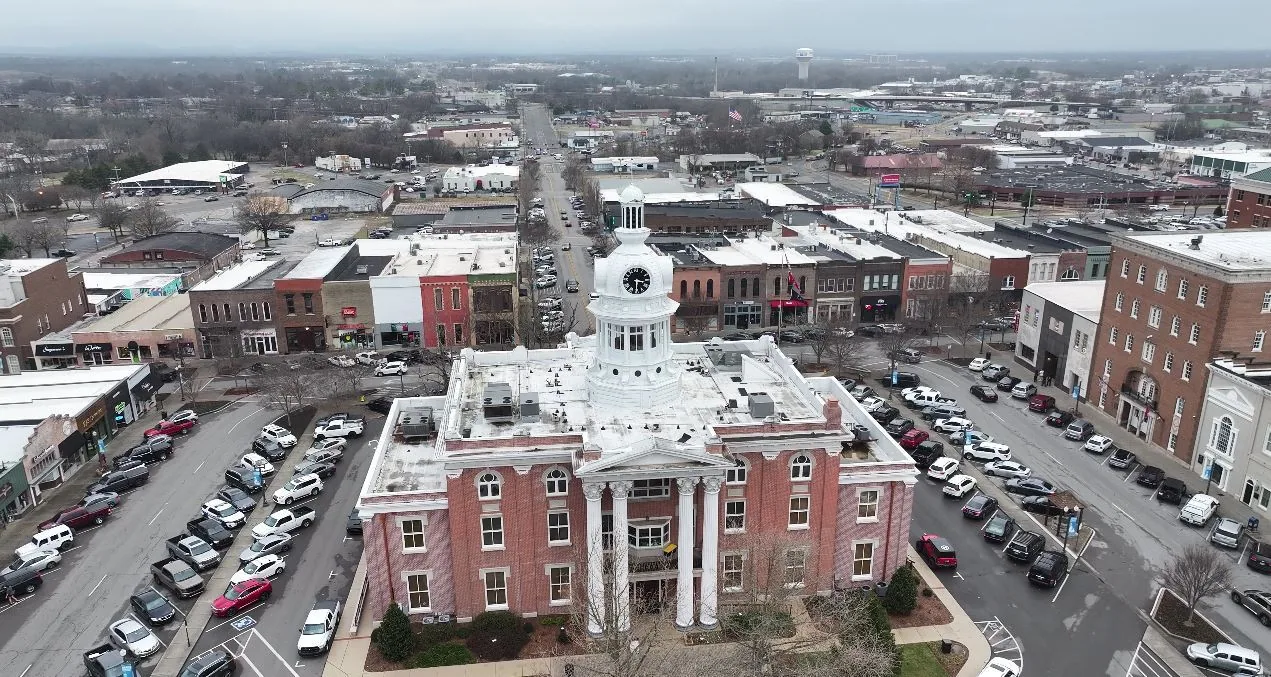
Check the roof after weather
Middle Tennessee has documented severe-weather exposure, but a regional event does not prove that a Nolensville property has roof damage. After a hail or wind report, we inspect the membrane, metal edges, curb flashings, skylights, and any repairs already in place. Each mark is photographed and described by roof section. If a puncture, lifted edge, or open seam is present, we identify the repair needed. An impact mark without an opening is recorded differently from active water entry.
The inspection also checks the roof below the visible surface when moisture is suspected. A membrane can look intact while water has moved into the insulation or deck. We test only where the owner authorizes access, then record the exact location and depth. If a storm has disrupted operations, a temporary tie-in can secure the opening while the permanent repair is scoped. Owners can compare wind damage repair with hail damage inspection after the field findings are documented.
Plan access across the route
A route that crosses the Rutherford and Williamson county line can affect delivery timing, yet the final work window depends on the property itself. We confirm the gate, turning room, loading hours, and where a lift or material pallet can sit without blocking the building. If an entrance is shared with other businesses, the site lead identifies traffic peaks and any access rules. The crew records the staging plan before roof work begins.
Rocky Fork is a proposed multi-neighborhood connection, not a description of a particular commercial property. We use the actual site layout to choose where work starts and how a truck reaches the roof. If the roof has several elevations, we mark them on a plan and sequence each section so one open edge does not interrupt another operation. For regional service context, compare commercial roofing in Franklin and roof work in Brentwood, where each property's access needs are confirmed separately.
Mark the repair limit
A patch should end where sound material begins, not at the edge of a ceiling stain. We inspect nearby seams, wall transitions, drains, and equipment curbs to see whether the leak is isolated or connected to a larger failure. If the insulation is wet, we map its boundary before resealing the roof. A repair with a dry, stable tie-in can remain a focused scope; connected moisture or failed attachment may call for a broader plan.
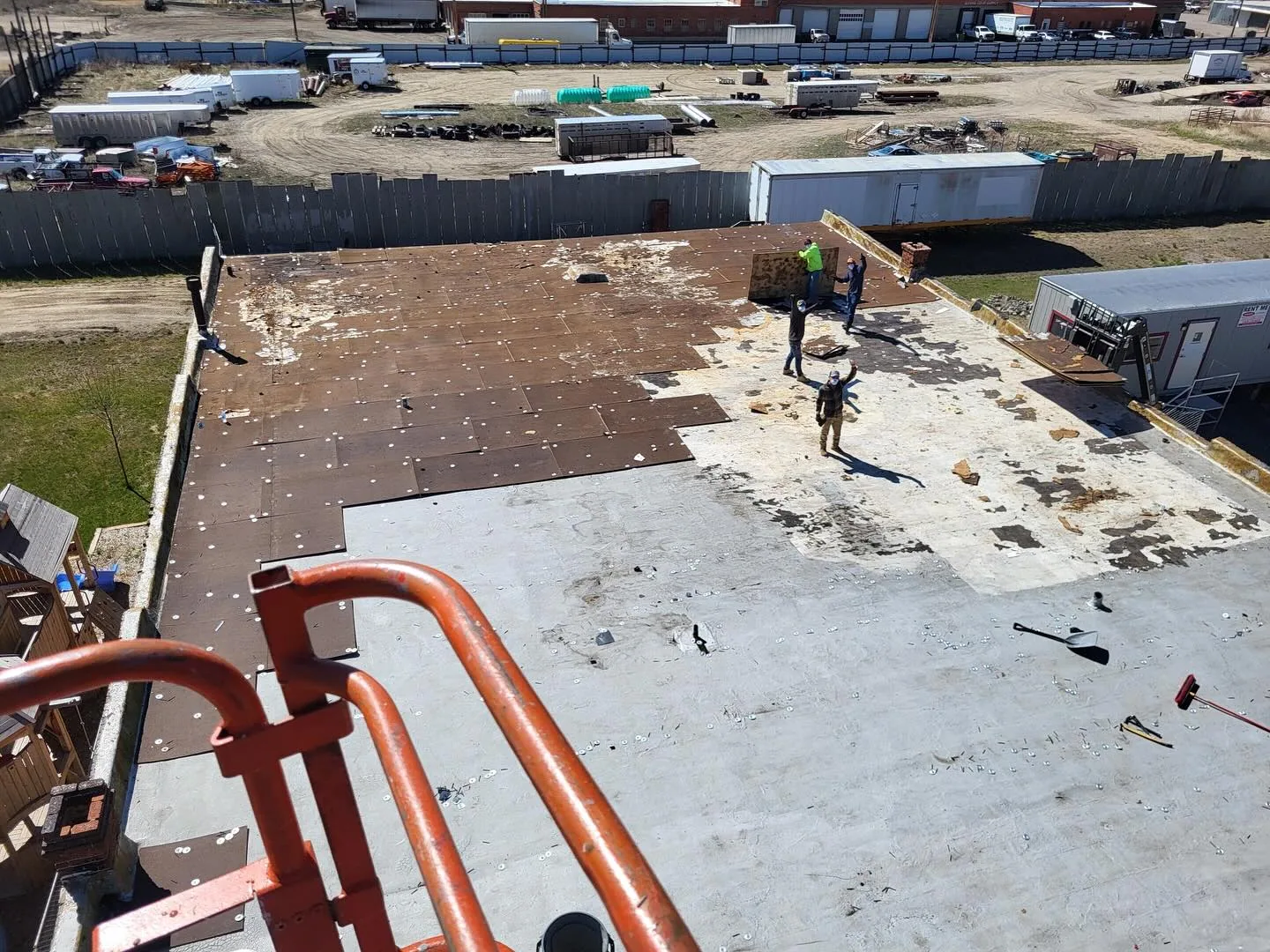
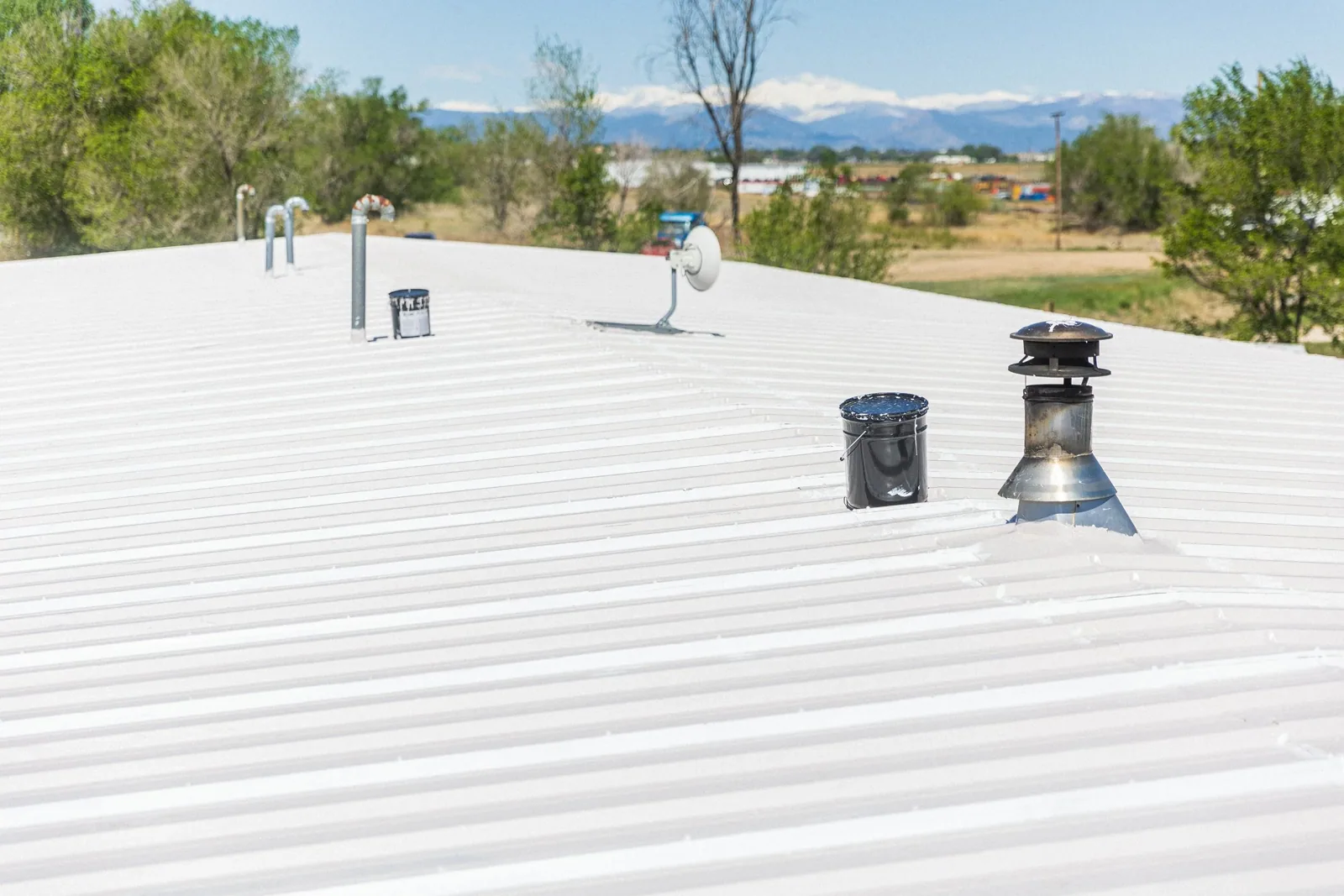
Replacement is considered when repeated repairs would leave too many weak transitions or when the deck cannot support another patch. A recover may be possible if the existing layers, attachment, drainage, and structure support a new system. The estimate separates tear-off, insulation, deck work, edge metal, and temporary protection. Owners can review commercial roof repair, replacement work, and recover options once the inspection identifies what can stay.
Protect the day's stopping point
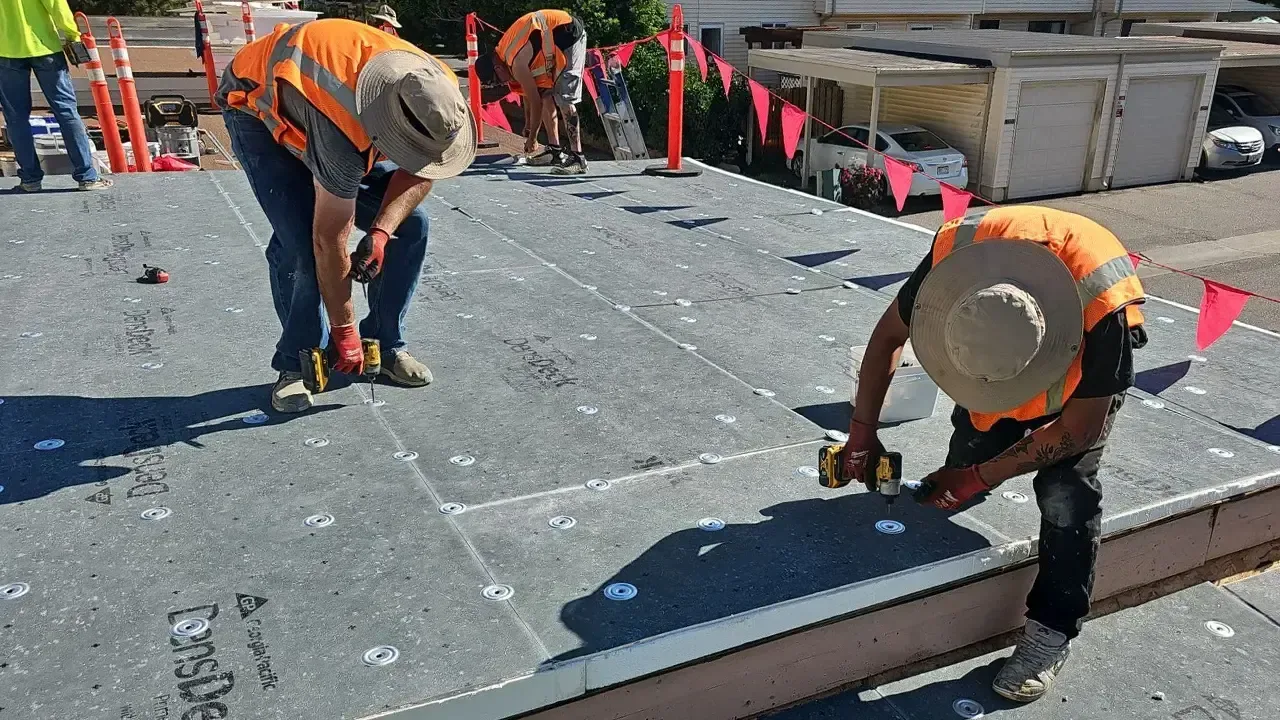
Roofing continues only as far as the crew can close safely before weather or an operating constraint stops the shift. We stage materials for the section in progress, protect drains and openings, and install a temporary tie-in at the day's boundary. The foreman records that stopping point with photos and records what remains. If the forecast changes, the owner can see which areas are finished and which need a return visit.
On an occupied property, the work zone should not cross an entrance or equipment area without coordination. We confirm any shutdown with the person responsible for the system below the roof and keep the daily route clear. Emergency response is available at any hour, including weekends and holidays, to stabilize a sudden opening before permanent work resumes. For a phased occupied-building reroof, we can align sections with tenant access and the property's loading window.
Leave a record for the next visit
A useful closeout shows the location of the repair, the tie-in detail, the material installed, and any condition outside the approved work. We provide dated photos and identify sections that could not be tested. At a test opening, we record the layer stack, photograph what the cut reveals, and close it before the crew leaves. Expansion beyond the reviewed area requires owner approval. The record lets a future inspector compare the same details instead of treating the roof as one undivided surface. We attach the photos to the matching authorization and repair record.
For a storm-related insurance review, we can assemble dated inspection photos, repair records, and scope records by roof section. The package separates observed conditions from requested work and records where testing or added repairs remain. The owner can use those materials to coordinate with the carrier while keeping the roof sequence tied to confirmed field conditions.
Maintenance can then focus on seams beside prior repairs, drain bowls after debris collects, and flashing near equipment that changes. A property manager can keep those findings with a roof condition report and use a maintenance visit to check the next action. For an inspection near Murfreesboro's northern service area, see the Northfield Boulevard corridor. To schedule Nolensville work, arrange roof access and the person who can review a written scope.
Commercial Roofing Questions
Does the Rocky Fork project mean a roof crew can reach my building from that route?
No. The concept proposes a corridor connection toward McEwen Drive in Franklin, but it does not establish access to an individual property. We confirm the current gate, driveway, staging area, and loading window with the site contact before mobilizing.
How do you separate storm marks from actual roof damage?
We photograph the membrane and metal details, then check whether a seam, flashing, or surface has opened. An impact mark alone is not treated as a leak. If water is suspected below the roof, we identify the test location and keep that finding separate from visible surface conditions.
Can a repair be completed while the property remains open?
Often, with a defined work zone and a daily closing point. We coordinate the access route, deliveries, and any equipment shutdown before opening a section. The crew protects penetrations and the temporary tie-in whenever weather or operations pause the work.
What drives the cost of replacing a commercial roof?
Tear-off, wet insulation, deck repair, edge and flashing details, material staging, and operating restrictions change the scope. We document those items and separate known work from concealed conditions that need authorization before they are included.
What will the crew leave behind after a repair?
Dated photos, the repaired roof section, the tie-in material, and any condition still outside the approved work. If a test or follow-up is needed, we identify the location and the next step so the owner can plan a return visit.
Related Roofing Work
More commercial roofing work connected to Nolensville in Murfreesboro.
Schedule a Nolensville roof walk
Coordinate the roof access point, operating window, and contact who can review a written scope. We will map the affected section and document the repair boundary.