
Commercial Roofing in Old Fort Parkway, Murfreesboro, TN
Commercial roof repair and replacement along Old Fort Parkway in Murfreesboro. We check storm damage, drainage, flashing, access, and the limits of each repair.
Old Fort Parkway
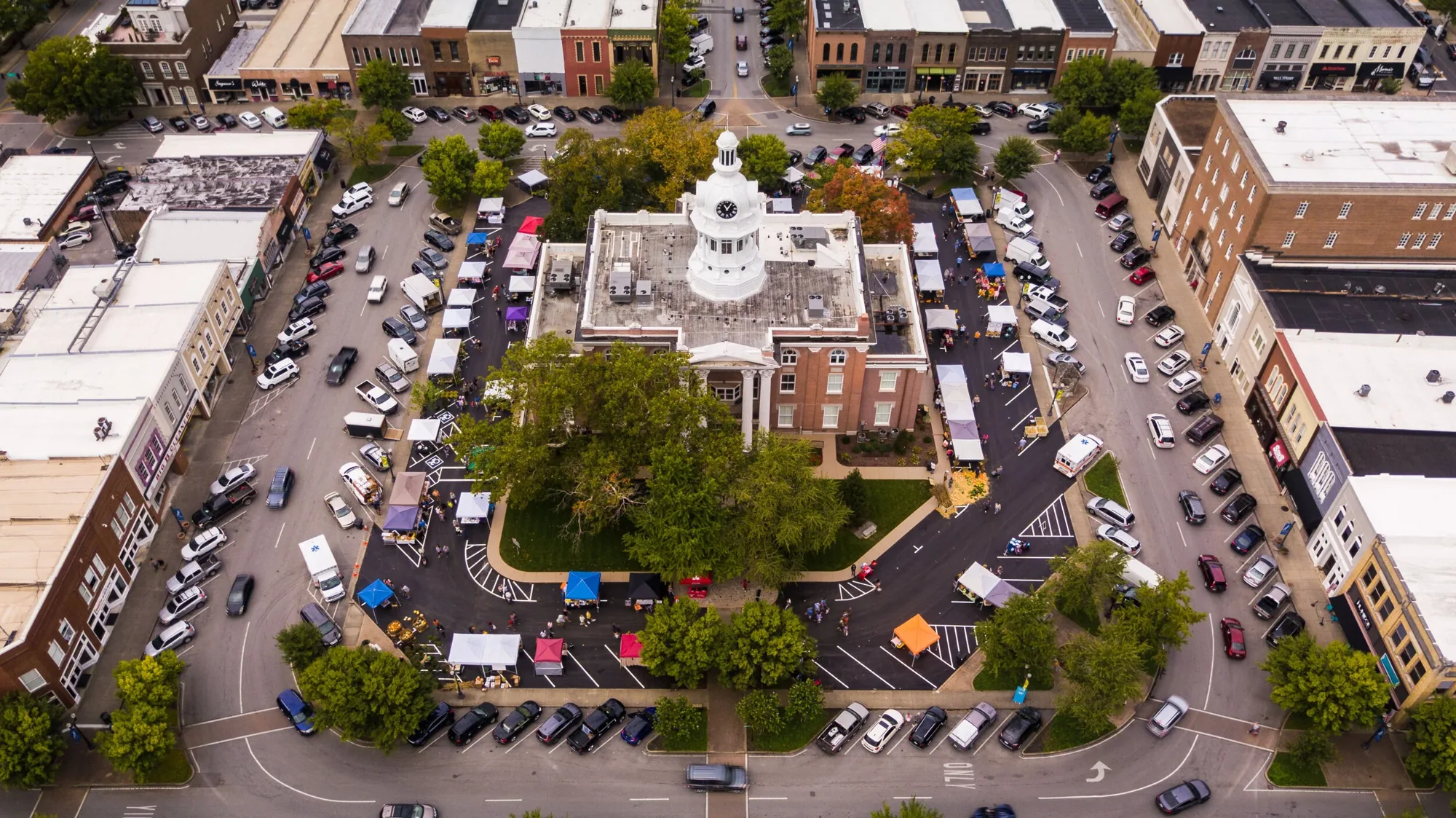
On Old Fort Parkway, access and exposure can matter as much as the roof assembly. The corridor connects commercial properties to a busy street network, so a repair plan must account for the occupied building, delivery path, and any work above public-facing entrances. We start by identifying the roof section and the reported condition, then confirm what is safe to reach and what needs a closer test. The repair plan follows what we can see at that property, not what the corridor name suggests.
New Salem Highway and Veterans Parkway help orient work near Old Fort, but traffic plans do not establish a particular building's roof condition. We inspect the membrane or metal, edge details, penetrations, and drainage on the actual property. If the site has multiple additions or roof heights, each section gets its own boundary and findings. This prevents a storm report in one area from becoming an unsupported assumption about every nearby building.
Separate Wind Damage From Existing Wear
After a wind event, a displaced panel, lifted edge, or opened seam can expose the building quickly. On July 29, 2024, a wind event damaged trees and traffic lights along Old Fort Parkway. That is useful local context for asking about date, direction, and visible impact; it does not show what happened to an individual roof. We compare the owner's report with uplifted metal, loose coping, torn membrane, broken fasteners, and water entry inside the building.
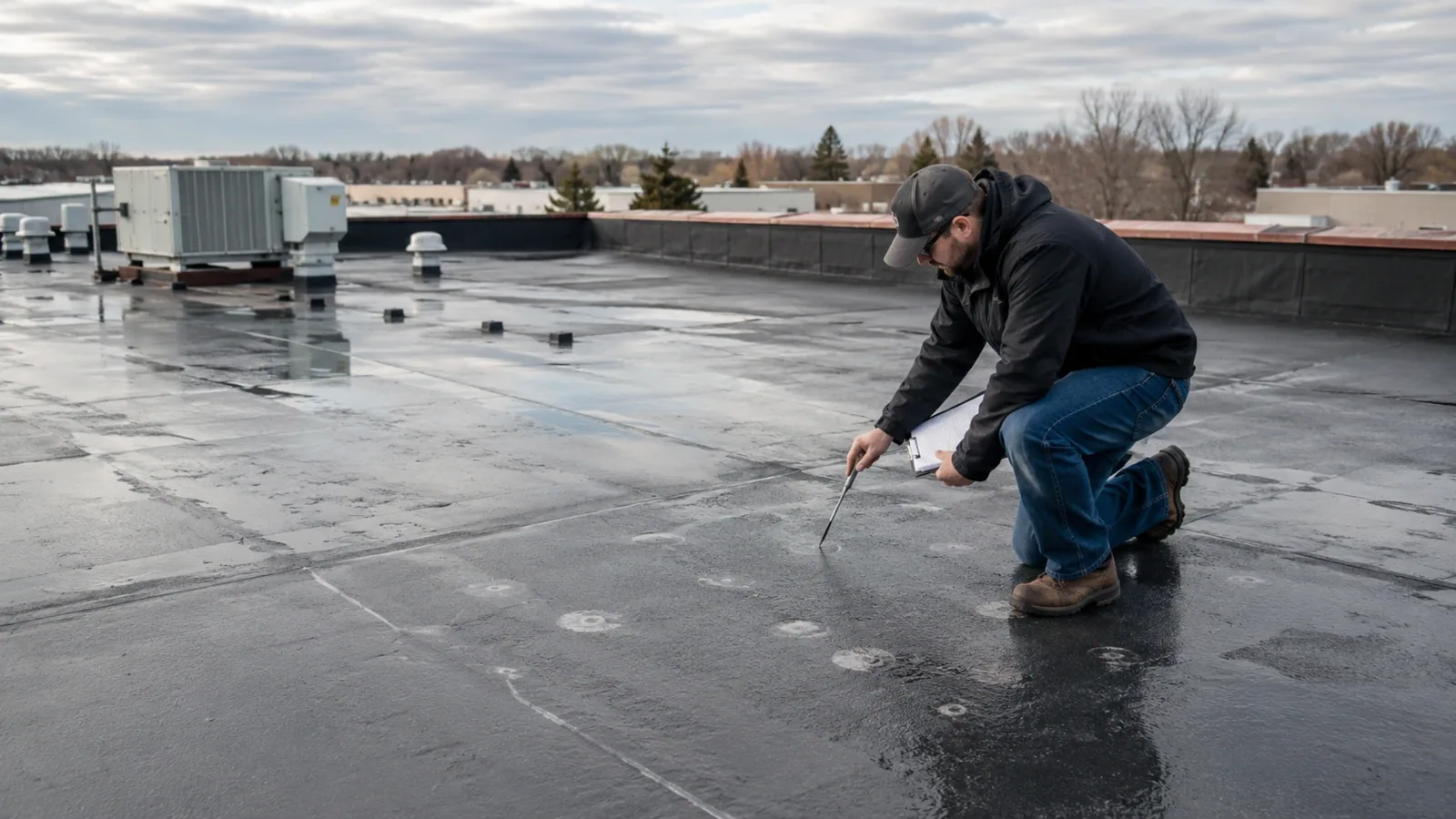
Photographs should show both the close detail and enough surrounding roof to locate it. We record whether the repair is temporary protection or a permanent correction, what material was used, and whether the adjacent system is still secure. If water is entering during the assessment, a temporary dry-in can stabilize the affected section while the full repair is defined. The owner receives a clear boundary instead of a vague statement that the whole roof sustained damage.
Inspect the Full Path Around the Failure
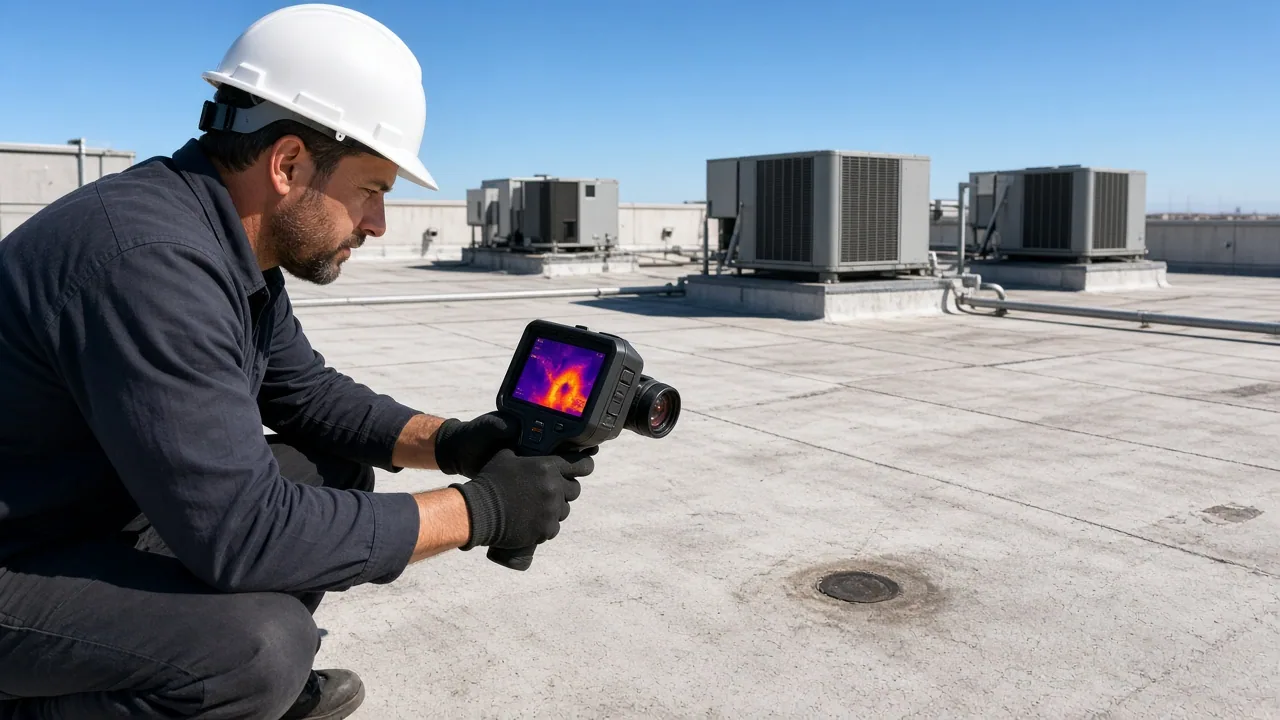
A roof leak may appear far from the opening that admitted water. We compare the stained room with seams, penetrations, parapets, wall transitions, and nearby drains. Wind can loosen an edge without tearing the field membrane, while a failing curb may let water follow the deck before showing below. The inspection records what is confirmed, what could not be reached, and whether a test cut or moisture survey would change the decision.
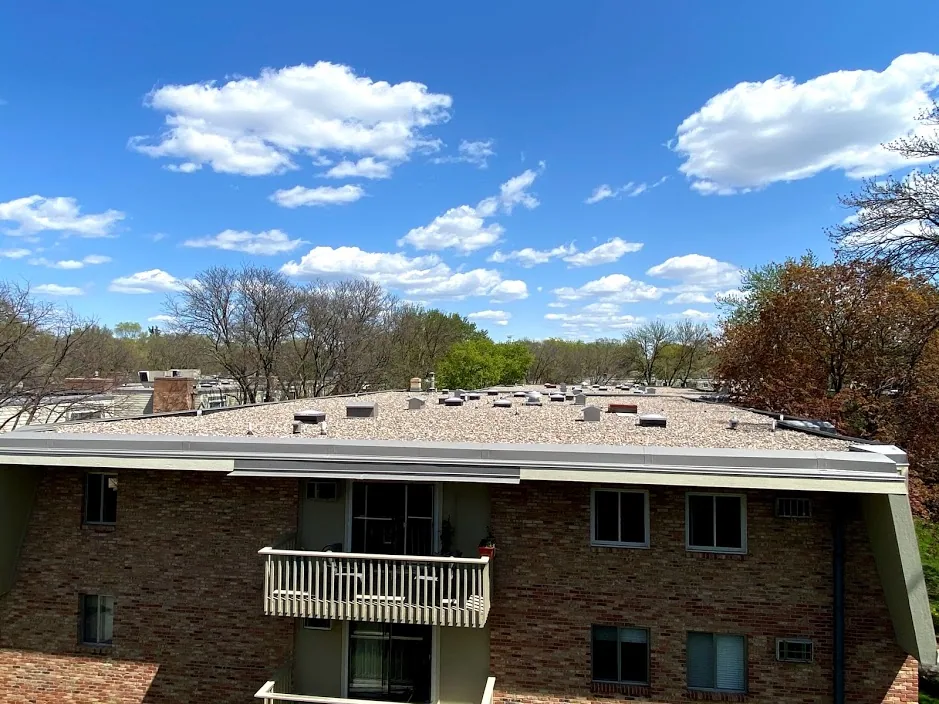
On an occupied commercial property, the walk also identifies rooftop equipment, fragile surfaces, and areas where an access route crosses active operations. A commercial roof inspection can document the system, condition, and priority repairs before pricing a larger project. For a building with several roof levels, the photo condition report should label each section so a follow-up crew can find the same detail without relying on a general corridor description.
Confirm That Water Has a Clear Exit
Drainage problems are often visible at the outlet, where a clogged bowl, raised patch, or damaged scupper interrupts the path. We check field slope and the height of each drain relative to nearby seams, curbs, and roof edges. A temporary low spot may result from a compressed layer or a prior repair, but we diagnose it before proposing added material.
For a roof near a traffic corridor, schedule disruptions can make access windows tight. That is a reason to identify the drain locations and staging plan before work begins, not to rush a repair without inspection. A drain and scupper repair may be separated from a membrane scope when the outlet itself has failed. If the water path remains uncertain, a marked roof plan and a controlled test are more useful than assuming a street-side leak originated at the nearest visible edge.
Choose a Repair Limit That Can Be Verified
A focused repair may suit one opened seam, loose edge, or damaged penetration if the adjoining materials remain sound. When the same location fails repeatedly, or moisture extends beyond the initial stain, a wider review may be justified. We explain why the proposed boundary stops where it does and what would cause it to expand. That gives the owner a measurable repair area and avoids charging for unrelated roof sections without evidence.
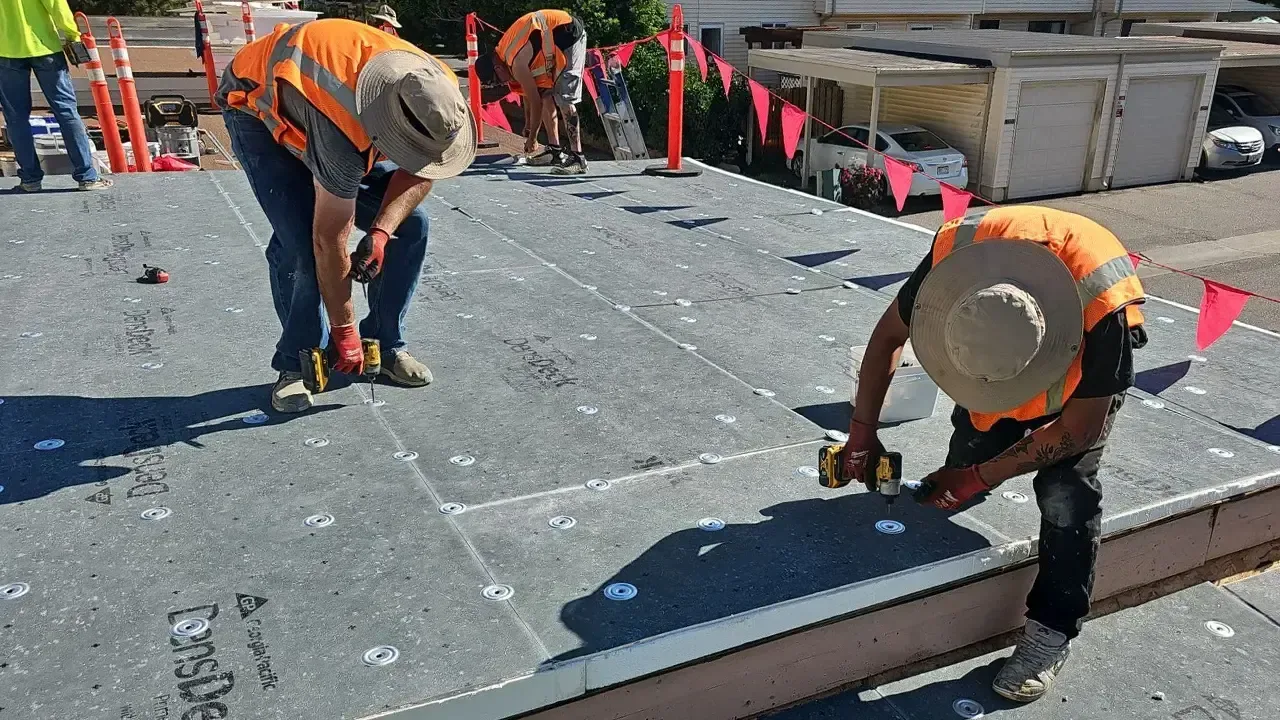
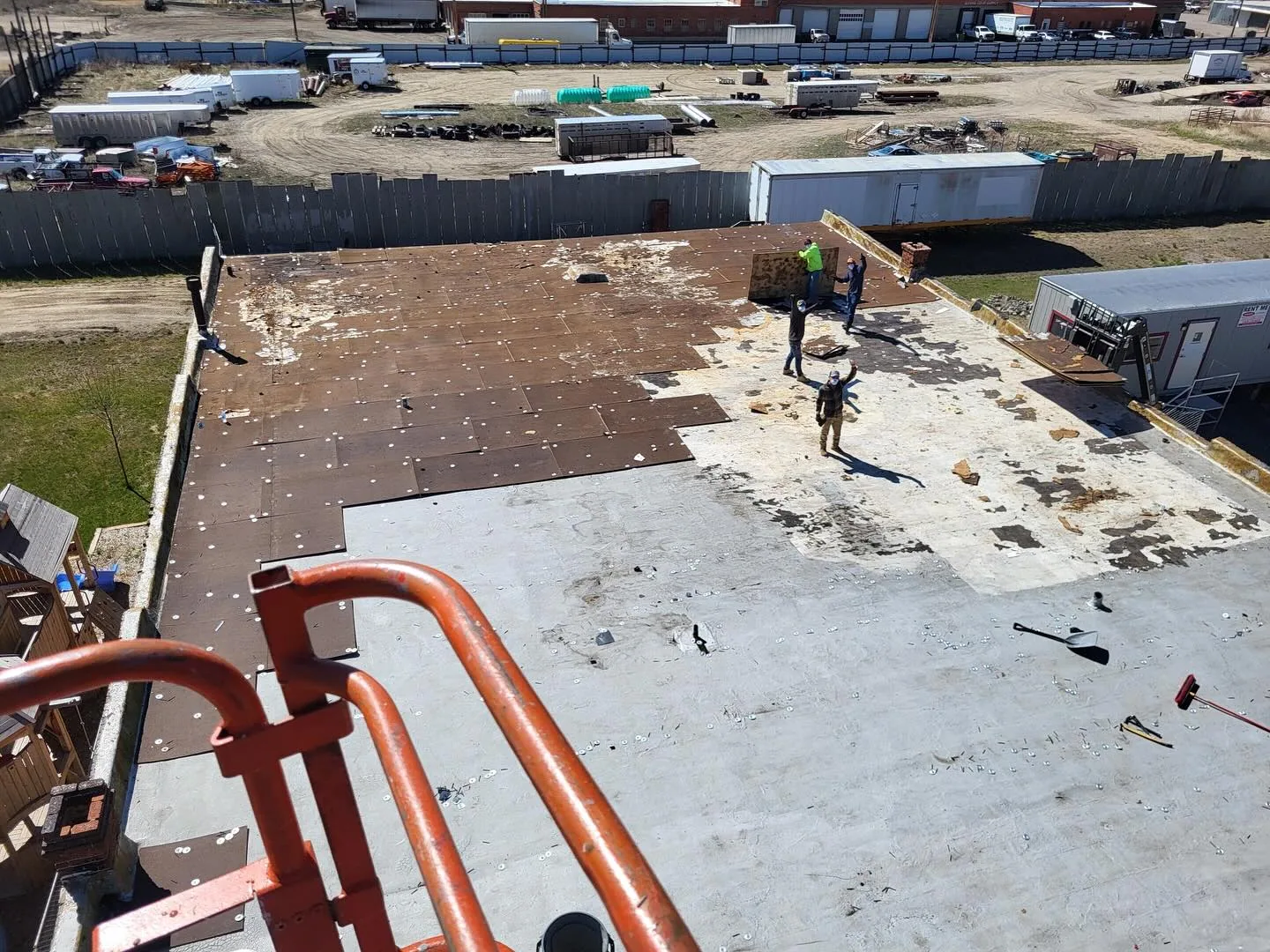
A recover requires a stable, dry assembly and acceptable heights around drains, curbs, and parapets. Replacement may be the more direct option if insulation is wet throughout, attachment is failing, or the deck needs exposure. The repair scope and replacement scope should use comparable measurements and list removal, insulation, edge metal, equipment handling, and disposal separately. A claim file can preserve dated photographs and work descriptions without promising how a carrier will decide coverage.
Plan Deliveries, Staging, and Daily Dry-In
Commercial land uses beside an arterial can be arranged around parking and automobile access, but the roof crew still needs an owner-approved path. We confirm whether a lift can be placed on site, which drive aisle must remain open, and where debris may be lowered. The building contact should tell tenants when overhead work starts and who can authorize a temporary entrance change. These details affect crew size, delivery sequence, and the amount of roof we can safely open during a shift.
Work along this part of Murfreesboro may connect with Veterans Parkway or New Salem Highway, yet each site needs an independent plan. We protect the active work zone, keep materials secured, and close the roof before leaving. If weather or a concealed deck issue interrupts production, the estimate should state how temporary protection is maintained and who approves a schedule change.
Make Timing and Cost Drivers Visible
Two roofs of similar size can carry different costs when one has crowded equipment, difficult access, multiple layers, or a deck that cannot be inspected from below. We separate known quantities from allowances for concealed conditions. The proposal identifies mobilization, removal, disposal, insulation, edge work, temporary protection, and any equipment coordination that changes the sequence. Where the condition remains uncertain, we explain what inspection step would narrow the range.
Timing depends on approved access, material lead time, roof preparation, and the area that can be dried in safely each day. A repair may fit a short window, while a replacement requires staging, tenant notices, and more coordination. The owner can compare the immediate water-control work with the permanent scope and decide which areas should proceed first. Changes are documented before they become added work.
Leave a Useful Record for the Next Visit
We return dated photographs, the repair boundary, products installed, and any section that the crew could not access. If removal exposes wet insulation or a damaged deck beyond the approved area, work pauses at a protected limit while the owner reviews the finding. A closeout record should distinguish the original condition from added work and identify any temporary repair that still needs a permanent follow-up.
Send the roof plan, the location of any active leak, recent storm records, and the best access window. We will inspect the permitted sections and prepare a repair, recover, or replacement scope based on what the crew can verify. If a roof sits near New Salem Highway or Veterans Parkway, record the entrance and delivery constraints so the schedule reflects the property rather than a map label. Each neighboring building receives its own inspection record and approval.
Commercial Roofing Questions
Does the July 2024 wind event mean my roof was damaged?
No. The local event is context only. We inspect your roof for lifted edges, opened seams, loose metal, and related interior moisture before defining work.
Can you protect an active leak before the full repair is ready?
Yes, when conditions allow, we can install a temporary dry-in and document its limits. The permanent scope follows a closer review of the assembly and surrounding details.
What should be included in a storm repair record?
Keep dated roof and interior photos, the affected section, observed damage, temporary measures, and the permanent repair boundary. We can provide a marked work record for the building file.
Will a repair require closing the whole building?
Usually the crew can work within a controlled area, but entry routes, lift placement, and safety conditions determine any temporary closure. We agree on those limits before mobilization.
When is replacement a better fit than repeated patches?
Widespread moisture, recurring failures, weak attachment, or deck concerns may justify comparing replacement. We show the findings and align the measured scope for each option.
Related Roofing Work
More commercial roofing work connected to Old Fort Parkway in Murfreesboro.

Schedule an Old Fort Parkway Roof Review
Share the roof sketch, storm or leak notes, and the person who can authorize access. We will document affected details and price a defined repair with protection needs and any follow-up testing.