Ponding Water Commercial Roof Repair in Murfreesboro, TN
Ponding water repair in Murfreesboro begins with drain elevations, membrane condition, and moisture checks before a roof patch or slope correction.
Ponding Water Commercial Roof Repair
After a rain, a low area that still holds water needs a measured review. We map the pond, check the nearby drain or scupper, and look for membrane stress, open seams, and softened insulation. In Murfreesboro, TN, NOAA normals show frequent measurable precipitation, so roof drainage deserves routine attention. The station record does not tell us how a particular roof drains. We compare the low area with its outlet and mark whether debris, a blocked path, or a depressed surface is holding water.
Standing water may expose a weak seam or keep a prior patch under stress, but it does not by itself prove that the roof needs replacement. We inspect the membrane, edges, flashing, and interior symptoms before choosing a repair. The plan separates immediate cleaning or patching from a larger drainage correction. We confirm roof access and the operating constraints before setting the work window.
Mark the pond and the outlet
We follow each low area toward a drain, scupper, or perimeter outlet, checking strainers, leaders, and transitions that can collect debris. If the outlet is clear, we compare the surface around it with nearby sections and record whether a saddle, cricket, or slope break is missing or displaced. A blocked drain needs a different response than a structural depression. The report identifies what we observed and what must be measured before corrective work is priced.
Murfreesboro's annual precipitation normals help explain why drainage routes deserve regular attention; they do not establish ponding at one property. We check the building in front of us. If a roof plan is available, we mark the outlet and pond, then add dated photos from repeat locations. The roof inspection can include the surface map and interior leak records in one record.
Read the surface around the water
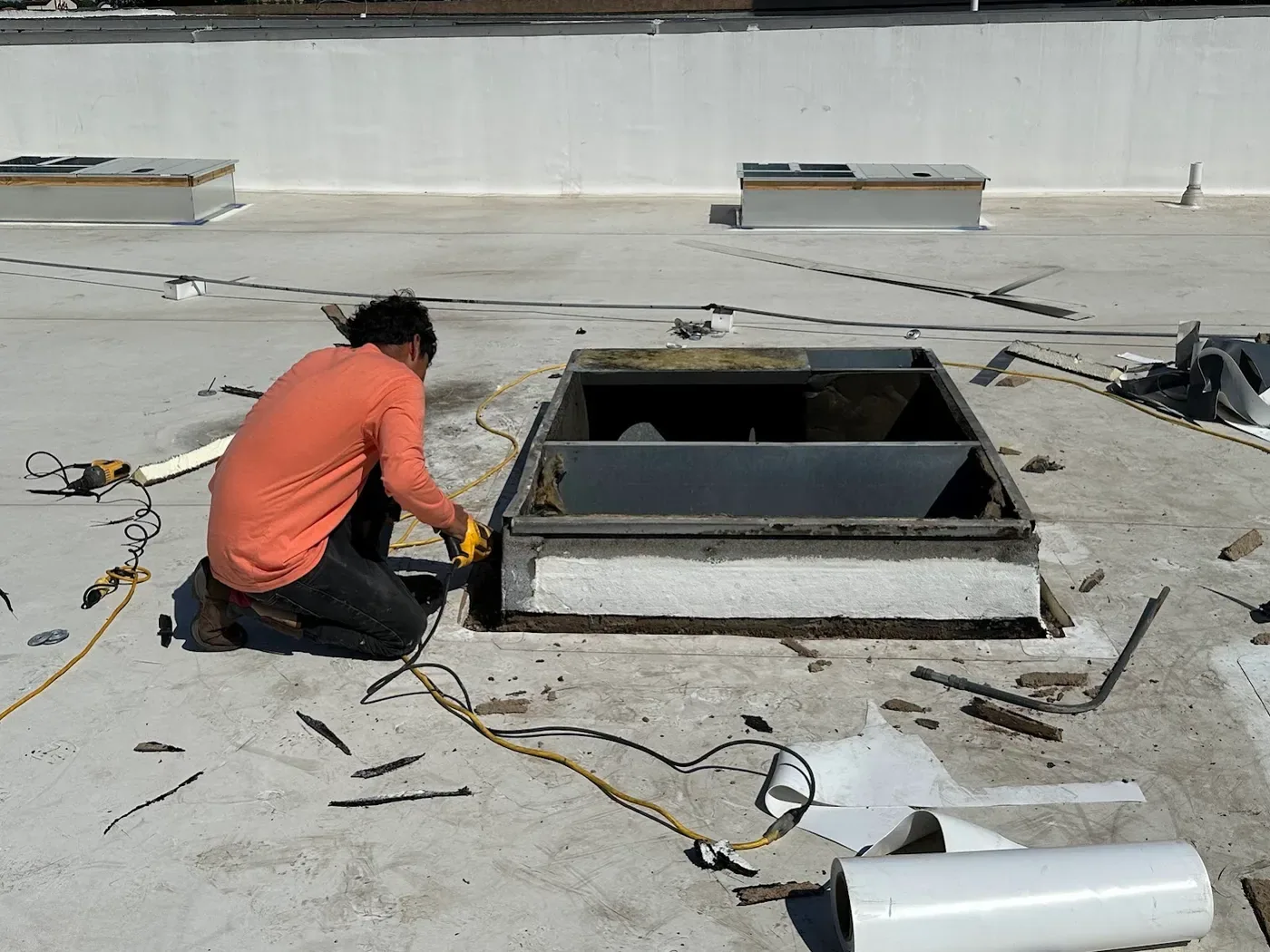
Water can stress a seam, lap, or old repair where a low section remains wet. We look for dirt lines, algae, displaced surfacing, fishmouths, blisters, splits, and sealant that has separated from the substrate. A probe can help determine whether a lap is bonded, while a careful surface check shows whether the membrane has become brittle or pulled tight around a curb. We do not enlarge a defect before identifying the repair boundary. When moisture is suspected below the sheet, a test location is agreed with the owner and closed with compatible materials.
The surrounding insulation and deck matter. A shallow pond above a sound substrate may call for maintenance or a targeted detail repair, while wet insulation, repeated leakage, or a depressed deck changes the scope. We distinguish surface water from trapped moisture and list any inaccessible section. That gives the owner a clear basis to compare a patch with a broader correction. We can also check for failed flashing at a nearby wall or penetration, because water may be entering at a detail rather than through the low point itself.
Find out whether the assembly is wet
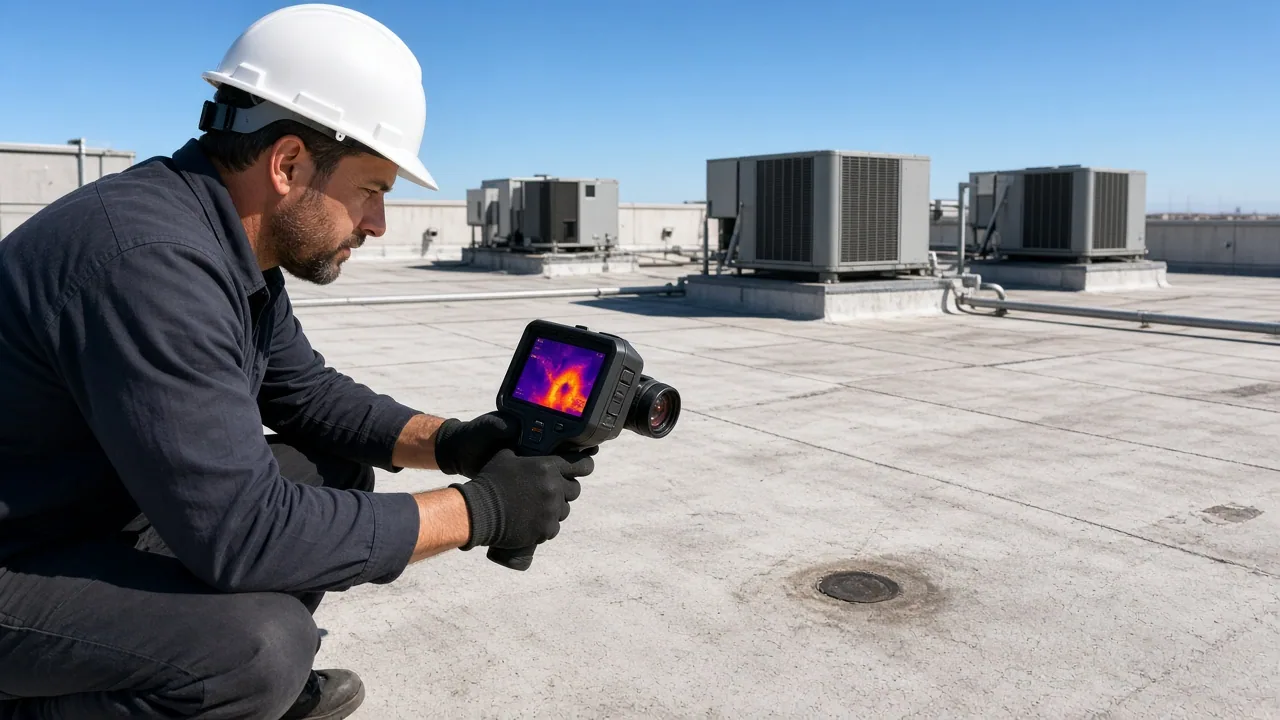
A wet ceiling tile and a visible pond may belong to separate paths. We compare the room report with roof penetrations, deck joints, drains, and earlier repair locations. Moisture scanning helps select a test area, but a thermal pattern is not a substitute for a cut or core when the assembly needs confirmation. We mark the test location and deck condition, then restore the opening. An occupied room requires interior protection and a contact who can release the space.
Murfreesboro's land-use plan includes manufacturing, distribution, medical, office, and food-production uses. La Vergne's official economic roster also includes distribution and manufacturing activity. I-24 and US 231 connect the regional movement network. These facts point to access and drainage as practical coordination items, not evidence about a particular roof. We plan around actual occupancy and findings. A distribution-center roof scope should show which drain or work zone must remain available.
Choose between clearing, patching, and slope work
Remove debris when it is the cause and the outlet can be restored safely. Repair an open lap or damaged membrane when the surrounding material remains suitable. If water remains because of the roof geometry, a lasting correction may require tapered insulation, a cricket, or another designed slope change. That work must preserve drain height, door and curb clearances, edge termination, and any roof-system requirements. We set the correction boundary from measurements and substrate checks, not from the outline of the visible puddle alone.
Coating is not a way to fill a depression, and a new membrane does not fix a low deck by itself. Before considering a recover, we check moisture, layer count, attachment, drainage height, and whether the existing surface will accept the proposed assembly. If those conditions do not support an overlay, replacement or localized tear-off may be the responsible option. A repair plan may include drain and scupper work or a recover evaluation, with each item described separately so the owner can see what solves the water path.
Set a safe work window
Drain cleaning, test cuts, membrane repair, and slope correction have different weather needs. We confirm access, staging, and interior restrictions before moving materials. Murfreesboro's NOAA normals include warm periods and nights at or below freezing, so the sequence should account for actual installation conditions. Those citywide averages are not a day-of forecast. We hold work when the substrate, surface, or weather will not support a sound tie-in.
Cost and timing depend on the area to open, layers to remove, outlet and edge details, wet insulation or deck repair, and permitted staging. We list discoveries separately from planned work. A maintenance visit can track drains and repair boundaries between capital projects. For roof work in the surrounding region, including the La Vergne service area, we confirm the address and access requirements before scheduling.
Close the work with a drainage record
At closeout, we photograph the drain, the corrected low area, the repair edge, and any section that remains under observation. records identify what was cleared, repaired, tested, or deferred. If the water path changes after work, the owner can compare the result with the original map instead of relying on memory. For a property with recurring ponding, we recommend repeat photographs from the same points after suitable rain conditions and a record of drain maintenance. That helps separate a one-time blockage from a geometry or substrate problem.
We keep the final scope tied to the assembly and the building's operating schedule. The crew closes temporary openings at the end of each shift, protects drains during nearby work, and confirms that the outlet is clear before removal of the work zone. The owner receives the repair limit and any follow-up item in plain terms. A defined seam repair or membrane puncture repair should appear as its own line when it is part of the ponding correction.
Commercial Roofing Questions
Does a puddle mean the roof must be replaced?
No. We check the outlet, membrane, moisture, deck, and how long water remains. A clear drain or localized seam repair may be enough; a depressed or wet assembly can call for a larger correction.
Can coating fill a low spot?
Coating protects a suitable surface, but it does not correct roof slope. We measure the low area and compare drain elevation before pricing a drainage change.
How do you tell a blocked drain from a low deck?
We inspect the strainer and outlet, then measure the surface route around the pond. If the outlet is open and the low area remains, we document the geometry and check the substrate.
Will an infrared scan prove water is trapped?
It can point to areas for testing. We confirm suspected moisture with an agreed test cut or core and document the layers before closing the opening.
What drives the cost of a ponding-water repair?
The outlet detail, amount of membrane to remove, wet insulation or deck, staging, and whether slope must change all affect the scope. We separate confirmed work from conditions that still need testing.
Related Roofing Work
More commercial roofing work connected to Ponding Water Commercial Roof Repair in Murfreesboro.
Map the standing-water area
Share the roof plan, drain locations, and any interior leak report. We will check the water path, document the assembly, and lay out a repair boundary or drainage correction.