
Commercial Roof Flashing Repair in Murfreesboro, TN
Murfreesboro flashing repair follows the leak path to a wall, curb, or penetration, then ties new material into a sound roof assembly.
Commercial Roof Flashing Repair
A wall transition can fail while the field membrane still looks serviceable. On a commercial roof in Murfreesboro, TN, we inspect the counterflashing, base flashing, termination, and nearby sheet before choosing a repair. Water may enter at a corner or curb and travel along the deck before it reaches the room below. We mark the reported interior location, compare it with roof details, and photograph the full transition. The repair boundary must reach sound membrane, secure metal, and a substrate that can hold the new tie-in.
Sealant alone is not a complete diagnosis. A gap may come from loose metal, a pulled termination, movement at a curb, or a wider membrane issue. We check whether the flashing is compatible with the roof system and whether the underlying area is dry. If insulation or deck condition is uncertain, we identify a test area before covering it. The owner receives a defined repair scope with any separate roof condition listed for follow-up, rather than a bead of sealant with no stated limit.

Inspect the whole transition
We start where horizontal roofing turns up a wall, curb, parapet, pipe, or equipment base. The walk checks the flashing height, surface condition, laps, corners, termination bar, counterflashing, and fasteners. At a curb, we look at all sides and the path between supports, not only the side above the reported stain. Metal may have opened at a joint while the membrane remains intact. A photo set records each face and the repair edge so a facility lead can tie the roof finding to an interior report.
Murfreesboro's annual precipitation normals make a complete water-shedding transition worth checking, but climate data do not diagnose one roof. We follow the actual detail and record whether water could bypass the visible gap. In the East Main Street Historic District, the city's downtown map shows an urban mix of commercial, residential, civic, school, and open-space uses. That is useful context for access and occupant coordination, not proof of any building's wall or roof construction. We confirm the real assembly before specifying materials.
Find how water gets past the detail
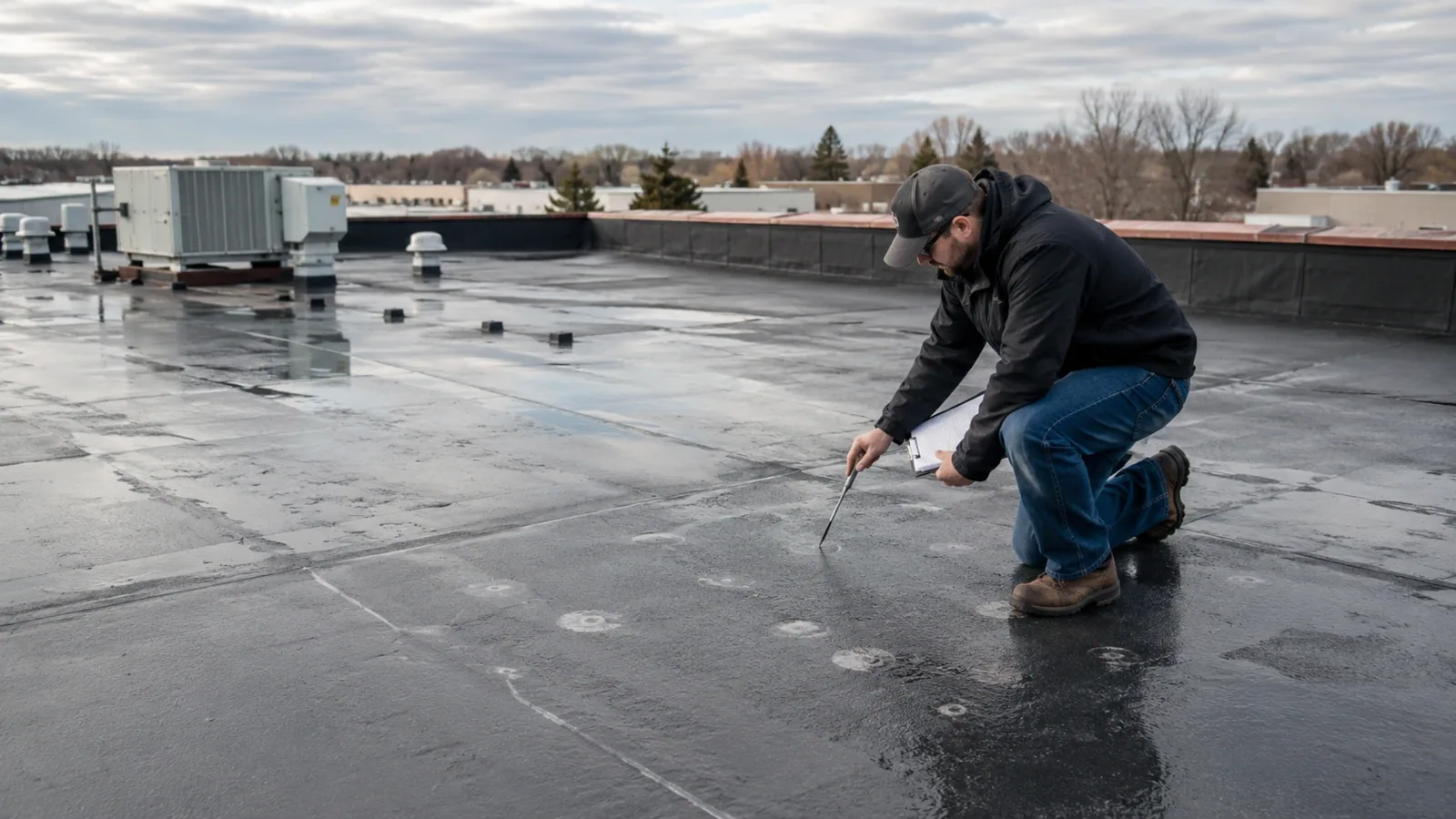
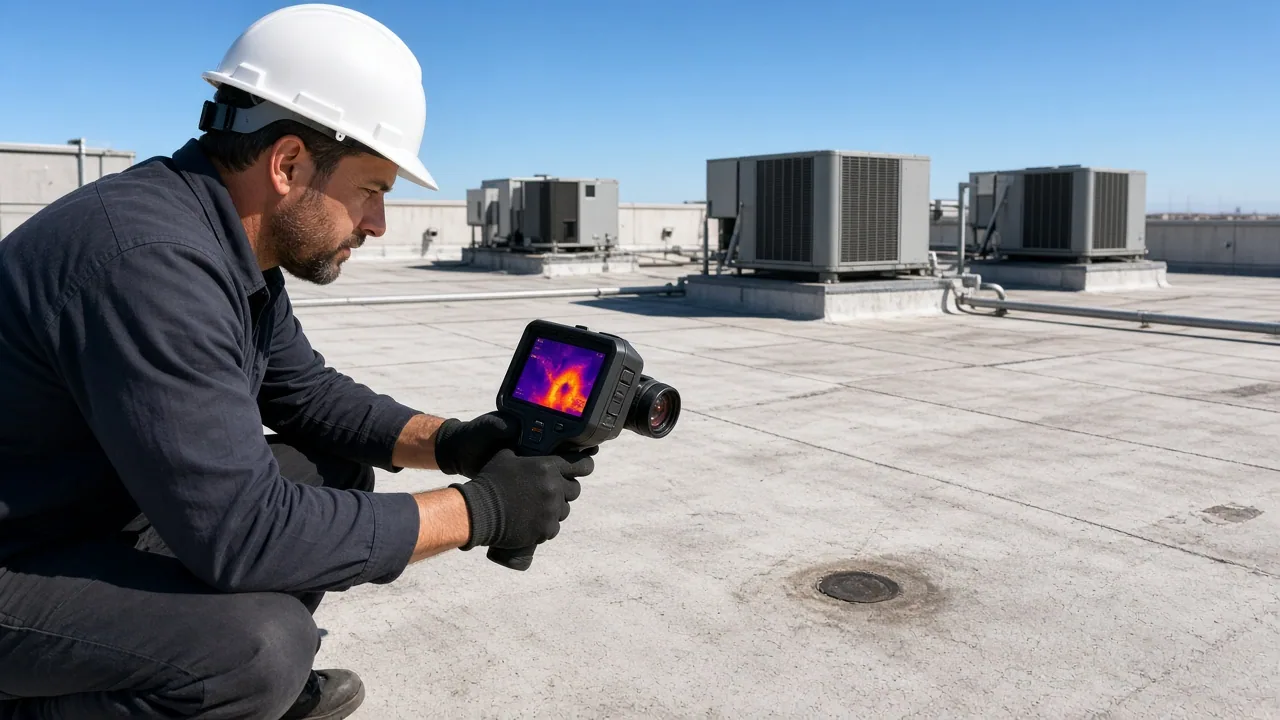
A flashing defect can be small on the surface and still leave a broad wet area below. We compare the leak timing with rainfall, rooftop equipment, wall joints, nearby drains, and previous patches. Moisture scanning may help select where to test, but a thermal reading is not conclusive. Where a test cut or core is needed, we agree on its location, protect the occupied space below, record the layers, and close the test opening before leaving. The report distinguishes what we saw from what remains behind a concealed wall or curb.
The city's downtown map names East Main Street Historic District, while the 2040 transportation plan includes improvements along Middle Tennessee Boulevard and other city routes. Those names identify broad local settings; they do not describe a particular roof. We keep the repair tied to the inspected property. When the opening reaches a membrane lap rather than a wall, a seam repair may be part of the scope. When the water appears near a low area, we also check the drainage path.
Match the material at the repair edge
Flashing materials must work with the existing roof. We identify the membrane type, surface treatment, and condition before selecting a patch or replacement detail. A new layer placed over dirt, moisture, or a loose termination can fail at the same boundary. We remove material only far enough to reach a bondable or mechanically sound edge, prepare the substrate, and install the transition using a compatible method. Corners, seams, and changes in plane receive close attention because water and movement concentrate at those locations.
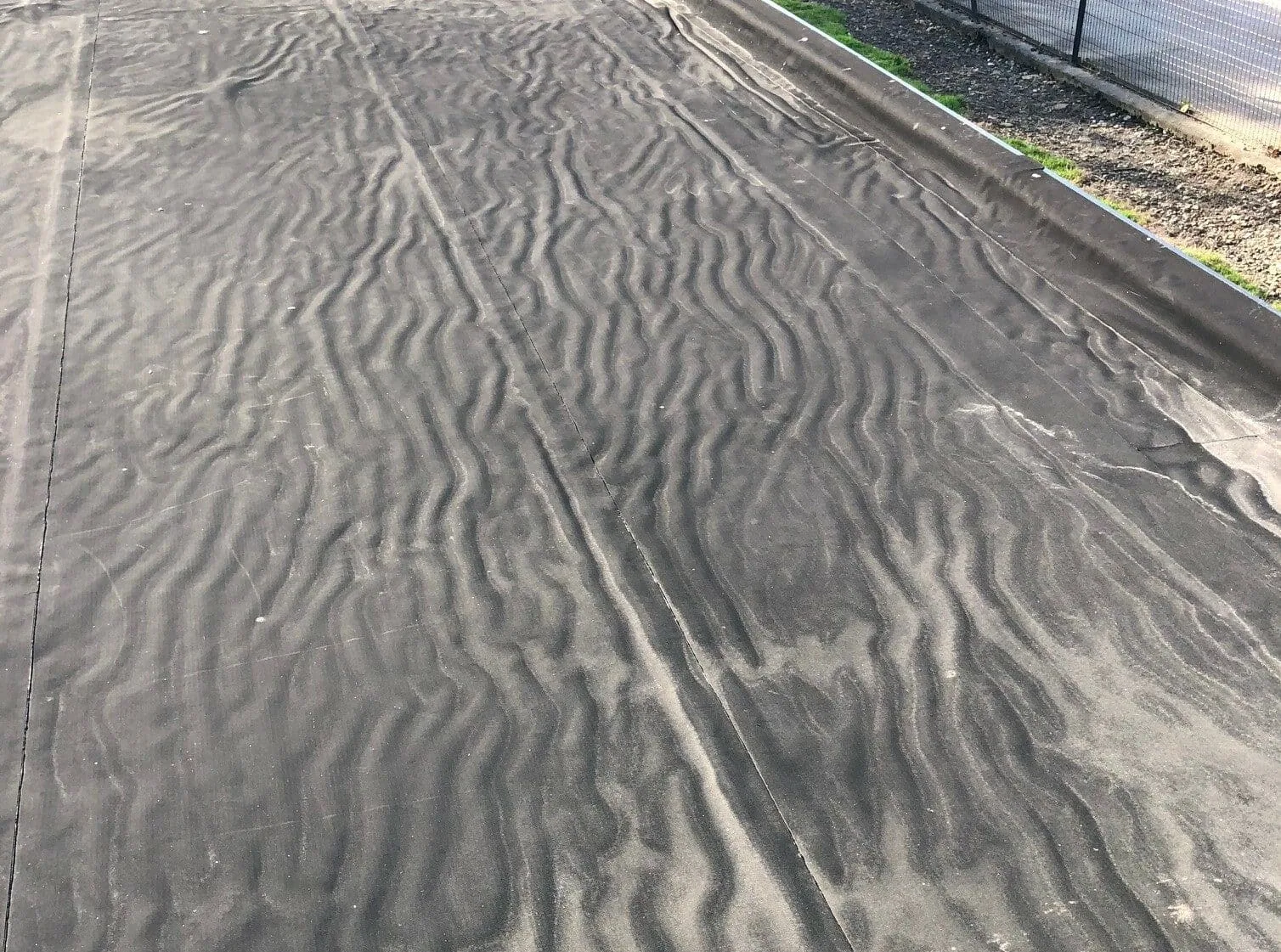
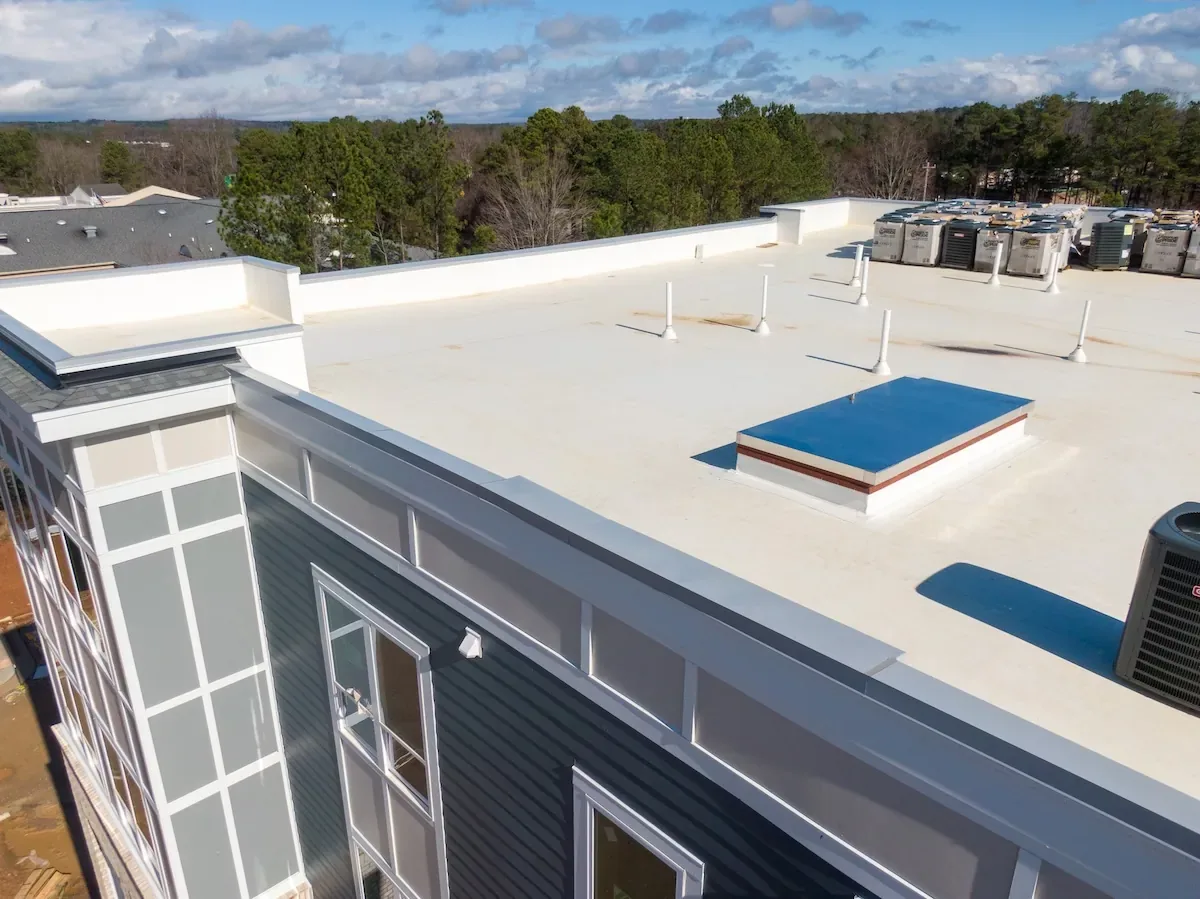
If metal is distorted or fasteners no longer hold, the work may include a new cleat, termination, counterflashing, or curb detail. A roof that has multiple layers, coating, or a prior recover needs additional review before a new flashing can be integrated. The TPO assembly and the EPDM assembly use different attachment and flashing approaches; we do not treat a product name as enough to select the repair. The field check sets the detail and the repair limit.
Set a repair boundary the owner can track
A localized detail repair makes sense when the surrounding sheet, insulation, and deck are sound. We mark the area, remove failed flashing, prepare the tie-in, and restore the transition. If wet insulation extends past the visible opening, the scope may need to widen to a dry boundary. Repeated failures at several curbs or wall lines can indicate broader attachment or aging concerns. We photograph each location and describe a separate quantity or section rather than folding unrelated findings into one lumped repair.
The choice may be a targeted patch, a curb reflash, replacement of a longer wall section, or a larger reroof when the assembly cannot support a dependable detail. A recover is considered only after moisture, layer count, edge height, and compatibility are reviewed. We can pair the detail repair with a commercial roof inspection or replacement evaluation, keeping immediate protection distinct from capital planning. The report records exclusions and any access limits that affected what could be confirmed.
Coordinate access and close the roof each shift
Work around curbs and walls may require mechanical equipment shutdown, lift access, interior protection, or a clear path for material movement. We confirm the site contact, roof access, work zone, and loading window before scheduling. Murfreesboro's commercial route network includes I-24 and US 231, so delivery and arrival timing can be coordinated with the property rather than assumed. The route names are local context, not a promise about travel time. Each day's work ends with an inspected tie-in, covered materials, and drains free of debris.
Rain risk matters while flashing is open. We set the repair area so the crew can close it before a weather hold, and we do not leave a temporary condition without identifying it to the facility lead. For urgent entry, our emergency roof response can stabilize the opening while the permanent detail is prepared. A Downtown Murfreesboro roof walk follows the same building-specific checks, with access arranged for that property's occupants and roof assembly.
Record the finished transition
At closeout, the owner should be able to see which face or penetration was repaired, what material was installed, and where the repair ends. We provide dated photos of the original condition, prepared surface, completed tie-in, and nearby reference points. records identify any area that still needs testing or a separate repair. The record is useful when another leak is reported because the property team can compare the location and timing with the work already completed.
We also verify that the final transition sheds water into the intended drainage path and that the perimeter is secure. If the owner has a roof plan or maintenance file, we can label the repair to match the building's section names. A condition report can carry the finding into a planned repair schedule. The goal is a closed detail and a clear handoff, not an unmarked patch that the next site contact must rediscover.
Commercial Roofing Questions
Can a flashing leak be fixed with new sealant?
Only when the surrounding detail is sound and the sealant is the failed component. We check the termination, metal, membrane, and substrate before selecting a repair material.
Why is the ceiling stain far from the roof opening?
Water can travel along insulation, deck joints, framing, or conduit. We compare the room report with nearby roof details and test where the assembly needs confirmation.
Can you repair one side of a rooftop curb?
We inspect all sides first. If the remaining faces and curb base are sound, the work can be limited to the failed area with a documented tie-in.
What happens if the flashing sits over wet insulation?
We open an agreed test area and establish how far moisture extends. The repair boundary moves to dry, stable material before new flashing is installed.
Does the whole roof need replacement after one flashing failure?
Not automatically. We compare the local detail with the surrounding field, attachment, moisture, and deck. A broader scope is recommended only when those findings support it.
Related Roofing Work
More commercial roofing work connected to Commercial Roof Flashing Repair in Murfreesboro.

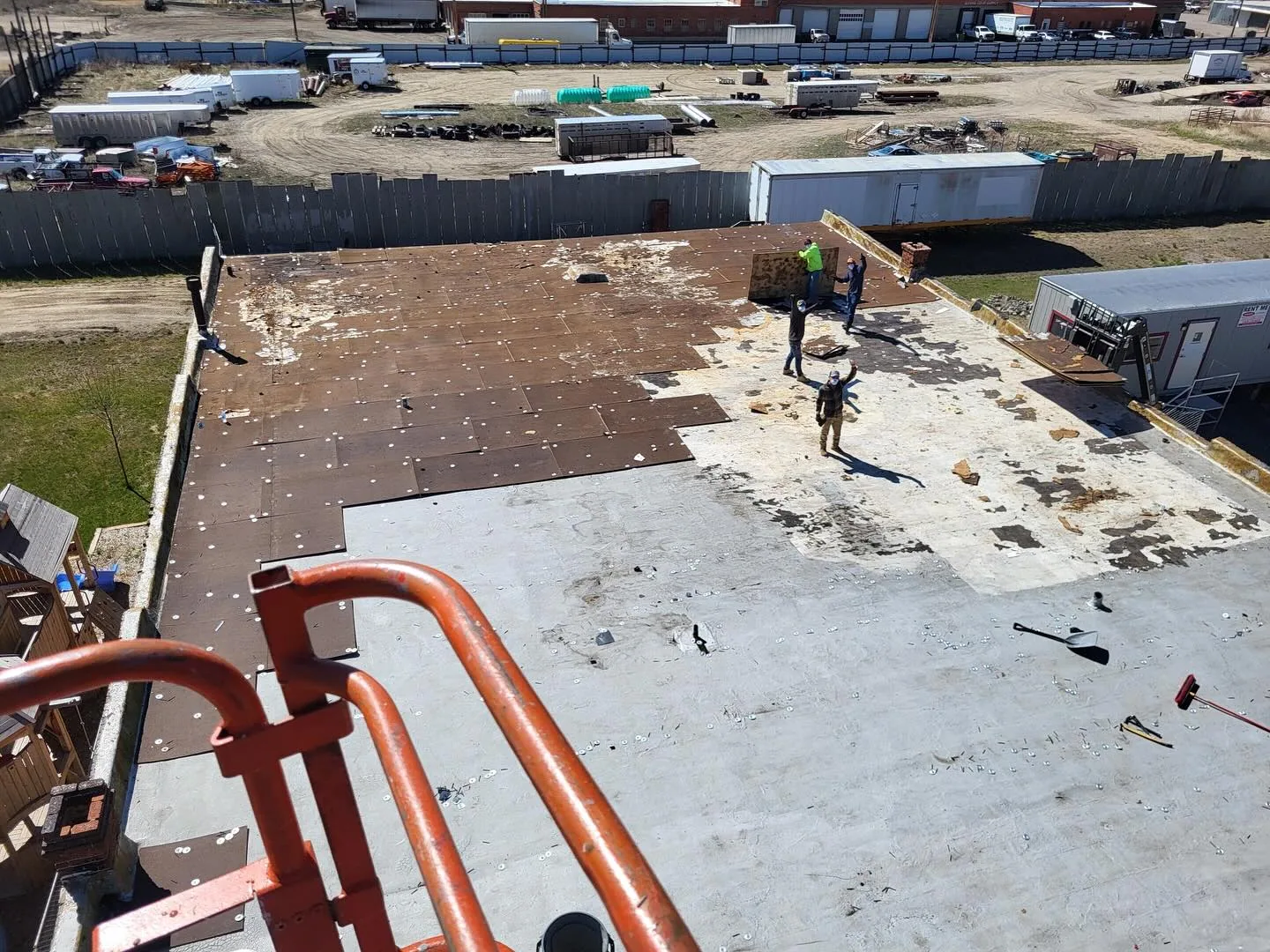
Trace the flashing leak
Share the reported room, roof access contact, and any prior repair notes. We will inspect the transition, check the surrounding assembly, and return a repair boundary with photos.