
School Roofing in Murfreesboro, TN
Murfreesboro school roof work needs clear student routes, dry-in limits, and a sound repair boundary. We inspect, document, and phase the work by building.
School Roofing
A school roof has to be ready before the first hallway fills. In Murfreesboro, TN, we set the roof walk against classroom use, bus movement, kitchen deliveries, and the doors that must remain open. A leak over a corridor can travel past the ceiling stain, so we map the room, roof section, drain path, and any equipment curb before opening a seam. The first scope protects the space below while identifying what the roof needs.
The city’s downtown map shows school, civic, commercial, residential, and open-space uses in the same urban pattern, including the East Main Street Historic District. That mix makes access and staging a property question, not a roof assumption. We check the actual assembly and arrange the work zone with the school contact. A commercial roof inspection can establish the condition before a repair window is set.

Set the Work Zone Before Students Arrive
Start with the calendar and the ground. We locate student entrances, bus lanes, delivery doors, playground areas, and the lift position, then agree on which section can be isolated. Roof access should not send a crew through a student route. Material drops and debris removal need their own path, and the daily opening must be small enough to close before the crew leaves. The school contact gets a clear boundary and a handback time. Planned roadway work includes Greenland Drive and SR 99/New Salem Highway; we confirm the school’s current entry route before setting a delivery window.
When the building stays occupied, a phased occupied-building roof scope keeps each work area defined. The plan names the roof section, interior protection, noise window, and who can release the next area. A maintenance staff member can also flag rooms where a temporary ceiling cover or equipment protection is needed. That information changes sequencing before material is on the roof, when adjustments are still simple.
Trace the Leak Past the Classroom
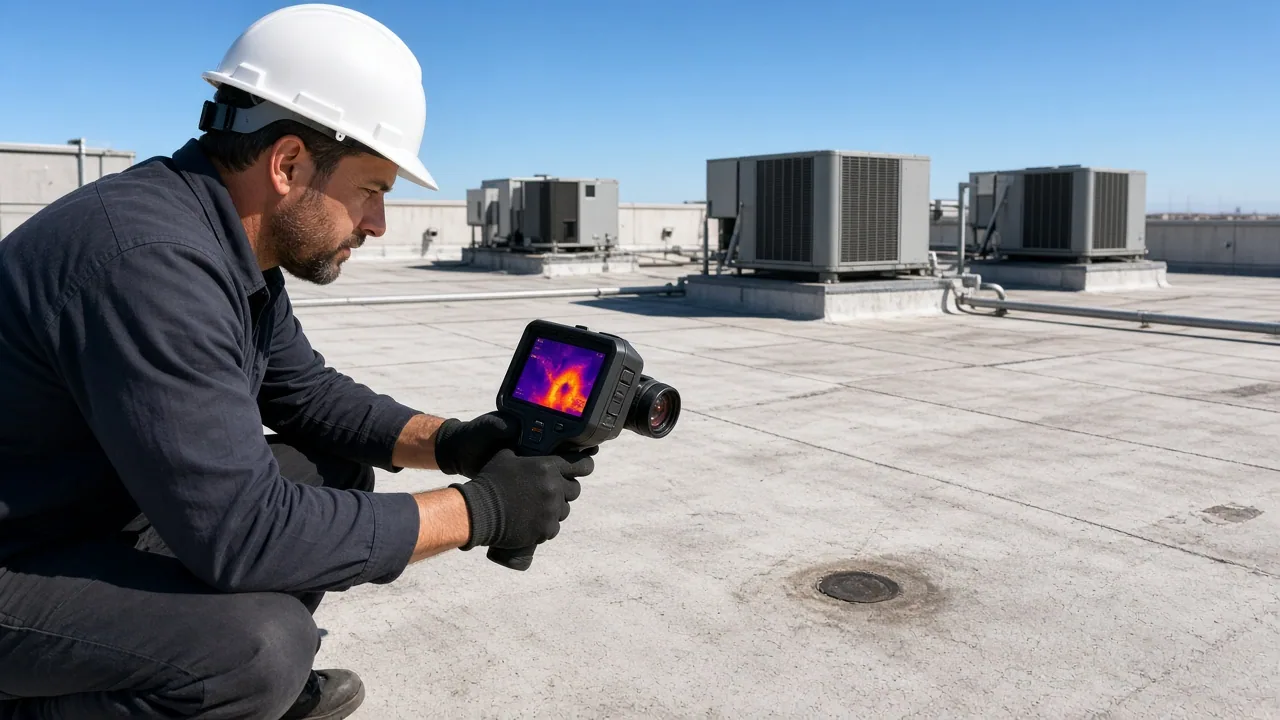
Ceiling marks identify where water appeared, not necessarily where it crossed the roof. We inspect seams uphill from the report, then check drains, parapets, penetrations, flashing corners, and transitions between additions. A roof can hold several membrane generations, so we record the material and prior patches before choosing a repair method. Where layers remain uncertain, a small test area can confirm whether insulation is wet and where sound material begins.
At Murfreesboro 5 N, annual precipitation averages 55.92 inches across 134.5 days with measurable rain. Facilities staff can log which drain slows after rain and whether the same corridor reports moisture again. A drain and scupper repair addresses outlet conditions; it does not replace a membrane repair when water enters at a seam. We map each finding to its own work item.
Match the Repair to the Roof in Place
School additions often create different roof details side by side. We identify whether the field is TPO, EPDM, modified bitumen, built-up roofing, metal, or a coating before preparing a patch. Welded sheet, adhered lap, and exposed-fastener panels need different surface work. We also check edge metal, curb height, insulation, deck attachment, and how the older area ties into the later one. A system label in a maintenance file is a starting point, not a field confirmation.
The city’s 2024 code adoption applies to covered commercial work with local amendments. When a school project changes the deck, framing, assembly, or scope, we confirm the applicable review with the project team before pricing. A TPO roof repair begins with sound weldable membrane; a college roof assemblies follows the installed plies and flashing details. The repair boundary follows what the inspection finds.
Plan for Heat, Rain, and Storm Findings
Weather changes the order of roof work. Heat affects crew hours and material handling; a passing shower can close a tear-off area that is not ready for dry-in. We set a daily limit, keep temporary protection available, and stop before the exposed section outruns the weather window. After hail or wind, the inspection separates loose metal, punctures, and displaced flashing from marks that do not affect the roof system.
In July 2024, an EF-0 track ran 3.38 miles across Murfreesboro. Estimated peak wind reached 75 mph, and minor roof damage was recorded in the broader event. That history makes a timely visual check useful after a reported storm, but the school’s actual roof decides the scope. For a documented event, hail damage roof repair or wind and tornado roof repair starts with dated photos and a marked section plan.
Separate the Urgent Room from the Capital Scope
A localized repair can be the right call when the surrounding membrane is secure, the insulation is dry, and the deck holds the detail. If multiple test areas are wet, seams keep reopening, or attachment has failed across a broad field, another patch can hide the larger condition. We mark what was tested, what remains inaccessible, and where removal would begin. The owner can compare repair, recover, or replacement with the same documented boundary.
For a recover, added height at drains, doors, and rooftop equipment needs checking before the assembly is chosen. A hospital roof access can show whether the existing layers support that option. Insulation and cover-board replacement is scoped where wet or damaged material is found, not across an assumed area. A a roof capital plan can keep emergency protection separate from work scheduled for a school break.
Leave a Record the Facilities Team Can Use
Closeout needs to identify the roof area, repair edge, drain or curb detail, materials, and any follow-up item. We take photos that connect to a marked plan and record what was tested, what was replaced, and what could not be reached safely. The facilities team should be able to find the repaired section without relying on a verbal handoff. If a later phase is planned, the record shows where this scope stops.
Access around the East Main Street Historic District and other parts of the city depends on each school's entrances and schedule. We confirm the actual gate, staff contact, and roof access before mobilizing. Send the roof plan, room reports, prior repair records, and dates the building can release. We will inspect the assembly, set the work boundary, and return a written scope for the school’s operating calendar.
Commercial Roofing Questions
Can roof replacement be completed during a school break?
A break can provide a larger work window, but weather, deliveries, and the number of sections still set the daily limit. We walk the roof first, identify what can be removed and dried in, and give the school contact a sequence with handback points.
What should facilities send before the inspection?
A roof plan, leak locations, room photos, addition records, and any roof access restrictions help us route the walk. We verify the actual assembly on site before treating older records as a system specification.
How do you protect classrooms under an active repair?
We mark the roof section above the affected space, agree on interior protection, and keep the opening within a shift-sized dry-in limit. The school contact knows the work zone and when the room can return to normal use.
Does hail require a full school roof replacement?
No. We document the affected membrane, edge metal, and flashings, then test any suspect area. The scope can remain a repair when the surrounding assembly is sound; broader wet or loose areas need separate pricing.
Can you inspect multiple school buildings under one program?
Yes. We map each roof separately, keep its findings tied to the correct building, and group work by access window or system condition. That makes the capital decision useful without assuming every roof needs the same treatment.
Related Roofing Work
More commercial roofing work connected to School Roofing in Murfreesboro.
Plan a School Roof Walk
Send the roof plan, affected rooms, school calendar, and access rules. We will inspect the assembly, define the work zone, and return a scope the facilities team can schedule.