
Commercial Roof Drains and Scuppers in Murfreesboro, TN
Drain and scupper repair in Murfreesboro, TN checks low points, overflow paths, crickets, and roof tie-ins before standing water reaches the deck.
Commercial Roof Drains and Scuppers
A drain bowl can be clear while water still sits on the roof. For a commercial building in Murfreesboro, TN, we trace the drainage path from the field to the outlet, checking slope, crickets, scuppers, and overflow points along the way. The repair depends on where flow slows and what the surrounding assembly can support. A low spot, a crushed leader, and a blocked outlet call for different work.
We start with the roof plan, a walk after the area has begun to dry, and the building's use below. Then we mark the standing-water boundary, identify the outlet serving that section, and document any membrane or flashing damage near the flow path.
Follow the Water Past the Outlet
Water may collect because the drain is obstructed, the bowl or strainer is damaged, the piping is restricted, or the roof has lost slope. We clear the work area and inspect what can be reached without removing material. A roof inspection records the outlet, surrounding membrane, and conditions in the field. We also check scuppers and overflow routes so a primary drain issue does not leave water with nowhere else to go.
NOAA normals at the Murfreesboro 5 N station show 55.92 inches of mean annual precipitation and 134.5 days with measurable precipitation. That recurring water load makes drainage condition a maintenance item, but it does not tell us which outlet or roof section has a problem. We inspect the property and document the actual flow path.
We also record whether the water reached the outlet, where it stopped, and whether the roof was still receiving runoff during the walk. A dated photo from the field and another at the bowl give the next crew a comparison point. If the drain is below a service platform or HVAC line, we mark the access constraint before setting a repair window.
Check the Cricket, Field, and Low Point
A cricket should direct water toward a drain or scupper without creating a new dam at its high side. We look for settled insulation, reverse slope, displaced saddles, and seams that cross a low point. A level or laser can help compare elevations across the roof section. We photograph the readings and identify where the ponding begins instead of calling every dark area a drainage defect.
On a roof with repeated ponding, the next step may be localized correction or a wider tapered insulation plan. The deck condition and existing assembly determine whether the slope can be adjusted without a larger tear-off. We review the drain count, overflow arrangement, and penetrations before setting the boundary. If the membrane has already split or released around the low point, the repair scope needs to include both the water path and the damaged surface.
Repair the Bowl and Its Surrounding Details
A drain replacement is only as reliable as its connection to the roof. We check the bowl, clamp ring, strainer, membrane termination, and piping connection. On a scupper, we inspect the opening, sleeve, metal edge, and the face below for signs of leakage. The replacement detail must suit the roof system and leave the outlet accessible for future cleaning.
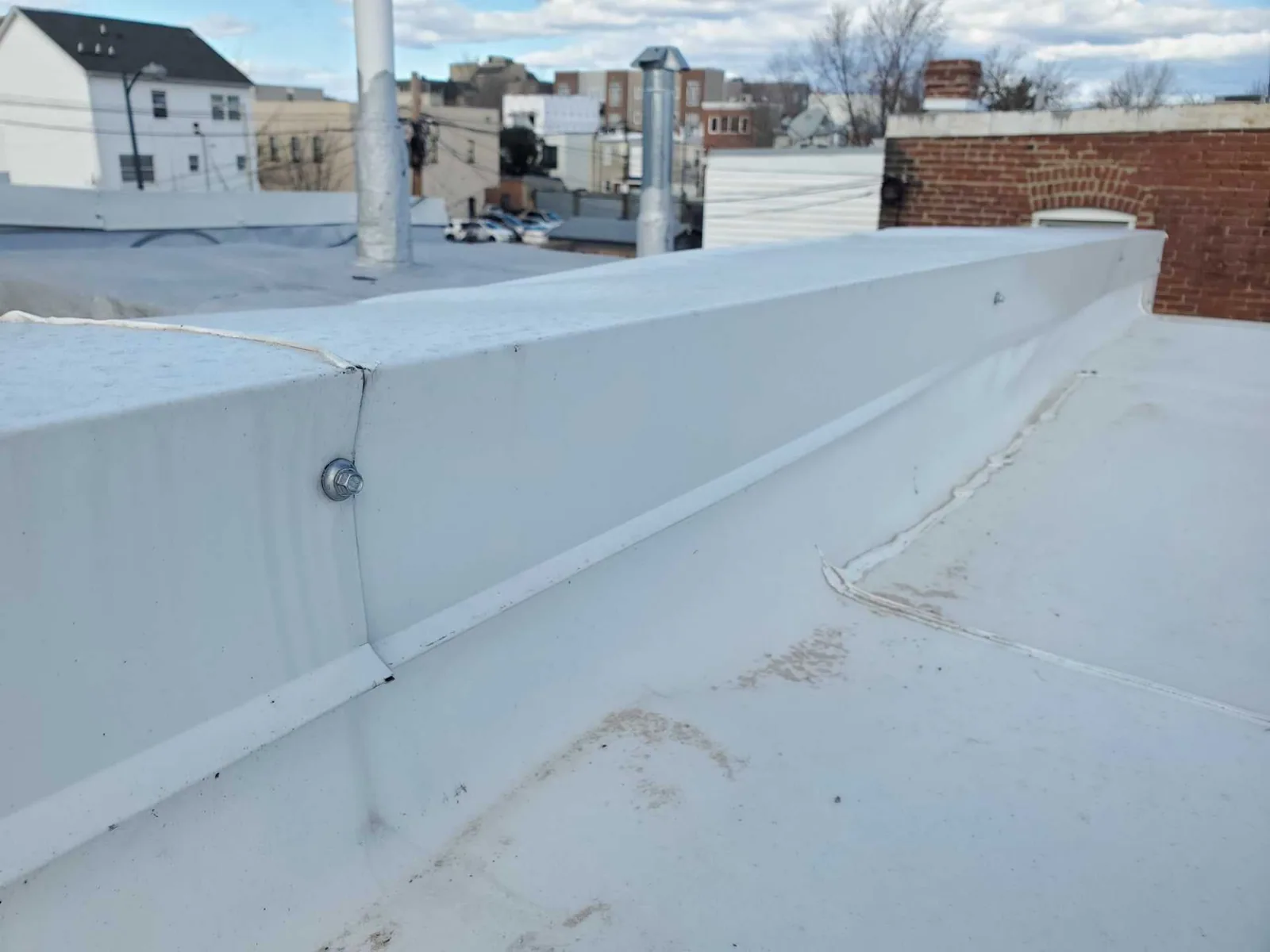
Cold nights are part of local roof maintenance. NOAA station normals record roughly 89 days per year with minimum temperatures at or below freezing. Before sealing around a drain, we confirm the substrate is dry and the repair materials can be installed within their specified conditions. A scupper and edge review can also catch a loose metal transition that directs water behind the wall.
Keep the Overflow Path Open
Primary and secondary drainage need to work as a pair. We verify the overflow opening is not covered by a coating, blocked by debris, or sealed by an earlier repair. Where an overflow discharges at a wall, we check for staining and failed flashing without assuming the mark identifies the cause. We record the route to grade and any building access affected by the outlet.
Medical-commercial and office uses are part of the planned land-use setting along Medical Center Parkway. At those properties, a drain correction may need a work window that keeps entrances, tenant areas, and rooftop equipment reachable. We set staging and protection with the facility contact, then verify the drain area after repair. A Medical Center Parkway roof walk can be coordinated around the actual property schedule.
Compare a Local Fix With Slope Correction
If debris is the only obstruction and the roof field drains correctly, a cleaning and maintenance plan may be sufficient. A broken bowl, loose flashing, or restricted leader needs a repair. Where the field holds water after outlets are open, we compare a localized tapered section with broader slope correction. The maintenance schedule should then specify when the outlet is checked, what condition needs a call, and who can access the roof.
Cost and schedule change with drain location, piping access, ceiling protection, insulation depth, and how much roof must be opened. We separate the drain correction from membrane replacement or deck work if those conditions extend beyond the outlet. The written scope identifies the roof section, flow direction, tie-in materials, and final water check. A photo-backed condition record helps the owner compare recurring ponding observations across service visits.
Leave a Checkable Flow Path
After the work, we clear debris, inspect the bowl or scupper, and verify where water exits. A follow-up walk after rainfall can show whether the corrected area drains as intended. We photograph the completed tie-in and record any low area that remains outside the repair boundary. The owner has a practical starting point for the next inspection instead of a vague record that water was present.
For buildings near Bradyville Pike or New Salem Highway, vehicle access and staging may change by property and shift. We coordinate the delivery window with the facility contact and keep drains clear of packaging and removed material. If the roof plan is outdated, we mark outlet locations during the walk and return a revised sketch with closeout photos. The sketch also records the overflow and any low point that needs later review.
Send the roof plan if available, recent ponding photos, drain locations, and any interior leak report. We can trace the section, inspect the outlet and slope, then give the owner a defined repair or maintenance scope.
Commercial Roofing Questions
Why does water remain when the drain strainer is clear?
The outlet may be clear while a low spot, reverse slope, restricted piping, or poor cricket keeps water from reaching it. We trace the flow path and mark the boundary before recommending a correction.
Should we add more drains to stop ponding?
Not before checking the existing slope, outlet capacity, overflow path, and roof assembly. We inspect the section and compare a local correction with added drainage only when the roof layout supports it.
What should a scupper repair include?
The scope should address the opening, sleeve, metal edge, membrane connection, discharge, and any wall flashing in the affected area. We photograph the repaired transition and verify the outlet is not obstructed.
Can standing water damage the roof?
Persistent ponding can expose seams and details to longer moisture contact and may reveal a slope or insulation problem. We document the depth and extent we observe and check whether the deck or membrane has changed.
When is tapered insulation part of the drain repair?
A tapered section is considered when the outlet works but the roof field still does not direct water to it. We confirm deck condition and assembly limits before defining that larger scope.
Related Roofing Work
More commercial roofing work connected to Commercial Roof Drains and Scuppers in Murfreesboro.

Trace the Drainage Path
Send the roof plan, outlet locations, and photos taken after the area begins to dry. We will inspect the drain, scupper, slope, and adjacent membrane, then set a written repair or maintenance scope.