Cool Roof Installation in Murfreesboro, TN
Compare reflective roof options in Murfreesboro. We check the assembly, insulation, drainage and attachment before setting a coating or replacement scope.
Cool Roof Installation
A reflective roof changes how the exterior surface absorbs sunlight, but it does not replace insulation or fix a wet assembly. For a commercial building in Murfreesboro, TN, we first check the roof condition, deck, seams, drains and existing thermal layers. Then we compare a compatible coating, membrane replacement or recover against the building's heat load and maintenance plan. That sequence keeps the decision tied to the roof that can be inspected, not just a light-colored product sample.
NOAA normals for the Murfreesboro 5 N station show about 48 days in a year reaching at least 90°F, alongside roughly 89 days with minimum temperatures at or below freezing. Those conditions make surface heat, moisture control and seasonal movement useful design checks. The temperature record is a climate benchmark, not a promise of a particular utility bill or indoor result.
Check the assembly before choosing reflectance
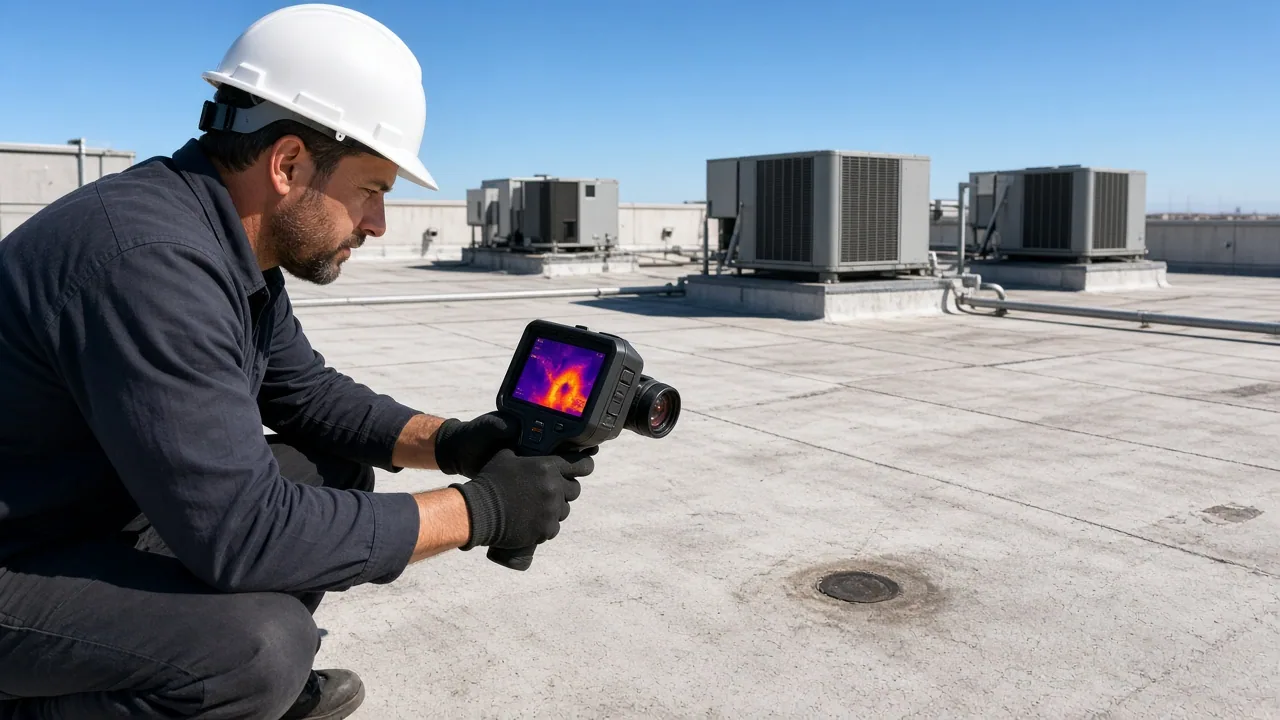
Start with the membrane type, surface condition, insulation thickness where known, attachment, roof slope and any prior coatings. A reflective top layer can only perform as part of an assembly that is dry, secure and detailed correctly at edges and penetrations. Blisters, wet insulation, loose seams or a deteriorated deck need attention before a coating is considered. We photograph representative sections and use test cuts where the roof surface cannot show what is below.
Office and business-park areas in Murfreesboro can include medical, technology and laboratory uses; general industrial uses can include manufacturing, warehouses and distribution. Those categories may bring different equipment loads and hours, but they do not establish a property's exact roof construction. A hands-on inspection records the assembly and visible defects. A moisture survey can help select areas for confirmation before new material covers the roof.
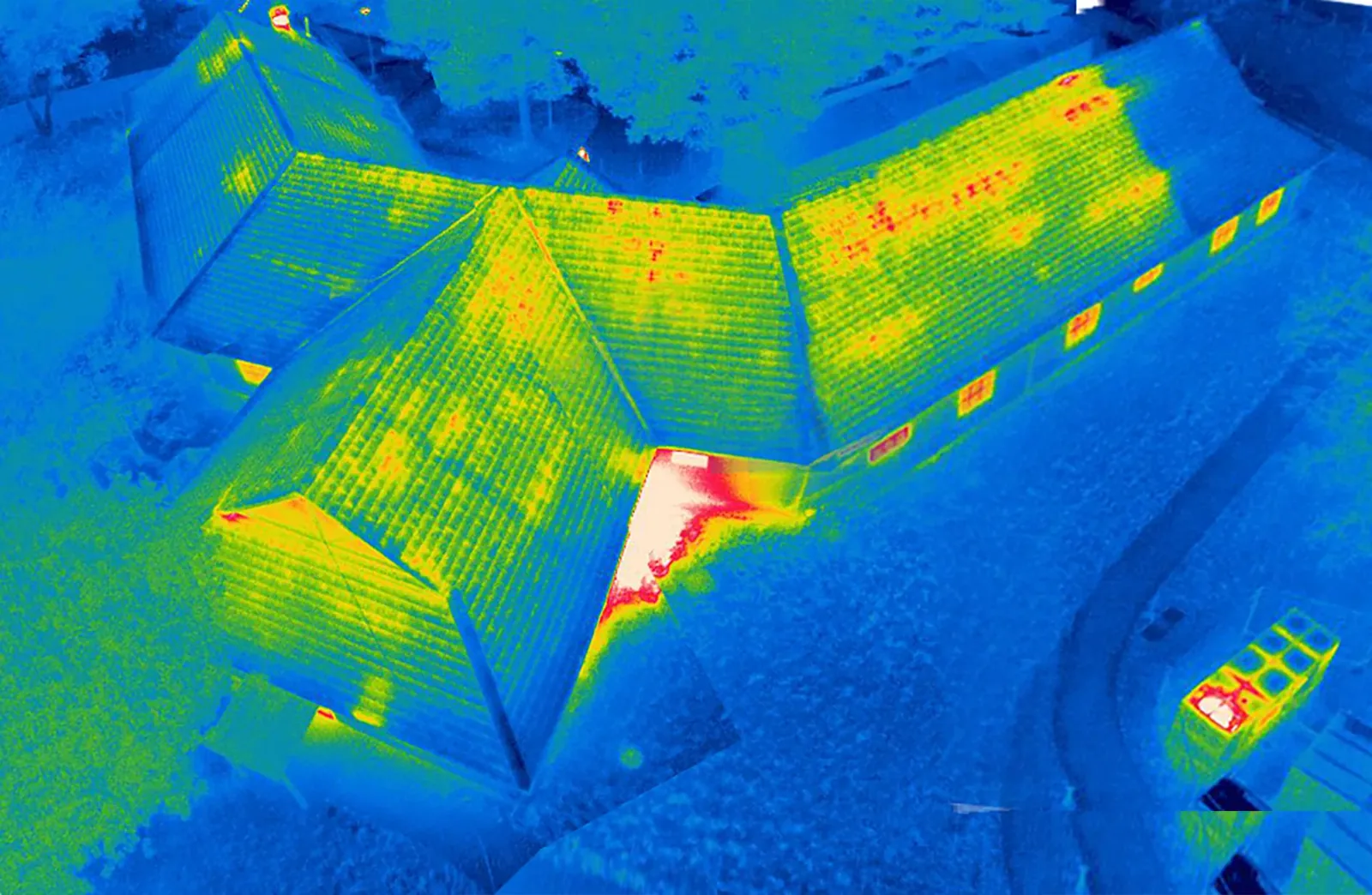
Separate the goals. A reflective surface may reduce solar absorption at the exposed membrane, while insulation limits heat flow. Ventilation, rooftop equipment, controls and internal process loads also affect indoor conditions. Reflectance does not replace insulation or mechanical evaluation. If the building has hot rooms, document where and when they occur before treating the roof as a cause.
Compare coating, recover and replacement
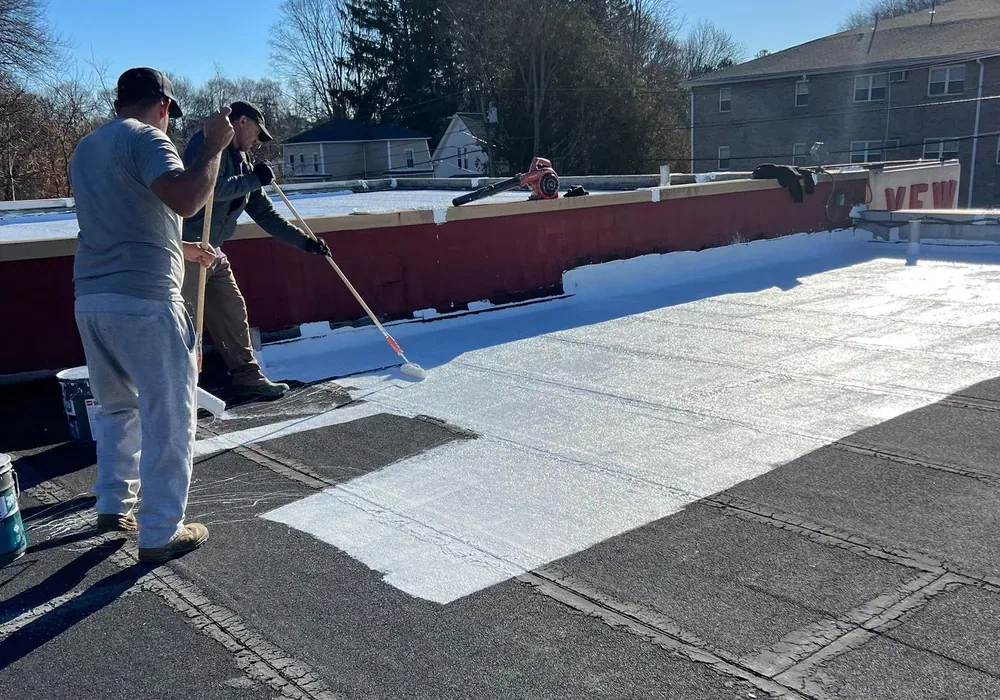
A coating may fit a dry, stable roof with compatible surface preparation and sound seams. The proposal should identify cleaning, repairs, primer, reinforcement at transitions, dry-film requirements and weather conditions needed during application. A coating cannot correct ponding, replace saturated insulation or secure a failing deck. If the substrate is uncertain, test before quoting a system that depends on adhesion.
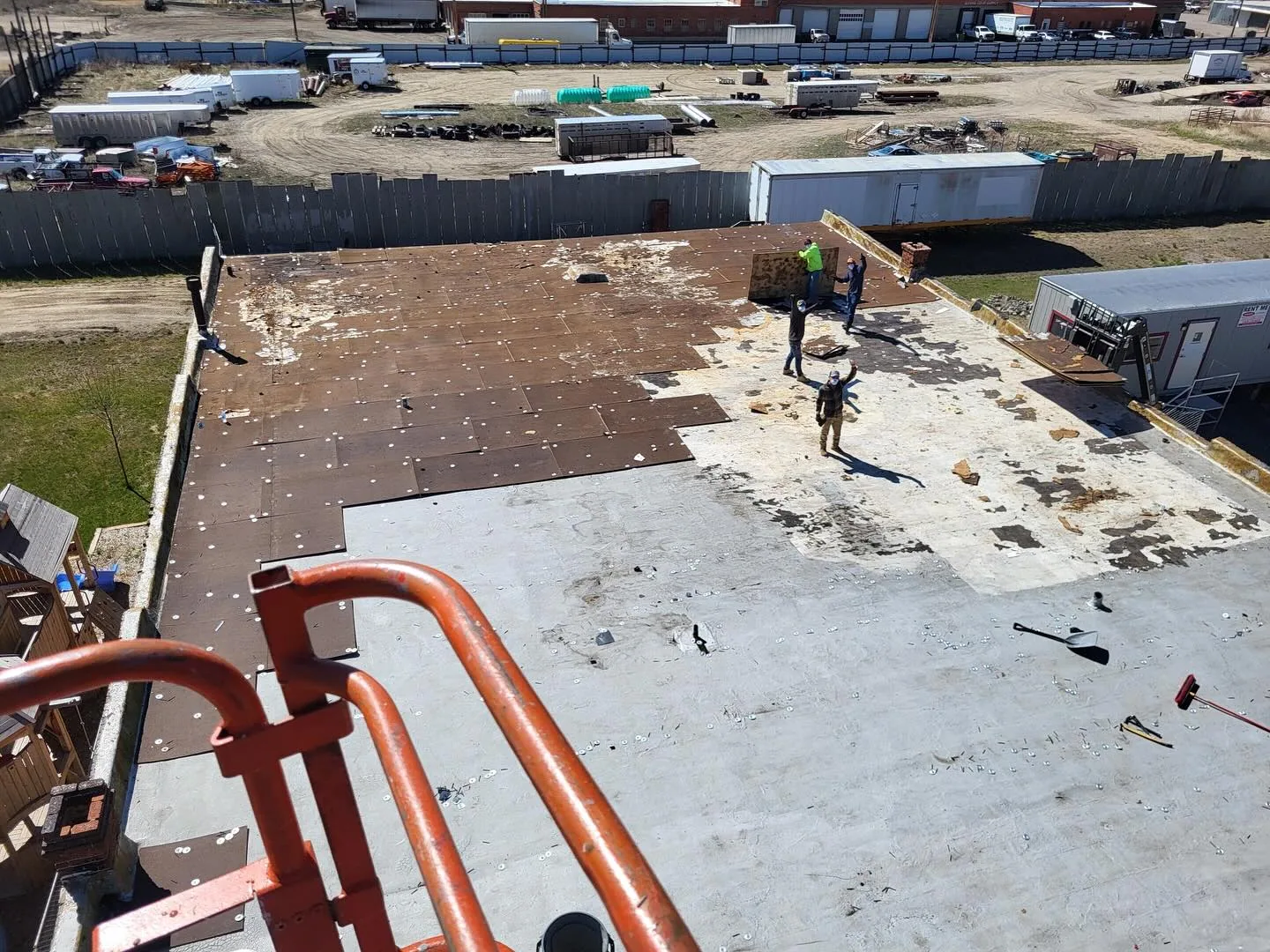
A recover adds another assembly and changes elevations at drains, curbs, parapets and doors. Check layer count, attachment, moisture, deck condition and drainage before adding height. Tear-off reveals more of the roof deck and gives the designer a chance to rebuild slope or insulation, but also brings debris, staging, interior protection and a longer open-roof sequence. A coating restoration should be compared with a recover or replacement using the same measured roof sections.
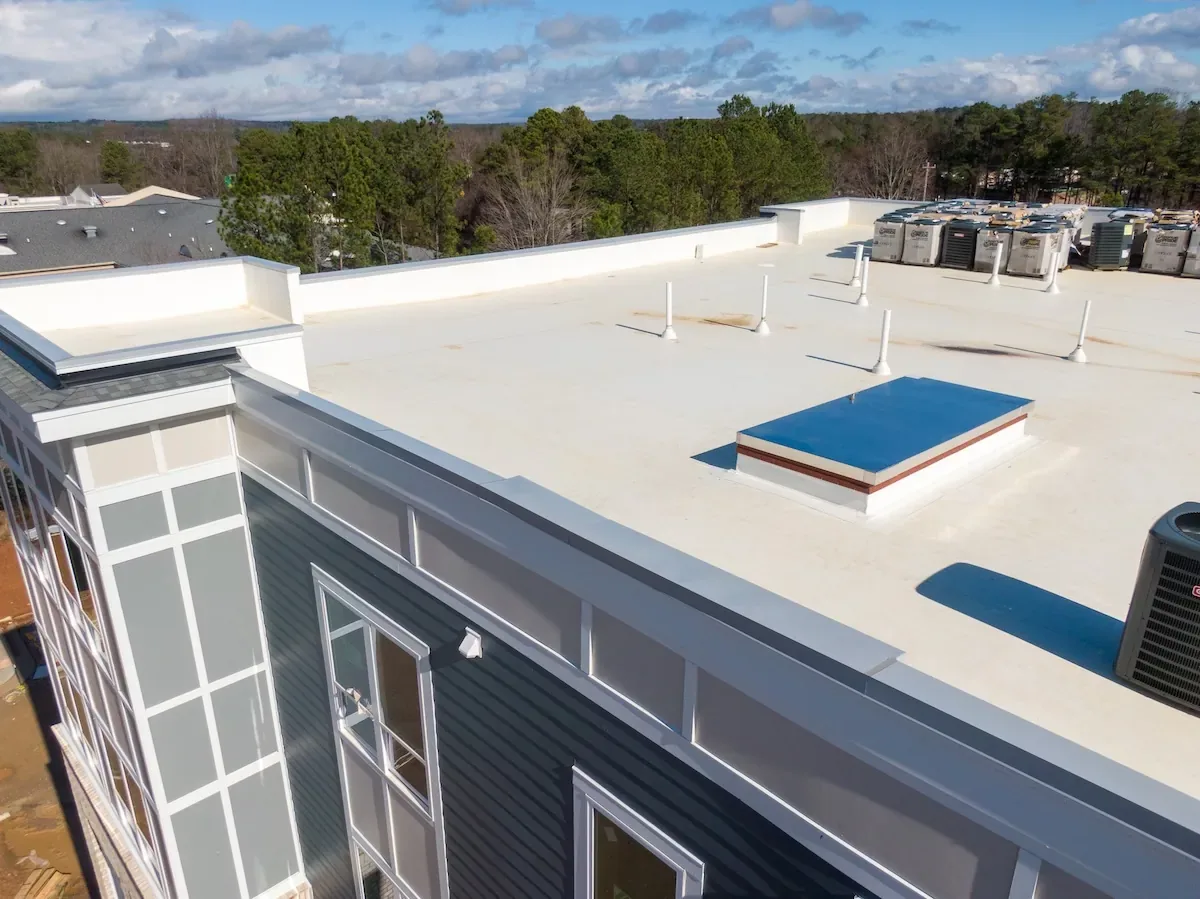
Membrane choice follows the assembly and access plan. A TPO roof can have a reflective surface, but seams, flashing, attachment and substrate remain part of the decision. Do not assume every white membrane qualifies as the same cool-roof system or that a coating can be applied to any existing product. We identify compatibility and maintenance requirements in the scope before selecting a system.
Protect drainage and edge details
A changed surface does not fix a blocked outlet. Inspect drain bowls, strainers, scuppers, overflows, crickets and low areas. Murfreesboro averages 55.92 inches of precipitation and 134.5 days with measurable precipitation in the 1991-2020 normals at the station; water management deserves a line in the scope. If the roof holds water, record the location and depth, then check slope, insulation and deck movement before a coating or overlay.
At a parapet or edge, confirm flashing height, metal attachment, termination and the way the top layer turns into the wall detail. At equipment curbs, inspect corners, support movement and room for future service. A drainage correction or edge repair may be needed before a reflective field treatment. The Medical Center Parkway area is one part of Murfreesboro's commercial network; on any property, document the actual drain and edge conditions rather than assuming uniform roof layouts.
Reflective products also need a maintenance plan. Dirt, biological growth, foot traffic and service work can change surface appearance or expose cuts. Record equipment paths, access points and the areas to revisit. If a mechanical contractor will service units after the coating, coordinate walk pads and curb repairs first so later work does not puncture a finished field.
Set expectations for heat and project timing
Cost and schedule depend on roof access, cleaning, repairs, test cuts, primer, reinforcement, material, labor windows, lift use and weather holds. Coating work needs suitable substrate and application conditions. A replacement can add insulation and adjust slope but requires more removal and daily protection. We separate each assumption and show where a test result could change the price or sequence.
Do not use reflectance as the sole answer to a cooling complaint. Compare roof-surface condition, insulation, interior temperature readings, HVAC performance and operating schedule. An office near Old Fort Parkway may have different solar exposure and rooftop loads than a distribution building in an industrial area, but a site measurement is needed before making a performance claim. The general contractor or facility lead should share any energy audit, mechanical balancing result or utility data that informs the project.
For Murfreesboro, the 2024 building and energy codes with local amendments apply to covered commercial work within city limits. Roof scope and permit conditions can change with insulation, structural framing, deck replacement and equipment or solar work. We describe the actual assembly and proposed layers so the project lead can confirm the applicable review with the city. If rain threatens an opened section, emergency service can protect the roof at any hour; permanent work follows after the substrate and detail are ready.
Record the surface and upkeep plan
At closeout, identify the product type, color, preparation, repaired details, application area, weather conditions and any excluded sections. Photograph seams, edges, curbs and drains after work. record where future service traffic should travel and what signs call for another inspection. A condition report gives the facilities team a baseline for comparing the roof after maintenance or a storm.
Properties near Old Fort Parkway or within Murfreesboro's office and industrial areas should keep separate roof records by address and section. A maintenance visit can check coating condition, drains, flashings and areas touched by mechanical trades. If later testing finds moisture, record its boundary and discuss whether local repair remains appropriate or a wider replacement is needed. The original scope should make those future decisions easier, not imply that one reflective layer ends roof maintenance.
We can review the roof plan, leak history, equipment schedule and available energy information with the owner or general contractor. The written proposal will show whether the roof qualifies for a coating, recover or replacement and what preparation each option requires. It will separate insulation and drainage corrections from the surface finish so the owner can compare what the work changes and what it leaves in place.
Commercial Roofing Questions
Will a reflective roof lower the building's cooling bill?
A reflective surface changes solar absorption, but building energy use also depends on insulation, HVAC condition, controls, occupancy and process loads. We describe the roof scope and avoid promising a savings amount without a project-specific energy analysis.
Can you coat over the existing membrane?
Only when the material is compatible, dry, secure and suitable for preparation. We check seams, adhesion, moisture, drainage and prior coatings, then test areas that could change the recommendation.
Does a white roof correct ponding?
No. The drain, slope, insulation and deck create the water path. We measure the low area and define any drainage correction before selecting a surface finish.
What changes the cost of a cool roof project?
Cleaning, repairs, test cuts, primer, reinforcement, lift access, insulation and work windows all affect the scope. We list preparation and hidden-condition assumptions separately from the finish system.
How should roof maintenance change after installation?
Keep walk paths and equipment service zones clear, and revisit seams, coating condition, curbs and drains. Record repairs or later trade work so the next inspection can distinguish new damage from the original surface.
Related Roofing Work
More commercial roofing work connected to Cool Roof Installation in Murfreesboro.
Compare a reflective roof scope
Send the roof plan, current membrane type, leak history, insulation details and any energy-use information. We can inspect the assembly and compare coating, recover or replacement options.