Restaurant Roofing in Murfreesboro, TN
Restaurant roof repairs in Murfreesboro must account for kitchen exhaust, dining hours, and delivery access. We inspect the flashing and phase work by shift.
Restaurant Roofing
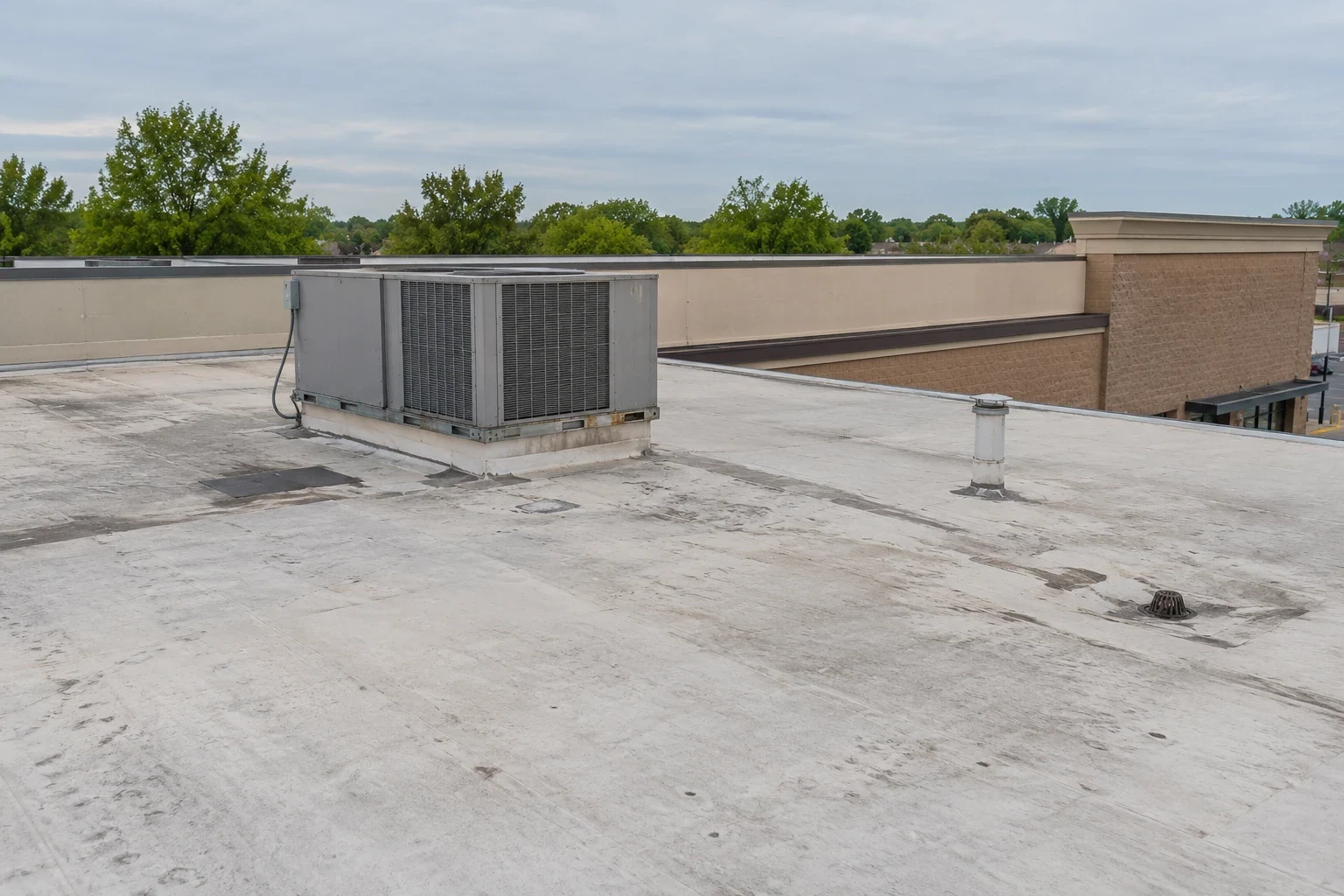
A restaurant roof can leak at an exhaust curb while the dining room stays busy below. In Murfreesboro, TN, we locate the affected room, inspect the roof above it, and coordinate the work window around kitchen production, deliveries, and customer access. Exhaust fans, make-up air, gas lines, and abandoned penetrations interrupt the roof field. We record each curb and flashing before selecting the repair so the scope addresses the actual entry point instead of sealing the ceiling stain.
Murfreesboro's downtown map shows commercial, civic, residential, school, and open-space uses in an urban mix and labels the East Main Street Historic District. For restaurant properties in a compact street setting, lift placement and customer routes deserve early planning. We confirm the building's real access and hours. Thompson Lane is among the routes with planned improvements, so the manager should confirm the current service entrance before lift or material delivery. A roof inspection ties any leak to a roof zone, equipment detail, and interior report.

Protect Kitchen Hours and Exhaust Access
We list which hood, fan, or rooftop unit must stay available and which trade can isolate it if flashing work requires a shutdown. Grease residue and service traffic can affect roof surfaces near exhaust, so we inspect the surrounding membrane and curb, not just the visible sealant. The restaurant manager helps identify meal periods, prep hours, and the safest material route. That schedule determines when the crew can lift a curb cover or open a small roof section.
A phased occupied-building scope sets the work zone, noise window, and dry-in limit. We confirm where delivery vehicles enter and keep their path separate from customer access. If a storm opening needs immediate cover, that protection can be done while permanent curb repair is scheduled for a quieter window. The written scope tells the manager which equipment remains active and when a mechanical contractor must be present.
Check Every Curb and Disused Penetration
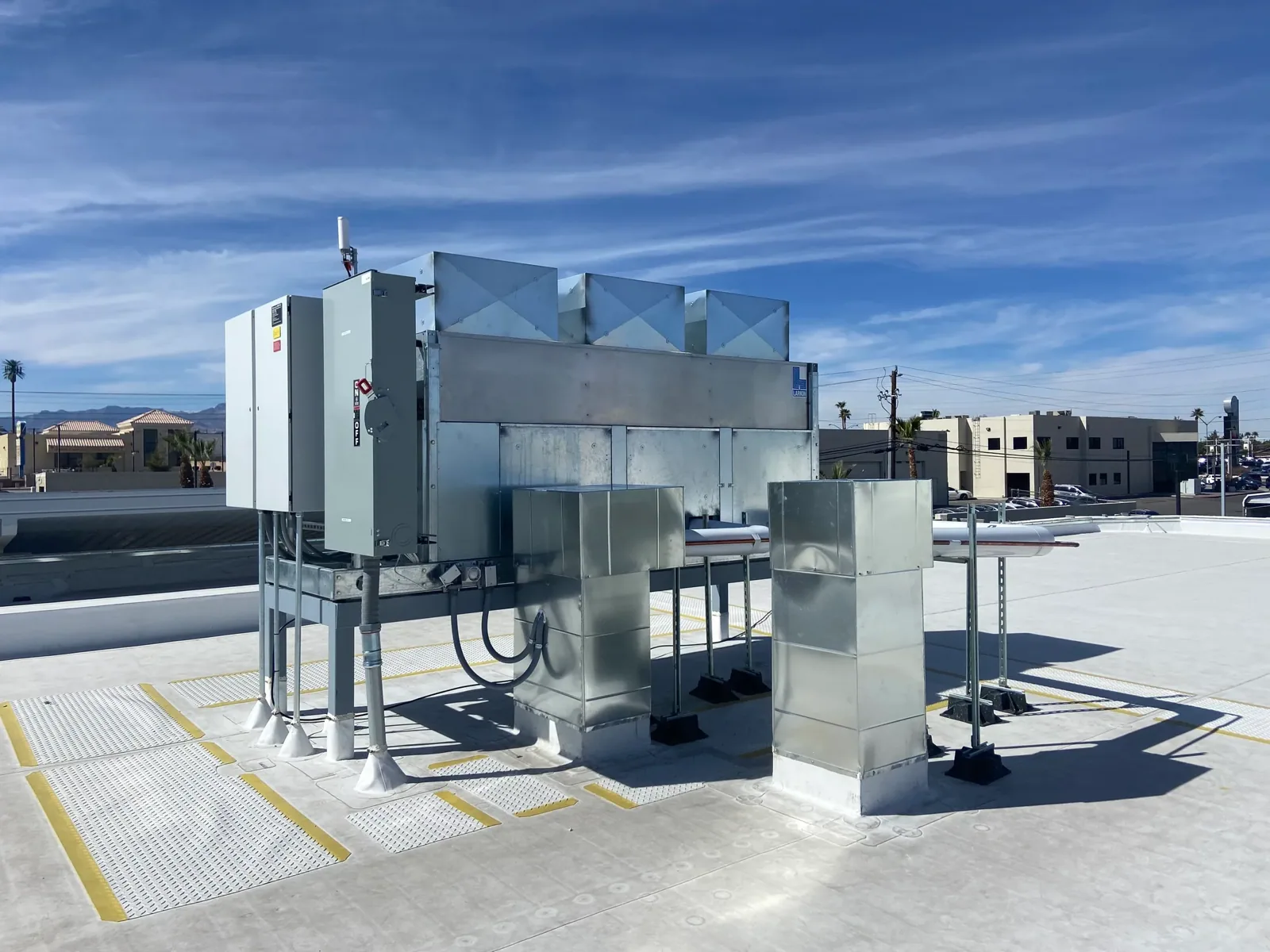
Exhaust curbs can move as equipment is serviced, and an old duct opening can remain a weak point after the unit is removed. We inspect the curb corners, metal, membrane termination, and nearby seams, then record any disconnected line or unsupported edge. A fresh bead of sealant is not a durable answer when the flashing has separated or water is entering below it. We identify the material and detail so the repair can bond to sound roofing.
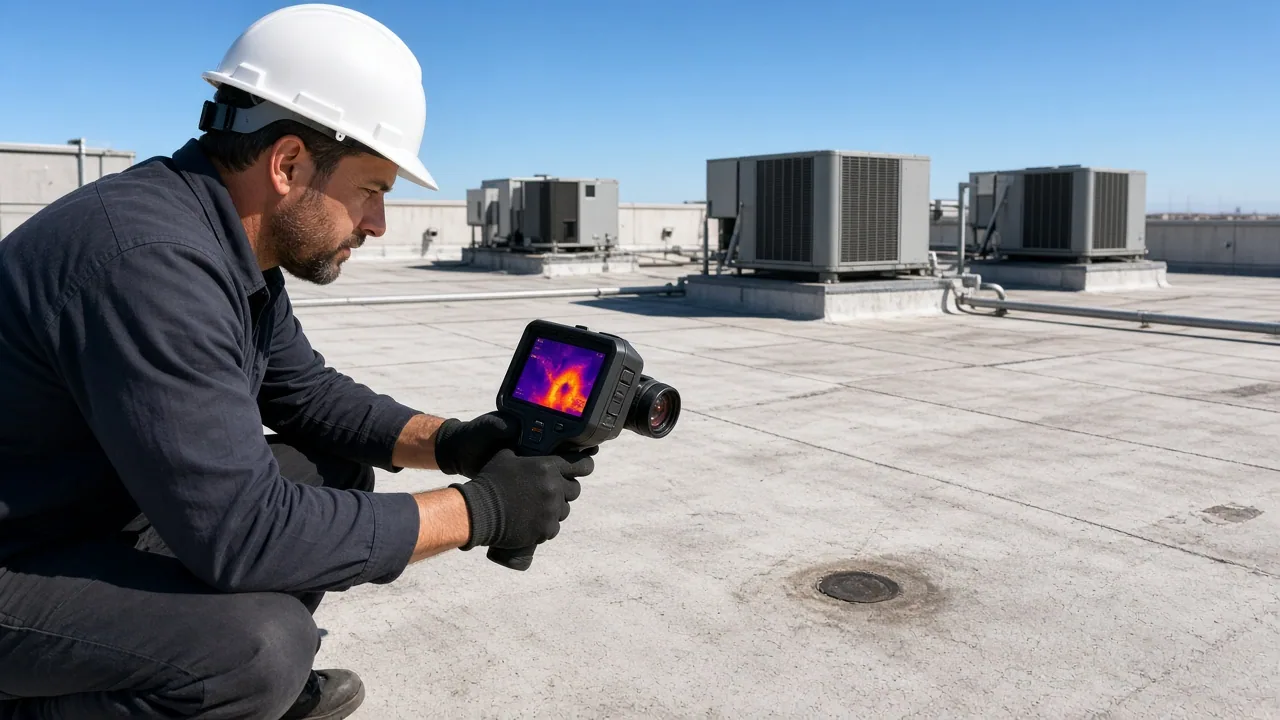
Use at least one photo of the equipment position and one view that shows the membrane around the curb. A curb and support review can separate roofing from fan or duct work. A grocery roof inspection also tracks refrigeration units and delivery routes; a hotel roof scope must coordinate guest areas and service access. Each building use changes logistics, while the flashing repair follows the assembly found on site.
Keep Grease and Debris Out of Drains
Kitchen exhaust can leave residue on nearby roof areas, and loose debris can collect along a parapet or drain strainer. We inspect the low points, outlets, overflow path, and surface around equipment. If a drain is blocked, cleaning may restore flow; if water remains because the roof holds a low spot, a separate slope correction may be needed. We record the outlet and the roof condition separately so maintenance does not confuse cleanup with repair.
At Murfreesboro 5 N, measurable rain occurs on 134.5 days in the annual normal; total precipitation averages 55.92 inches. The figure belongs to the station, not a particular restaurant roof. That local pattern makes a dated drain and ponding log useful, particularly where a recurring ceiling mark follows rain. A drain and scupper repair can address the outlet detail. If wet insulation is suspected beyond the visible area, we define test points before extending the removal boundary.
Match the Patch to the Existing Roof
First identify the installed surface: a welded sheet, adhered rubber, a multi-ply field, metal panels, or a coating. We prepare the curb repair to suit that actual material. Welded sheet and adhered membrane do not use the same preparation. Coated areas need adhesion checks; metal needs the right fastener and closure detail. We inspect previous patches to see if the surface is sound and whether movement at the curb may reopen the same line. The repair should fit the installed system and its exposure.
The same station averages 47.8 days per year at or above 90 degrees Fahrenheit and about 89 freezing nights. Temperature changes affect work timing and surface preparation, so we set a weather window that allows the detail to be completed correctly. A modified-bitumen flashing repair follows the existing ply and surfacing; a coating assessment first checks whether the field can accept a restoration system.
Separate Storm Cover from Permanent Scope
Hail or wind can damage metal edges, curb flashing, or the membrane itself. We photograph each affected area, mark the roof grid, and record whether the condition is an opening, a loose detail, or a cosmetic mark. Temporary cover can stop active water entry while the restaurant continues operating. The permanent work list remains limited to what the roof walk and any test area confirm.
A 1-inch hail report came from seven miles south of Murfreesboro on May 8, 2024. That report is local context, not evidence of damage at a restaurant. For an event-related leak, hail damage repair starts with the actual roof and a dated photo record. Access near the East Main Street Historic District is coordinated with the property's own guest, delivery, and service routes.
Price the Repair and the Broader Roof Decision
A local repair can make sense when the surrounding membrane is secure and the deck and insulation remain dry. Repeated curb leaks, multiple wet test points, or failing seams across the field may justify a broader section. We show what gets removed and where new material ties in. If a recover is considered, we check drain height, exhaust curb clearance, and access to equipment before pricing the assembly.
An overlay evaluation compares the existing layers with replacement. A photo condition report gives an owner a marked record of repair limits. A shopping-center repair plan can address shared tenant access when a restaurant is part of a larger retail building. For a standalone restaurant, we schedule the work around its kitchen and guest hours instead.
Hand Back a Roof the Manager Can Track
Closeout records the curb or seam repaired, nearby outlets checked, material used, and any follow-up the property still needs. We connect photos to a roof plan and record the equipment status at handback. A manager should know whether a fan can return to service and which trade must complete a separate task. If a test area remains open for monitoring, it is marked so a future leak report can be compared accurately.
Send the room or kitchen location, roof plan, exhaust schedule, delivery hours, and any earlier repair records. We will map the entry point and set out the immediate cover, the permanent curb work, and any mechanical handoff as separate items. The crew's access window is set with the restaurant contact, not assumed from typical service hours.
Commercial Roofing Questions
Can exhaust equipment stay on during a roof repair?
Sometimes. We inspect the curb and coordinate with the manager and mechanical trade before setting the work window. If a shutdown is required, the scope identifies the unit and the time needed before flashing work begins.
Why does a leak appear near the dining room instead of the kitchen?
Water can travel beneath the roof surface or along a deck before it appears inside. We trace uphill from the report and check curbs, seams, drains, and old penetrations before choosing a repair.
How do you keep a restaurant open during reroofing?
We divide work into sections, protect the interior, and keep material and debris routes clear of guests and deliveries. The manager gets the daily work limit and any equipment shutdown in advance.
Does a hail report mean the whole roof needs replacement?
No. We inspect the membrane and exposed details by roof zone, then document actual damage. The proposal can price a local repair separately from any larger work supported by the inspection.
What information helps schedule a roof inspection?
Share the roof plan, leak room, kitchen hours, exhaust restrictions, and delivery window. We can route the roof walk and coordinate any access or unit shutdown before arriving.
Related Roofing Work
More commercial roofing work connected to Restaurant Roofing in Murfreesboro.

Schedule a Restaurant Roof Walk
Send the leak location, roof plan, exhaust schedule, and delivery hours. We will inspect the curb and membrane, then return a scope that keeps the kitchen and guest routes in view.