
Hotel Roofing in Murfreesboro, TN
Hotel roof work in Murfreesboro must protect guest rooms, service areas, and rooftop equipment. We locate the leak and schedule repairs by access zone.
Hotel Roofing
A hotel leak can affect a guest room, kitchen, meeting area, or service corridor, and each one needs a different access plan. In Murfreesboro, TN, we map the room report to the roof above it, inspect seams and penetrations, and coordinate the work window with the property contact. The goal is a dry, protected work area and a clear handback, not a broad tear-off before the roof assembly is known.
Murfreesboro's downtown map records a mix of commercial, civic, residential, school, and open-space uses and labels the East Main Street Historic District. Hotel access in a compact commercial setting may place deliveries and guest entry close together. We confirm the actual route, lift location, and quiet hours with the property. A commercial roof inspection ties each interior report to the roof detail that needs attention.
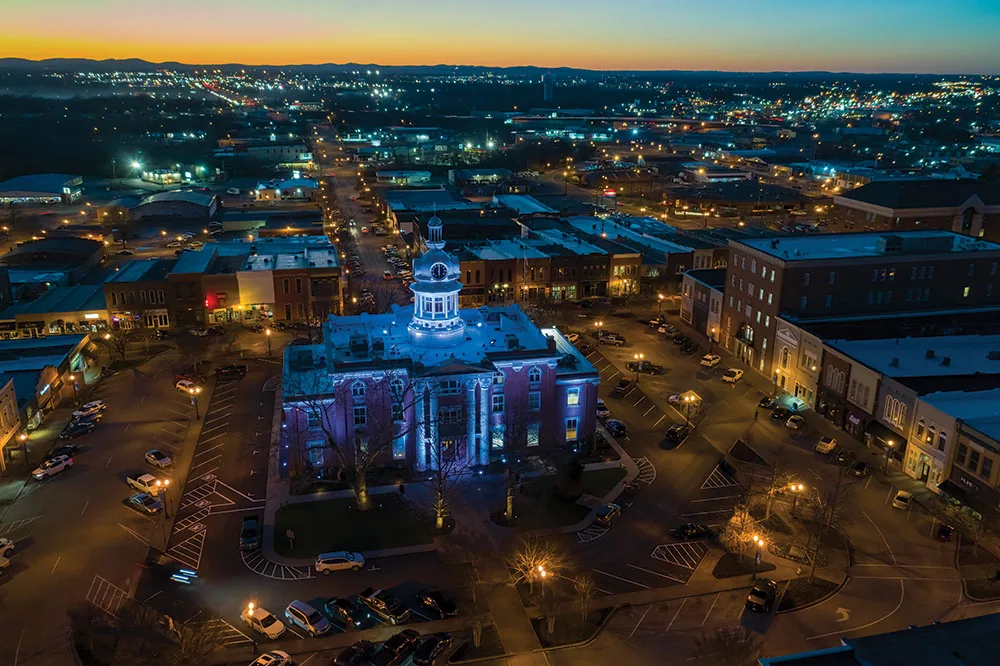
Keep Guest Entry Separate from Material Staging
Before work starts, we identify guest doors, loading access, service corridors, roof hatches, and rooms that need interior protection. A lift or material drop cannot block the entrance plan the hotel has given its guests. We mark the ground work zone, set a debris route, and divide roof work into sections that can be closed within the shift. If the weather window changes, the crew can stop at a defined limit without leaving an opening exposed.
Planned road improvements include Thompson Lane and Medical Center Parkway, so the property's current access path should be confirmed before the crew is staged. The hotel contact confirms the property's current access and delivery route rather than relying on a general map. Occupied-building phasing assigns a work boundary and handback time. If a guest room reports active water, emergency cover can start promptly while the permanent repair is planned around room turnover and equipment access.
Trace Water Above the Room Report
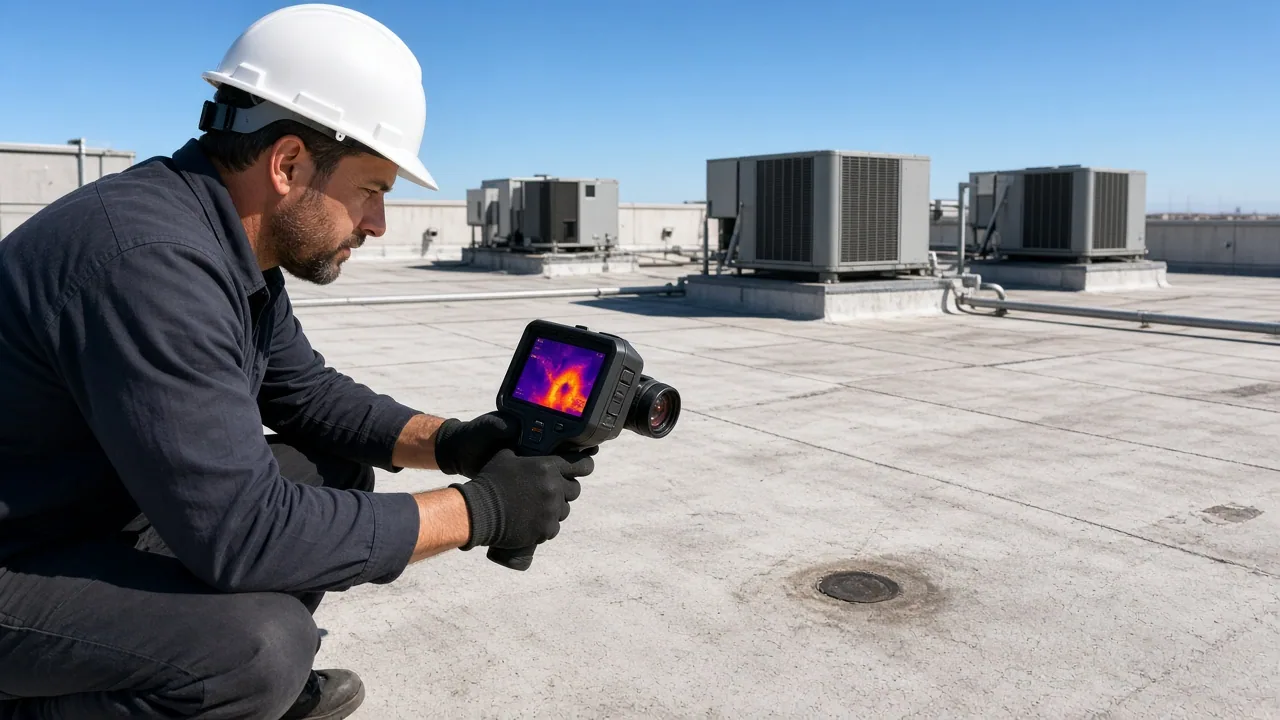
Water may travel along insulation or a deck before it appears at a ceiling. We map the room, inspect the roof area uphill from the report, and check seams, wall transitions, skylights, drains, and equipment curbs. Older additions can have different materials and slopes on one building. We record each assembly and inspect prior patches so a new repair does not stop at the visible stain while the entry point stays open.
Murfreesboro 5 N averages 134.5 measurable-rain days and 55.92 inches of precipitation per year; hotel maintenance can log outlets that hold water after a storm. Those station values are useful climate context for drain and moisture records. A drainage repair corrects an outlet or overflow issue found during inspection. If water may have moved beneath the field, moisture mapping can help choose test locations before the repair boundary grows.
Check Rooftop Units and Service Penetrations
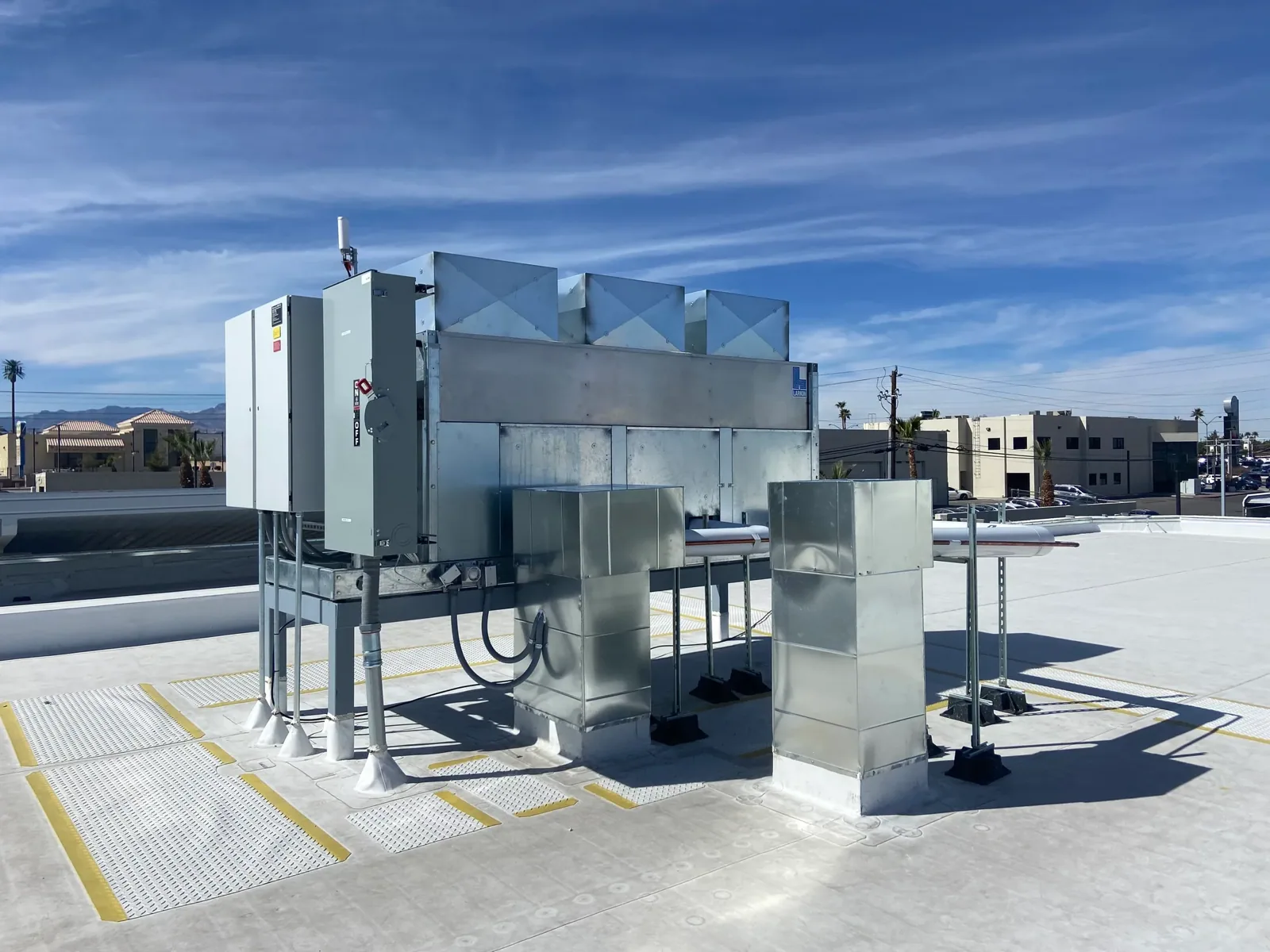
Hotel roofs can hold HVAC units, exhaust, antenna supports, and lines that pass through the membrane. We inspect the curb corners, flashing termination, fasteners, support movement, and abandoned openings. If a unit needs isolation, the scope identifies the responsible trade and the time required. A roof patch should not conceal a loose support or a curb edge that keeps moving under service loads.
At a property near Medical Center Parkway, access can be affected by guest traffic and service deliveries, but the roof details still require a direct inspection. A curb and support review documents those transitions. Restaurant roof work coordinates kitchen exhaust and operating hours; multifamily roof repair considers resident entrances. Each use shapes the staging plan without changing the membrane facts.
Match the Repair to the Existing Assembly
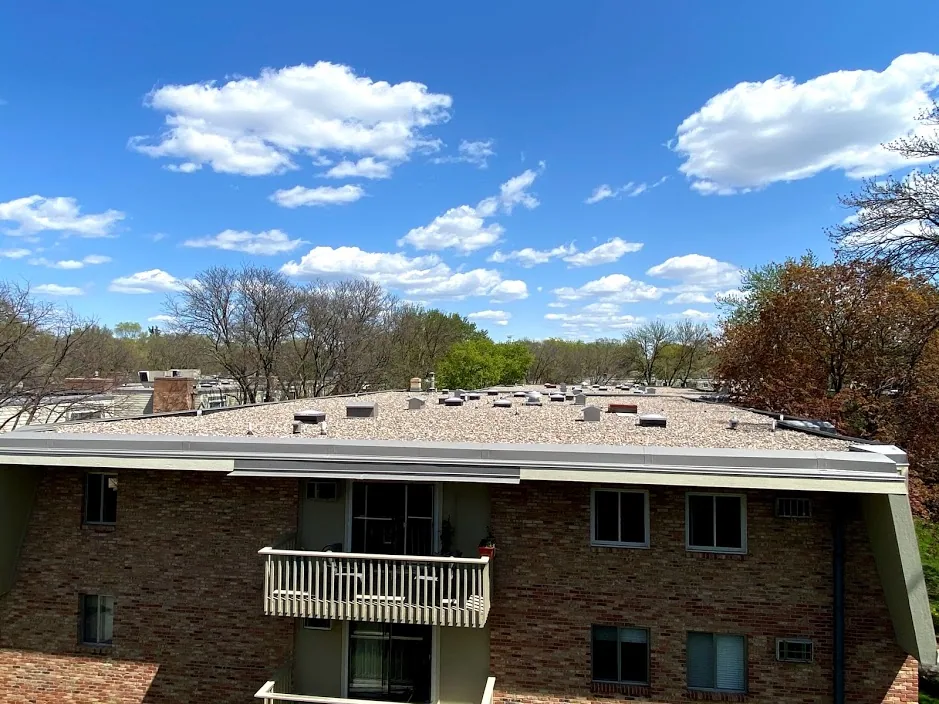
A roof may carry welded sheet at one wing and an older multi-ply system at another; we record the field and transition rather than specify from the guest-room report. Welded seams require sound membrane at the weld; adhered laps require a surface that accepts the repair. We check the deck and insulation where the condition warrants a test opening. At a transition between the original hotel and a later wing, the roof plan may not show the current detail, so field observations control the scope.
The Murfreesboro 5 N normal counts 47.8 days each year with highs of 90 degrees Fahrenheit or more, plus roughly 89 freezing nights. We use weather windows that fit the repair material and allow each detail to be completed and checked. A EPDM repair follows the existing membrane and lap; a coating restoration is considered only after surface, adhesion, and moisture checks. The proposal states what the roof can support.
Protect the Property After Hail or Wind
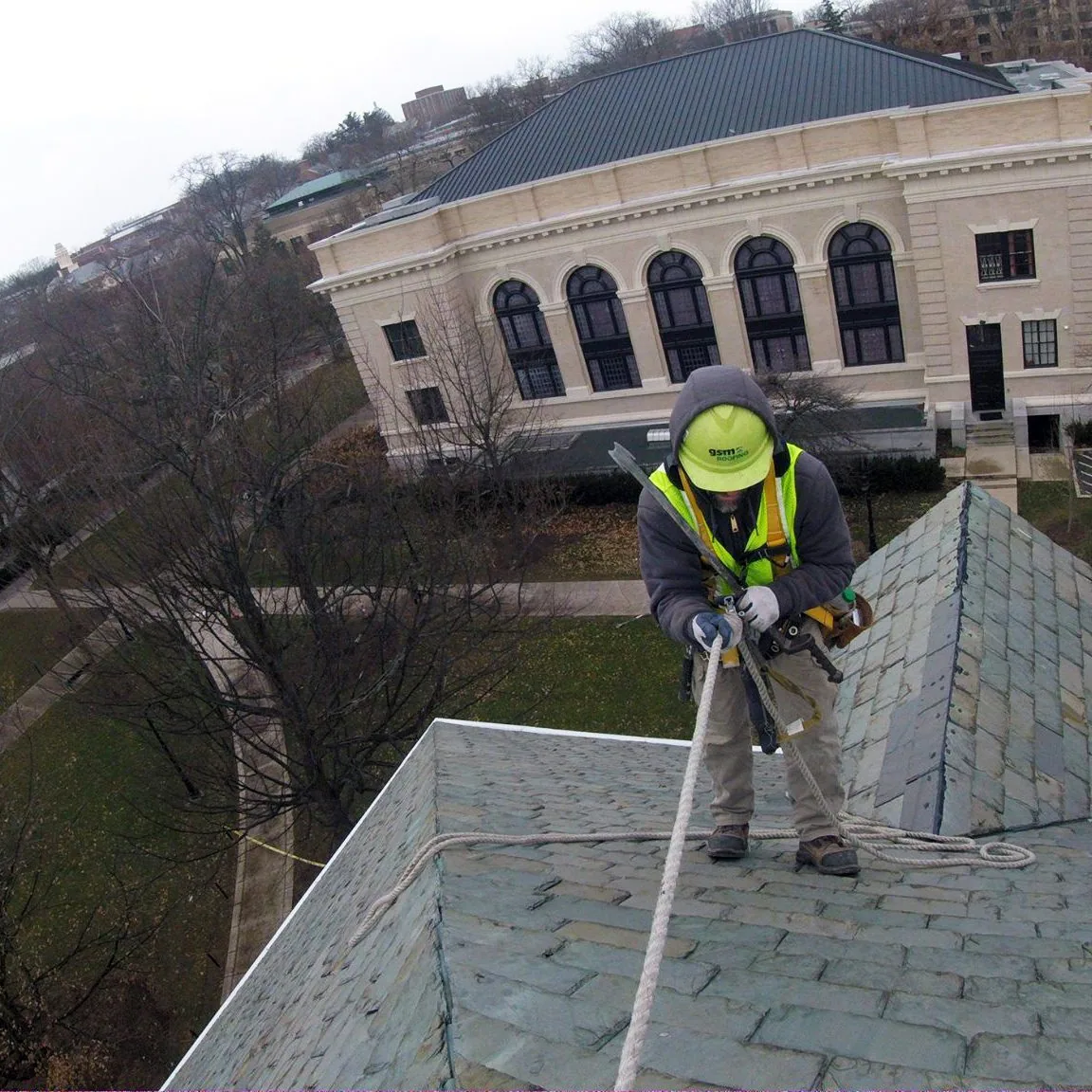
After a storm, we photograph the perimeter, penetrations, field, and any new interior reports. Hail can damage exposed details; wind can lift edge metal or stress a curb flashing. We distinguish an active opening that needs temporary protection from marks that need closer review. Each finding is tied to a roof zone so the property manager can coordinate with housekeeping, maintenance, and any insurance documentation process.
Two miles west of Murfreesboro, hail reached 1.75 inches on May 26, 2024; a west-southwest report four miles away measured 1.25 inches. Those observations describe the local storm, not this hotel roof. A hail damage inspection documents what is actually present. Work near Medical Center Parkway still needs the hotel's own guest entrance and loading restrictions confirmed before a crew is staged.
Price the Roof by Building Section
A targeted repair fits when the surrounding field is secure, test areas are dry, and the deck supports the detail. Repeated leaks, multiple wet test locations, or widespread seam failure can move the decision to a larger section. We mark what stays, what comes out, and where new flashing ties in. A recover is only priced after added height at drains, curbs, doors, and service equipment is checked.
A recover evaluation compares keeping existing layers with replacement. A condition report with photos gives ownership a record by building area. If the property includes extended-stay suites or multifamily components, an apartment building roof scope can address resident route coordination separately. Cost and schedule follow the confirmed roof condition and the access window the hotel can release.
Return the Roof and Rooms to Service
Closeout identifies the roof area repaired, material used, test result, and any open follow-up. Photos show the seam, curb, drain, or edge detail and connect it to a marked plan. The property contact can check that interior protection is removed and guest access is clear. If a mechanical trade still needs to complete work, the record says where the roofing scope stops and who must return.
Send the room report, roof plan, housekeeping or occupancy limits, equipment list, and prior repair records. We will trace the leak, confirm the assembly, and return an itemized scope with temporary protection separated from permanent work. The hotel can then plan the repair by guest area and service route. The handoff is complete when the room is protected and the roof record says exactly what remains.
Commercial Roofing Questions
Can roofing work take place without closing guest rooms?
Usually, if the work can be divided into protected sections and the hotel can set a room or access window. We coordinate noise, lift placement, interior protection, and the day's dry-in limit with the property contact.
How do you locate a leak that appears in a guest room?
We identify the room and inspect uphill from the roof area above it, including seams, curbs, drains, and wall transitions. A test opening can verify wet insulation when surface checks do not settle the boundary.
What happens if a rooftop unit has to be shut down?
We list the unit and shutdown window in the scope, then coordinate with the hotel and mechanical trade before flashing work begins. The crew does not assume equipment can be isolated without approval.
Can a hotel roof be repaired one section at a time?
Yes, when the assembly and transitions allow a safe tie-in. We identify each section, protect the rooms below, and close each day's opening before moving to the next area.
What should be documented after a storm?
Keep dated photos, the marked roof zone, interior reports, temporary protection, and repair findings together. That separates the storm response from older conditions and gives management a clear follow-up list.
Related Roofing Work
More commercial roofing work connected to Hotel Roofing in Murfreesboro.
Set a Hotel Roof Inspection
Share the guest-room report, roof plan, quiet hours, equipment list, and loading rules. We will trace the condition and return a scope that protects the occupied areas below.