Commercial Roofing in Northfield Boulevard, Murfreesboro, TN
Commercial roof service near Northfield Boulevard in Murfreesboro, TN. Plan drainage, repair boundaries, access, and replacement around field findings.
Northfield Boulevard
A roof near Northfield Boulevard can be in a changing commercial area while still operating on a fixed schedule. In Murfreesboro, TN, we start by identifying the assembly, the roof sections in service, and the route from access point to work zone. Then we check seams, drains, curbs, edges, and prior repairs. The written scope follows the roof condition and the building's operating window, not a broad assumption about the corridor.
Northfield Extension Phase 2 is planned between Broad Street and Garrison Drive. Murfreesboro's long-range planning connects transportation, land use, public facilities, housing, and economic development. Those facts help explain why access and staging deserve a direct check. They do not describe a particular property's tenant mix or roof system. We confirm truck access, loading needs, roof hatch conditions, and the decision-maker before setting a repair or replacement sequence.
Set the delivery window
A proposed road extension can affect how a manager thinks about future circulation, but today's roofing plan still has to fit the actual driveway and loading area. We check whether a lift can reach the parapet, where a dumpster may sit, and how deliveries cross the property. If Broad Street or Garrison Drive is part of a route, the crew confirms current access at the building before materials move. We keep pedestrian entries and tenant routes outside the marked work zone. Equipment outages are confirmed before a roof section is opened.
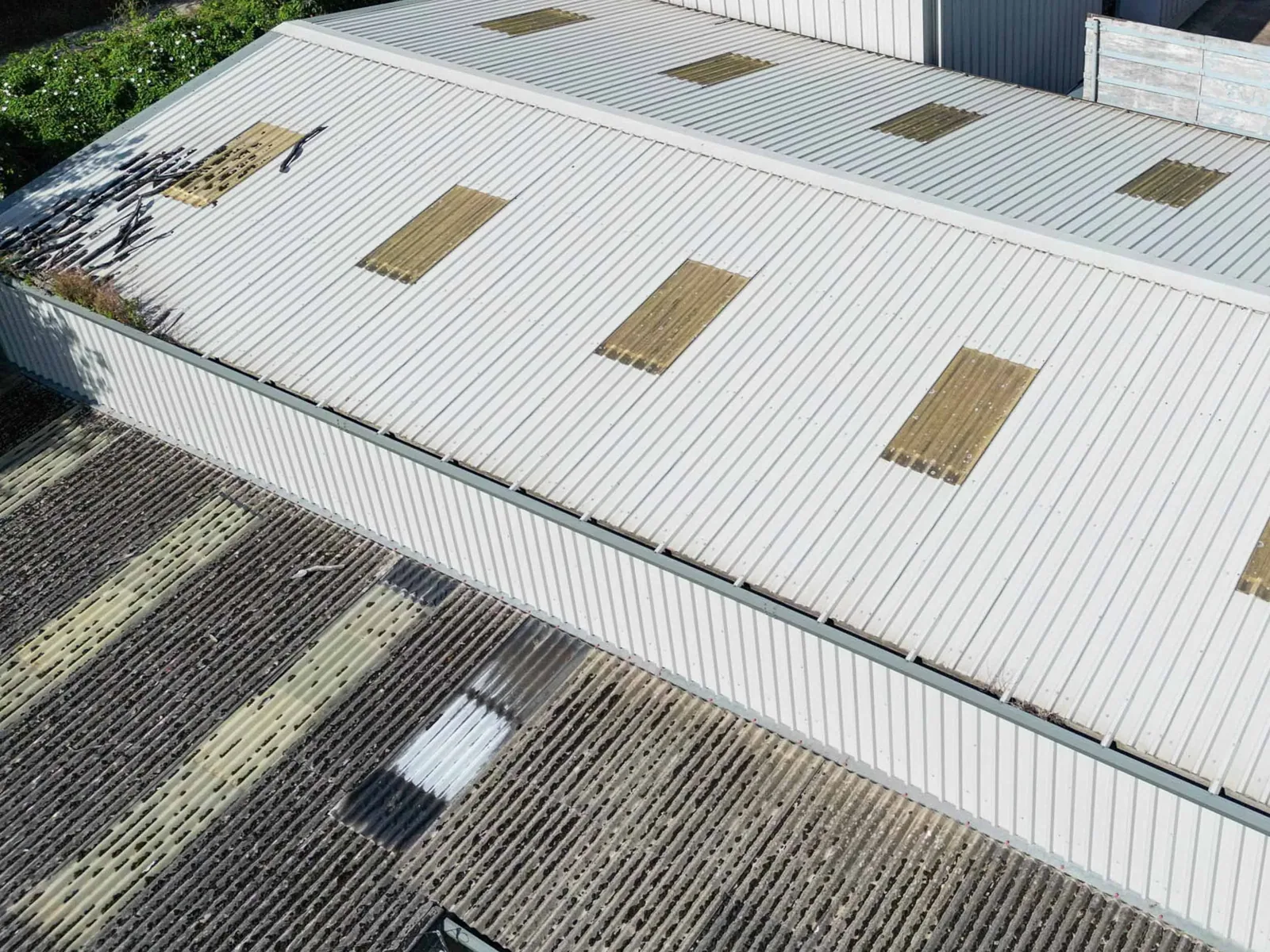
On a multi-elevation roof, staging can determine which section is practical to open first. The walk records ladder or hatch access, fall-protection conditions, equipment curbs, skylights, and any route that must stay clear. If inspection from the surface would be unsafe, we use a drone inspection to document visible conditions before anyone enters that section. For nearby roofs with different access constraints, owners can compare the Northwest Broad Street corridor and Broad Street commercial area.
Check the drainage path
Murfreesboro's NOAA normals include about 89 days each year when the minimum temperature reaches freezing or lower. A roof that holds water overnight can see repeated movement at seams, drains, and flashing as conditions change. During the walk, we record low spots, blocked strainers, open laps, and the path water takes toward each outlet. A ponding area is recorded separately from a leak below; one observation does not prove the other.
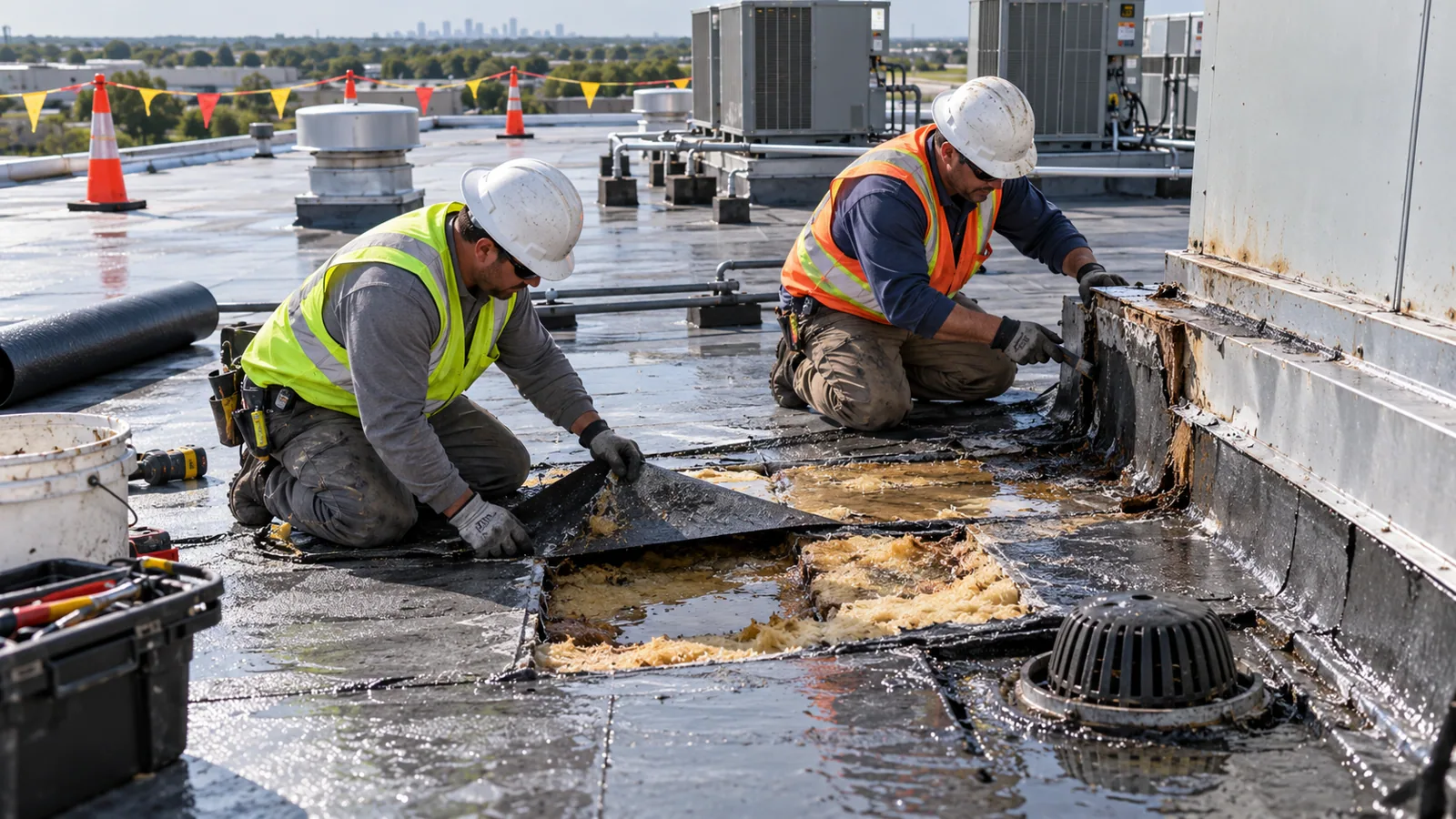
We inspect drain bowls, overflow openings, scuppers, and adjacent membrane for a clear route. A clogged outlet may need maintenance, while a loose flange or wet insulation calls for a roof repair. We mark each condition on a roof plan or photo set so the owner can see where water enters and where it leaves. When an interior stain is reported, commercial leak repair starts with that path, not with a patch placed directly above the stain.
Compare the repair boundary
A limited repair makes sense when the affected membrane can be tied into sound material and the surrounding deck is dry enough to support the detail. We inspect beyond the visible split, check nearby fasteners or seams, and look at the penetration or edge that may have started the failure. If moisture extends into several sections, we document the broader boundary before pricing a patch as the final answer.
Replacement becomes more practical when repairs would leave disconnected areas, repeated wet insulation, or an assembly that cannot accept a durable tie-in. A recover may reduce tear-off, but only if the existing layers, attachment, drainage, and structural conditions support another system. The proposal separates known work from concealed-condition allowances. Owners can compare replacement planning with recover work after the field record establishes what remains serviceable. A test cut is closed and photographed, with its location tied to the roof plan. That gives the owner a clear record of the layer condition used to compare repair, recover, and replacement. Each tie-in also needs a dry, compatible surface; trapped water or loose cover board can undermine an otherwise clean patch.
Record the section and deck
Murfreesboro's commercial-use framework connects general commercial development with arterial and collector access. For a roof project, the operating impact still depends on the individual property, its loading window, and the work area. We divide a large roof into marked sections, record the visible membrane and flashing condition, and record where a test cut or moisture survey is needed. If insulation or deck damage is found, the next step is priced as a separate condition rather than hidden inside a surface repair.
Repair crews need a stop point they can close at the end of the shift. We install a temporary tie-in when weather or operations require the work to pause, protect drains and openings, and take closeout photos before leaving. If the roof includes multiple tenants, the property lead can coordinate notices around the affected entrance or equipment outage. For routine follow-up, a condition report can preserve findings by roof section and drain work can be separated from membrane repairs.
Plan the next inspection
After repair, a practical maintenance visit checks the locations most likely to change: seams near a recent tie-in, drain bowls that collect debris, flashing at curbs, and edge metal exposed to movement. We record new conditions and compare them with the last photos. That gives the building owner a basis for deciding whether to schedule a small repair now, monitor a stable area, or plan a larger project with enough lead time.
For property teams working across Murfreesboro, the same record format can keep separate roof assemblies from being treated as one system. We label the building, roof section, condition, and action, then identify any access or operating constraint for the next visit. If a leak requires immediate attention, our emergency roof service responds outside regular hours, including weekends and holidays. We stabilize the section before completing the permanent scope. To request a walk near Northfield, set an access time and share the current leak or repair locations.
Commercial Roofing Questions
Will Northfield Extension change the way a roof crew reaches my building?
Northfield Extension Phase 2 is planned between Broad Street and Garrison Drive. We confirm the present driveway, loading route, and staging area with the property contact before scheduling. A road plan does not establish current roof access at an individual address.
How do you tell whether ponding needs a repair?
We check how water moves to drains and overflows, then inspect the membrane, seams, and insulation around the low area. Standing water alone does not define the repair. The written scope identifies the cause we can observe and any condition that needs testing.
Can work proceed while tenants use the property?
Often, with a defined work zone and a schedule that protects entrances, deliveries, and equipment needs. We confirm the loading window, roof access, and any shutdown before work starts. The crew closes each open section before leaving the roof.
What changes the price of a roof replacement?
Tear-off, insulation and deck condition, access for materials, edge details, drainage corrections, and the number of roof sections all affect the scope. We separate those items in the proposal so a concealed condition is not confused with the visible membrane work.
What should the closeout record include?
It should show the repaired section, tie-in details, any condition that remains open, and dated photos. We also record material and access constraints that affected sequencing. Those records help the next maintenance visit check the same locations without treating the whole roof as a single condition.
Related Roofing Work
More commercial roofing work connected to Northfield Boulevard in Murfreesboro.
Arrange a Northfield roof walk
Set the roof access time, loading window, and property contact. We will mark the drainage path, repair boundary, and any deck condition that changes the scope.