Commercial Roofing in Lascassas, TN
Commercial roofing in Lascassas, TN, starts with the roof assembly, drainage path, and access limits. Get a documented repair or replacement scope.
Lascassas
A roof over a small commercial operation can still carry a complicated repair: a low-slope membrane, a metal transition, rooftop equipment, or an interior leak that appears far from its entry point. In Lascassas, we begin with the building's actual roof and use. We confirm who can provide access, mark the affected section, and check the nearest seams, outlets, penetrations, and edge conditions. The goal of the first walk is a useful boundary for the next decision, not a broad promise about a roof we have not opened.
Lascassas is recognized as a Rutherford County community. County fire-rescue records include a response station serving the unincorporated area, and the county's shelter directory includes Lascassas community locations along Lascassas Pike. Those references help identify the community and a familiar route. They do not establish the construction, occupancy, or access rules at an individual property. We verify the work entrance, roof hatch or ladder, material staging point, and operating hours with the owner or manager before scheduling a crew.
Make the first walk useful
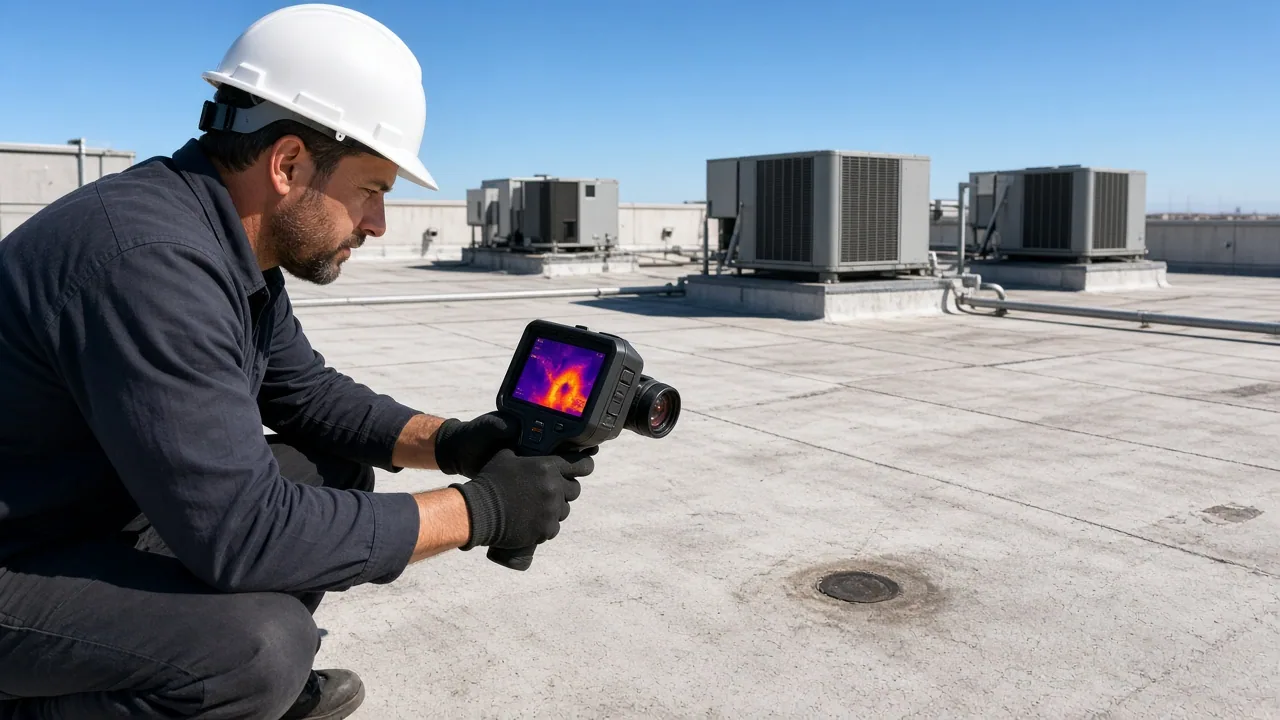
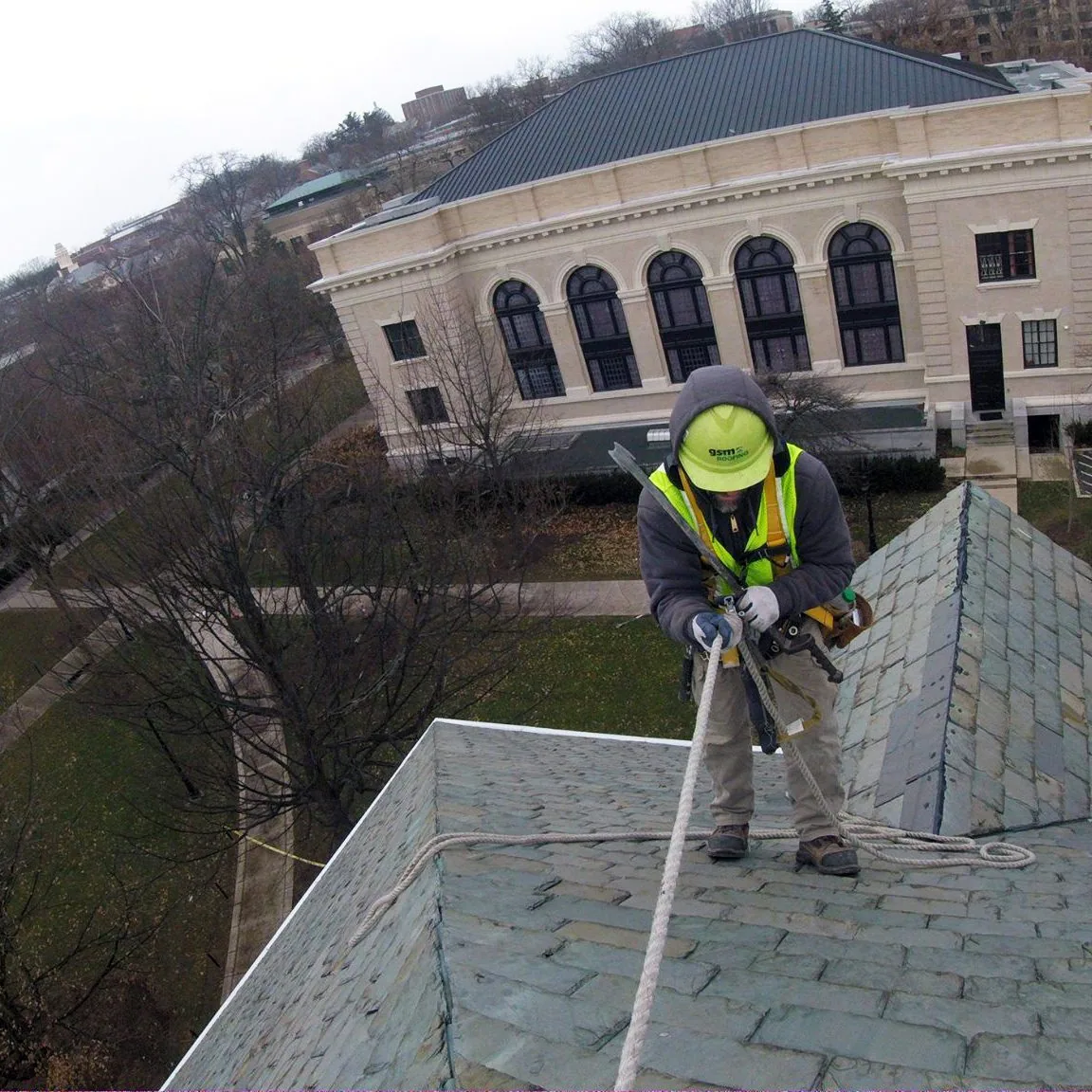
We start inside if the leak report can be tied to a room or ceiling area. The person who knows the building can identify when the stain appeared, whether it changes after rain, and whether equipment or a prior repair sits above it. Those details narrow the roof check, but the visible ceiling is not proof of the entry point. On the roof, we trace the drainage path and inspect the membrane or metal surface, seams, wall flashing, equipment curbs, skylights, and penetrations around the likely route.
Each observation is assigned to a roof section. A blister, open seam, rust mark, or wet interior finish is recorded as observed; a hidden deck condition stays listed as unknown until the assembly is opened. We photograph the transition and nearby details, then recommend additional testing only when it answers a scope question. A commercial roof inspection documents the assembly and condition, while commercial leak repair focuses on an established water path. The owner can review a concise report before deciding how much work to authorize.
Plan around the Lascassas Pike approach
The county shelter directory places a community location along Lascassas Pike. We use that route reference only as a local orientation point; a roof crew still needs directions and access details for the property being serviced. Before mobilization, we confirm the entrance that can accept a service vehicle, any gate or check-in step, roof access, and where a lift or material pallet can be staged. A route that is clear for a small inspection vehicle may not work for a delivery truck or crane.
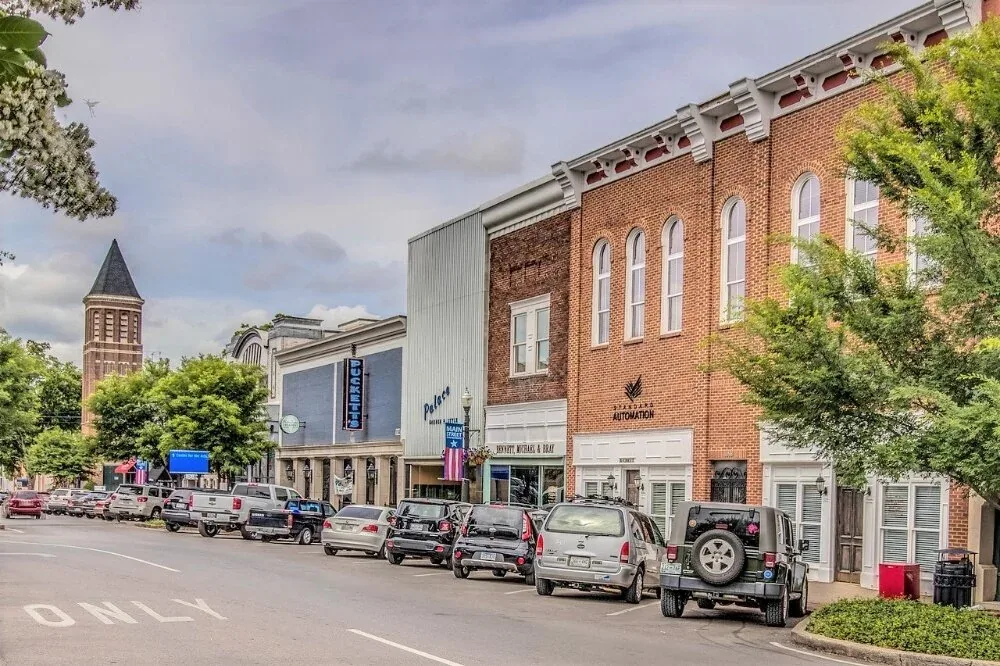
When a business is open during the day, the site contact should identify customer doors, deliveries, staff parking, and any area that must remain available. We set a loading window, keep the work zone separate from pedestrian traffic, and protect roof openings before leaving the site. If access changes or weather stops the work, the foreman records the secured boundary and the next start point. For project sequencing on an occupied property, occupied-building reroofing can help define the notice and phasing plan. A nearby community such as Rockvale has its own access conditions; we confirm those separately rather than transferring assumptions between sites. For a denser commercial route, compare roof planning in Smyrna, then verify the Lascassas property on its own.
Read the drainage path
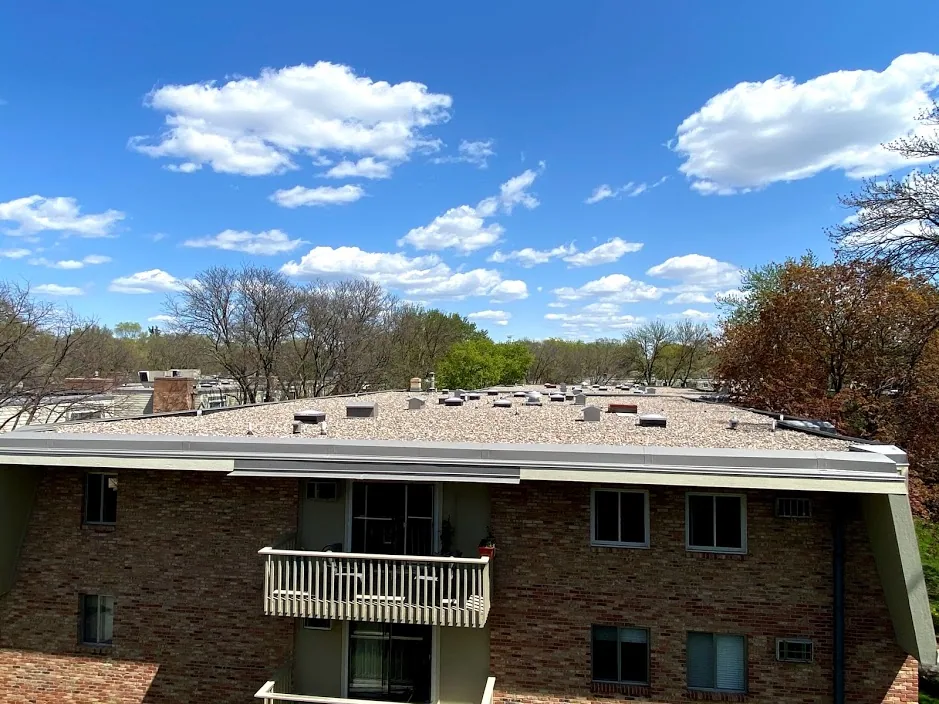
Water management is checked from the roof field to the outlet. We look for a clogged strainer, a depressed area, a loose drain ring, a blocked scupper, or a membrane transition that can trap debris. The outlet itself may be open while its flashing has pulled away. We record the actual condition and distinguish routine debris removal from a repair that needs membrane work. If a roof has several outlets, the work log should identify each one rather than describe the entire property as drained.
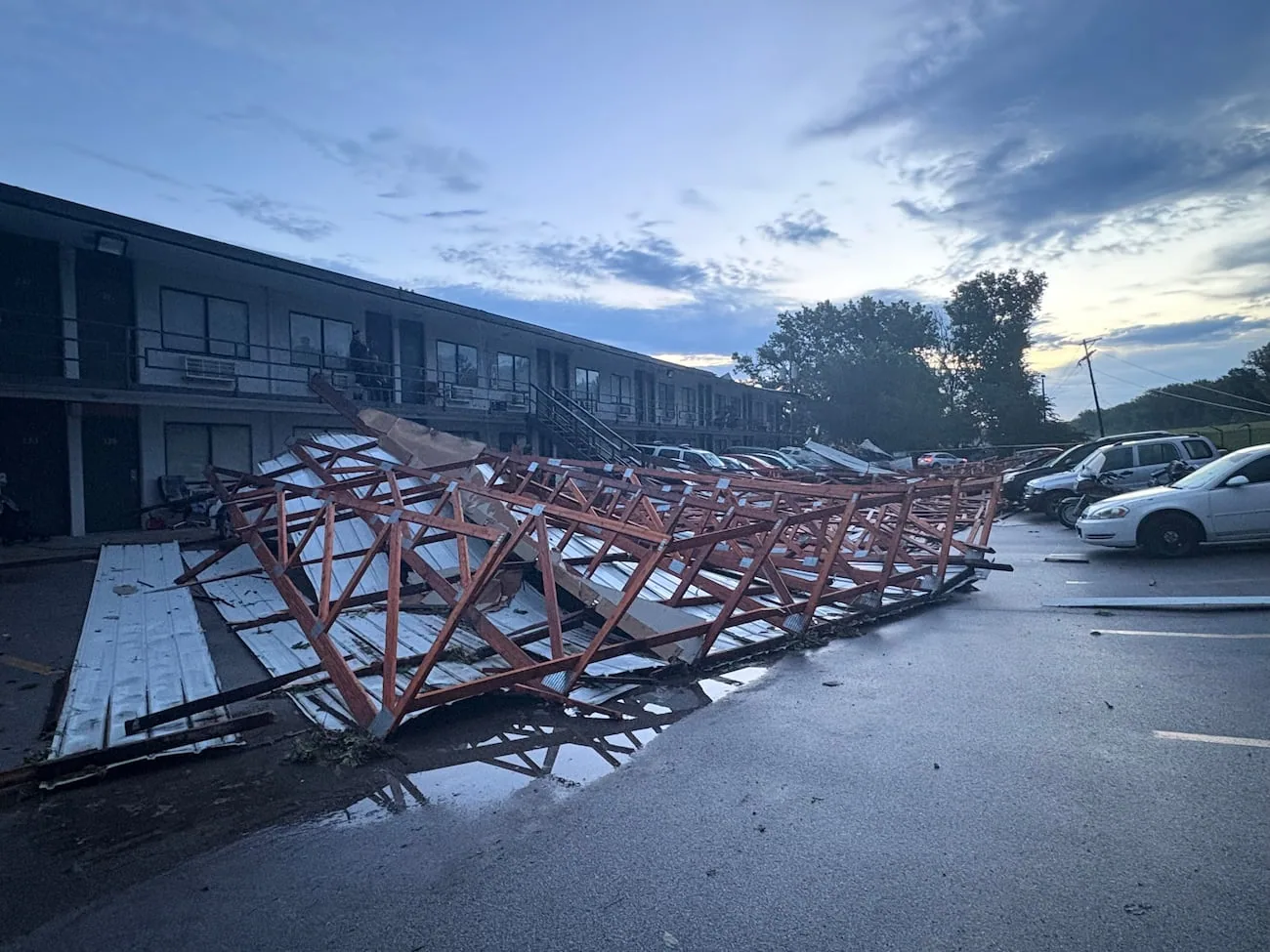
Murfreesboro's climate records and regional severe-weather reporting provide broader context for periodic roof checks, but they do not establish damage at a Lascassas property. A building's own inspection history, leak log, and dated photos are the useful comparison. After a weather report, we look for a changed edge, puncture, displaced flashing, or seam separation and write down what was visible. A drain and scupper service can address named outlets; wind-damage repair should follow inspection of the actual attachment and edge. Neither scope should assume an event caused damage without site evidence.
Compare the repair paths
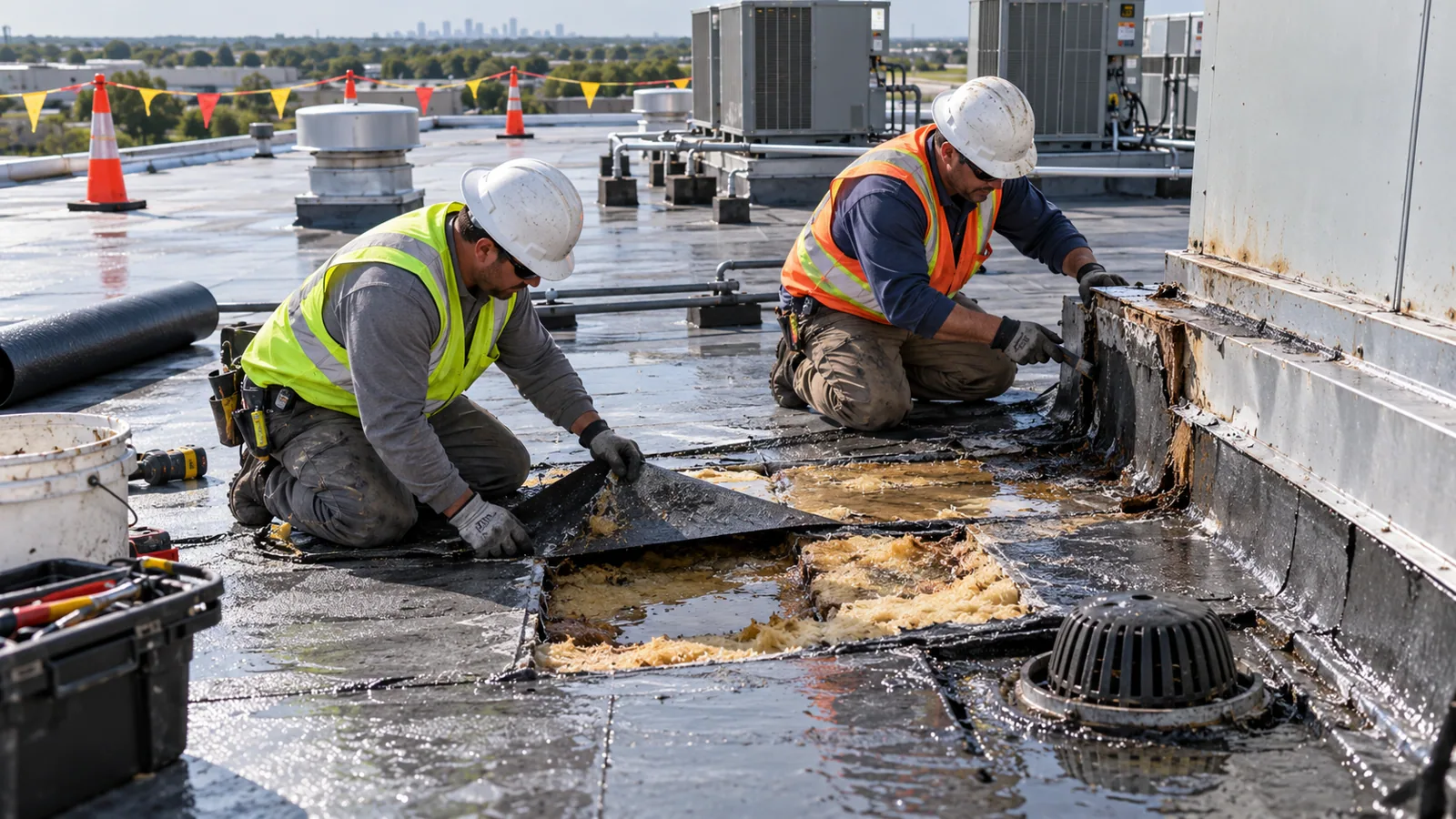
A local repair may be appropriate when the surrounding roof remains attached, dry, and compatible with a sound tie-in. We check beyond the opening so the repair does not terminate at another weak seam. The scope identifies the preparation, repair material, flashing detail, and final boundary. If testing shows moisture below the membrane or a deteriorated deck, we stop and present the condition before expanding the work. The owner decides whether to authorize a test opening or a revised scope.
When failures repeat across a section, a larger repair or replacement may be more responsible than another isolated patch. We compare the roof's layer count, attachment, insulation condition, drainage, curb transitions, and deck before recommending a recover. Coating is considered only where the existing surface and assembly support it; it does not correct wet insulation or a failed substrate. TPO roofing and modified bitumen can be evaluated against the current assembly and use, not selected from a label alone. A written proposal separates included work from concealed conditions that require approval.
Keep the property record specific
Closeout records should make sense to the next person who opens the roof file. We label photos by building and section, show the completed tie-in, identify the material installed, and list any area not included. If the crew could not safely reach a detail, the report says that directly. A record of a completed repair is not a warranty statement about adjacent roof areas that were outside scope.
For recurring maintenance, compare each visit with the prior photos and open items. The next check might be at a drain, equipment curb, parapet transition, or location where a patch was installed. That record can also support a budget conversation by separating near-term repair from capital replacement. roof condition reports organize conditions and priorities without implying that every section was tested. Owners coordinating more than one location can keep a distinct map and scope for each property. When a Lascassas roof needs attention, arrange a walk with the person who can provide roof access, explain building hours, and review the written repair boundary.
Commercial Roofing Questions
How do you locate a leak when the ceiling stain is elsewhere?
We trace the likely water route from the interior report to the roof section, then inspect seams, drains, curbs, and transitions along that path. The report separates the observed opening from any area that still needs testing.
Does Lascassas Pike tell you where to stage materials?
No. It is a community route reference, not a property access plan. We confirm the actual entrance, turning space, delivery window, and approved staging area with the site contact before bringing equipment.
When should an owner approve a test opening?
A test opening can clarify deck, insulation, or layer conditions that cannot be seen from the surface. We identify the question it will answer and the area affected, then wait for owner approval before disturbing the assembly.
Can drainage service include membrane repair?
It can when the scope names the outlet and the surrounding flashing or membrane detail that needs work. We document debris removal separately from a defect requiring new material or a tie-in.
What should a repair proposal show?
It should state the roof section, observed condition, included preparation and materials, tie-in limits, access assumptions, and concealed conditions that require approval. That keeps the owner from confusing a local repair with a full-roof inspection.
Related Roofing Work
More commercial roofing work connected to Lascassas in Murfreesboro.
Set a Lascassas roof inspection
Tell us where the leak appears, who can provide roof access, and when deliveries or customer traffic need to stay clear. We will document the section and return a written scope.