Self-Storage Roofing in Murfreesboro, TN
We inspect and repair self-storage roofs in Murfreesboro, TN, tracing leaks across unit rows, office areas, drains, and metal transitions before setting scope.
Self-Storage Roofing
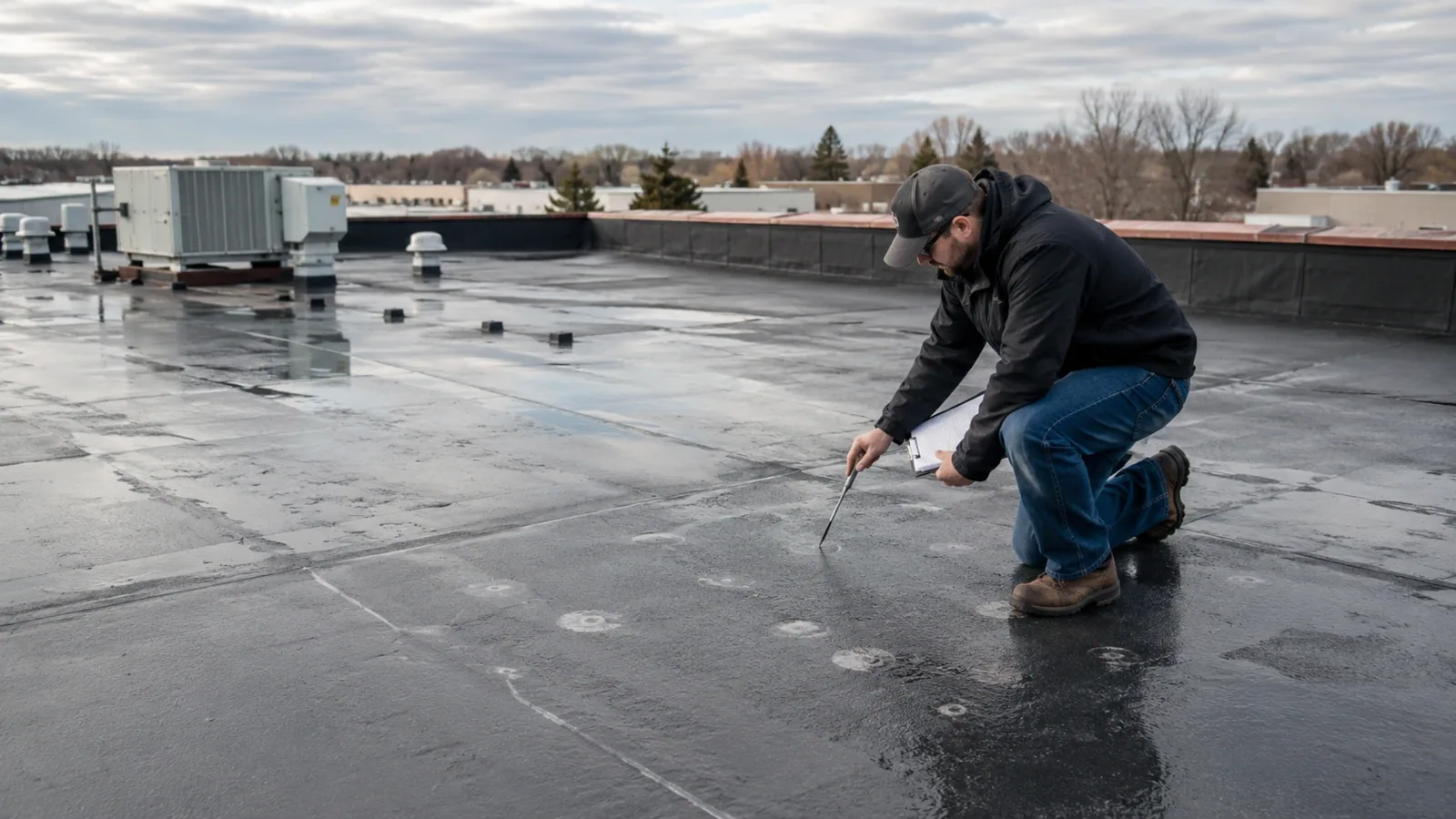
A self-storage roof has many small consequences packed under one large weather surface. A leak over a hallway can stain a door, reach stored goods, or interrupt access while the water path starts several bays away. In Murfreesboro, TN, we walk the roof by section and mark the drains, seams, curb flashings, and wall lines that serve each row. The first call identifies the units and drive aisles below the suspect area, then sets an inspection window around customer access. We plan within the Murfreesboro service area.
Warm summers, frequent rain, and nights that reach freezing put movement and drainage on the same inspection list. We check for open laps, split sealant, loose edge metal, wet insulation, and water held at low points. The findings support a repair boundary or a larger replacement discussion. For a leak needing immediate attention, our crews respond around the clock through emergency roof repair, then protect the section before the shift ends.

Trace the Leak Across Unit Rows
Water does not respect a unit number. It can enter at a seam, travel on a deck flute, follow a conduit, and appear above a different row of doors. We compare the interior report with roof details above and beside that bay. On a metal building, the panel side lap, fastener line, ridge, and eave deserve a close look; compare them with our warehouse roofing approach. On a membrane roof, we inspect seams, penetrations, patch edges, and drainage.
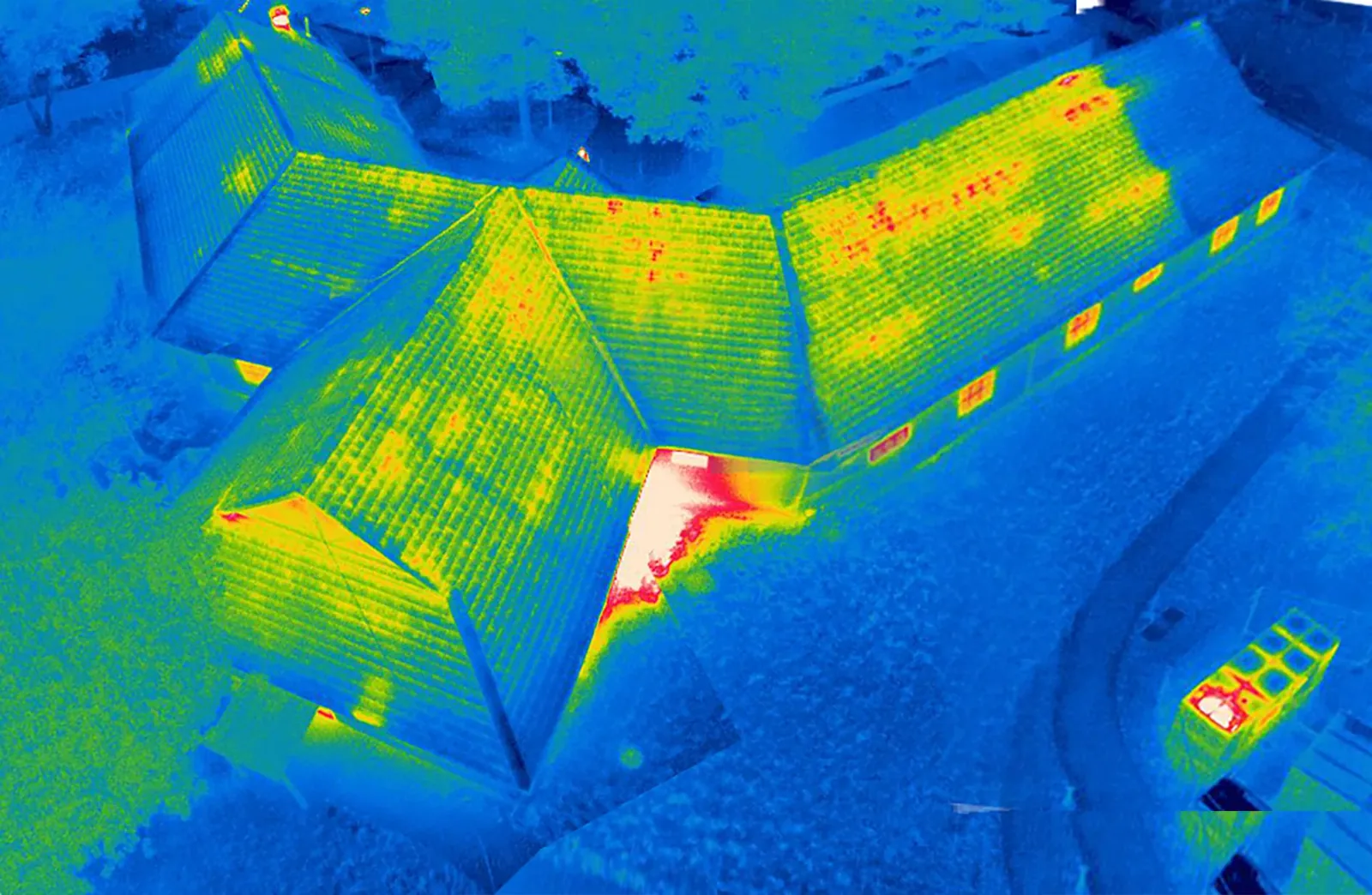
Storage sites often combine an office, climate-controlled blocks, drive-up rows, and covered circulation. The office may have rooftop equipment and more penetrations; the storage rows may have long, simple slopes but exposed fastener lines. Our office-building roof work follows the same curb-by-curb review. We separate these assemblies instead of calling every roof area the same system. When water has reached insulation, an infrared moisture survey can help focus test cuts, while an infrared moisture survey and close roof walk help test whether a visible defect explains the wet area.
Check Drainage and Metal Edges
Start with the low points. We clear the view to each drain, scupper, gutter, or downspout opening and look for a blocked flow path, a settled area, or a detail that holds water at a seam. Murfreesboro averages just under 56 inches of annual precipitation, distributed across 134.5 measurable-rain days. We check the actual storage roof's drainage route and overflow provisions, not assume a leak.
Edges take a different kind of review. We check coping, rake trim, gutters, eave closures, and fasteners for movement, separation, or failed sealant. A loose trim piece can admit wind-driven rain and can become a safety issue above an occupied aisle. The East Main Street Historic District is mapped among downtown commercial, civic, residential, and open-space uses; that compact street setting is a reminder to plan staging and lifts around adjacent occupancy. Every storage property has its own access and neighboring conditions, so the work zone follows the site walk.
Choose Repair, Recover, or Replace
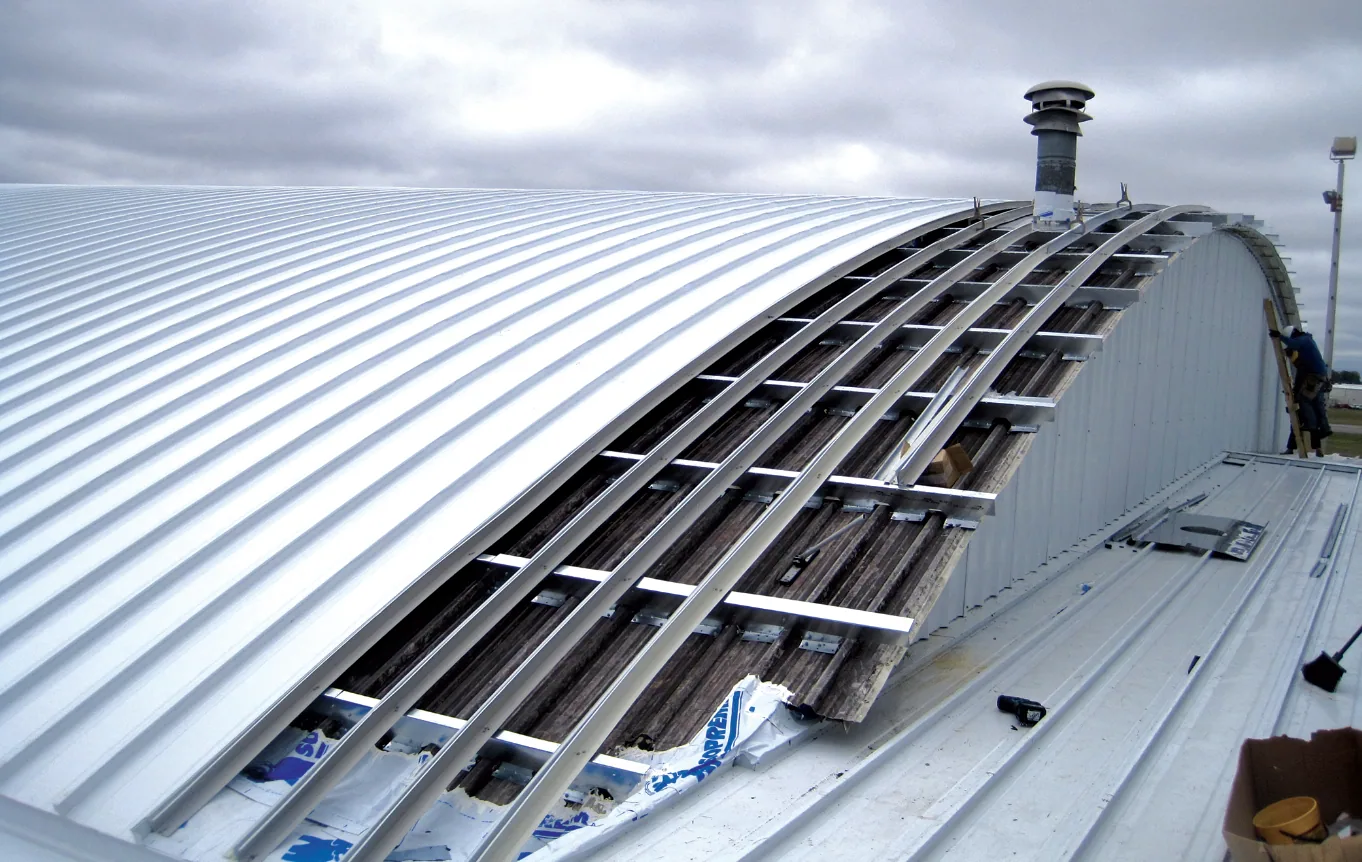
A repair is useful when the defect is local, the surrounding material remains sound, and the deck is dry enough to accept the detail. We remove failed sealant where needed, replace damaged material, rebuild a flashing, or secure an edge with compatible components. A coating can restore a suitable roof surface only after adhesion, seams, wet areas, and drainage are addressed; metal retrofit roofing may suit a different assembly. It does not make a saturated assembly dry or repair a moving deck. We explain which conditions support each option before recommending the scope.
Replacement becomes a stronger candidate when leaks recur at unrelated details, moisture is widespread, insulation has lost its function, or the existing assembly cannot support a reliable tie-in. We check attachment and deck condition, then compare a recover assembly with tear-off. A tear-off exposes more of the deck but changes noise, debris, staging, and the length of disruption.
Keep the Site Open During the Work
Customer traffic changes how a roof crew reaches a work area. We map the ladder or lift position, loading route, office entrance, fire access, and any drive aisle that must remain clear. Deliveries of membrane, insulation, or metal are timed to avoid blocking unit access. If the repair sits over a climate-controlled block, we coordinate the loudest work and temporary protection with the manager. The roof is not left open at shift end; each section gets a weather hold that can withstand the next change in conditions.
Medical Center Parkway has a concentrated medical-commercial and office-park setting, including routes where tenant continuity and rooftop equipment are practical planning concerns. For a storage operator with more than one facility, the same discipline helps compare sites without assuming they share one assembly. Our roof condition reports keep those records separated. We can organize a roof condition report by building and section, attach dated photos, and separate urgent water entry from planned maintenance.
Set a Repair Boundary
Before work starts, we mark what is included: roof section, edge or penetration detail, interior protection, debris handling, and any temporary access restriction. If a test cut reveals wet insulation or a damaged deck, we photograph the opening and stop at a safe boundary before expanding the scope. The manager can then decide whether to patch, replace a larger section, or plan a full reroof. Clear boundaries matter on storage sites because one small repair can sit beside several occupied rows that need uninterrupted access.
Where an insurance claim is involved, we keep the roof observations distinct from conclusions about cause or coverage. We can provide dated photographs, a repair scope, and a condition record for the owner and adjuster to review. If wind or hail is reported, the inspection checks the actual edge, panel, membrane, and flashing conditions.
Schedule the Roof Walk
Have the site manager identify the affected unit row, first report date, interior evidence, and any earlier repair. We will match that information to the roof section, inspect the drainage path and transitions, and return a written scope with photos. If an active leak threatens stored property, call for emergency roof repair any time of day. For recurring issues, a preventive maintenance visit can track open seams, sealant condition, blocked drains, and prior patch edges before they create another interior report.
Tell us which drive aisles and building entrances must stay clear, how the office schedules customer access, and whether a tenant notice is needed. A roof walk at the site is the fastest way to distinguish one failed detail from a broader assembly problem. For recurring checks, we track open seams, sealant, drains, and earlier patches through a maintenance visit. Ask for the scope to identify the exact work area and the closeout photos the manager will receive.
Commercial Roofing Questions
Why does water show up several units away from the roof defect?
A deck flute, insulation joint, conduit, or framing line can carry water laterally before it reaches a ceiling. We compare the unit location with seams, penetrations, and roof low points. The repair follows the entry detail, not just the stain.
Can you keep tenants and customers moving during roof repairs?
Yes, with a defined work zone. We position ladders and lifts, keep required aisles open, and coordinate noisy work with the manager. Any roof section opened during the day is protected before the crew leaves.
When is a coating a reasonable choice for a storage building?
The roof must be stable and dry enough. We check adhesion, seams, fasteners, wet insulation, and drainage first. Trapped moisture or deck movement can make a coating hide symptoms, so we price repair and replacement separately.
What should the repair scope say about a test cut?
The scope should identify the test-cut location, the layers found, and the temporary closure. If wet insulation or weak decking continues beyond the planned repair, we photograph it and agree on the next boundary before expansion.
What should we have ready before the roof walk?
Share affected units, the first report date, earlier patches, access rules, and interior photos. Point out entrances and delivery windows that must stay clear. We will use those details to choose the route and scope to visible findings.
Related Roofing Work
More commercial roofing work connected to Self-Storage Roofing in Murfreesboro.


Plan the Inspection Window
Call to set a roof walk around unit access, delivery traffic, and office hours. We will identify the affected section, document the drainage and edge details, and give you a repair boundary to review.