Aircraft Hangar Roofing in Murfreesboro, TN
We inspect and repair aircraft hangar roofs in Murfreesboro, TN, checking long-span metal, large doors, equipment penetrations, and safe work sequencing.
Aircraft Hangar Roofing
A hangar door can span more than one roof bay, and its movement sets the inspection plan. We check the door head, jamb transitions, adjacent metal panels, ridge, and eave before tracing a leak across the open span. The roof walk also accounts for aircraft movement, apron access, lighting, exhaust equipment, and any area that must stay clear. In Murfreesboro, TN, our scope identifies the work zone and weather hold before a panel, flashing, or membrane section is opened.
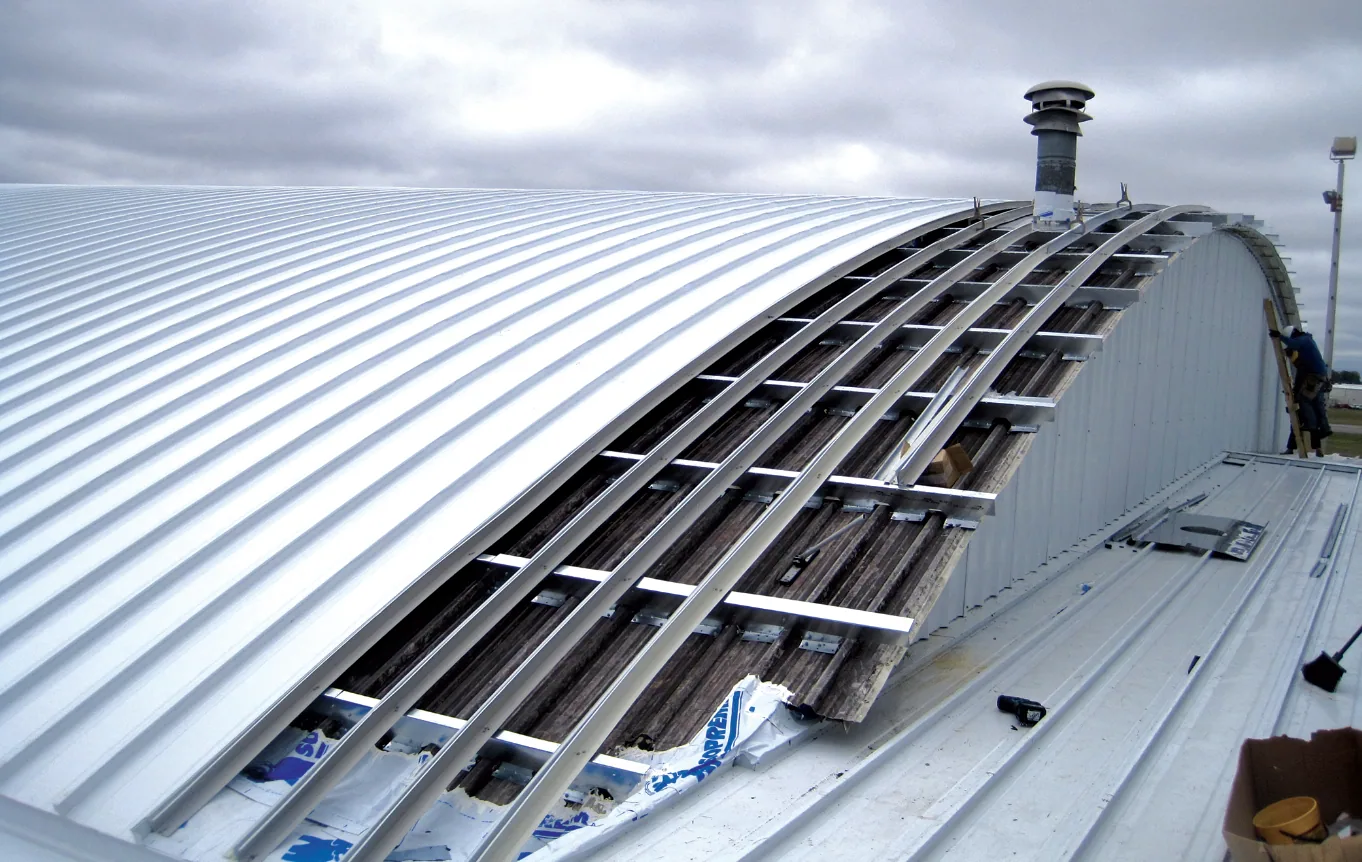
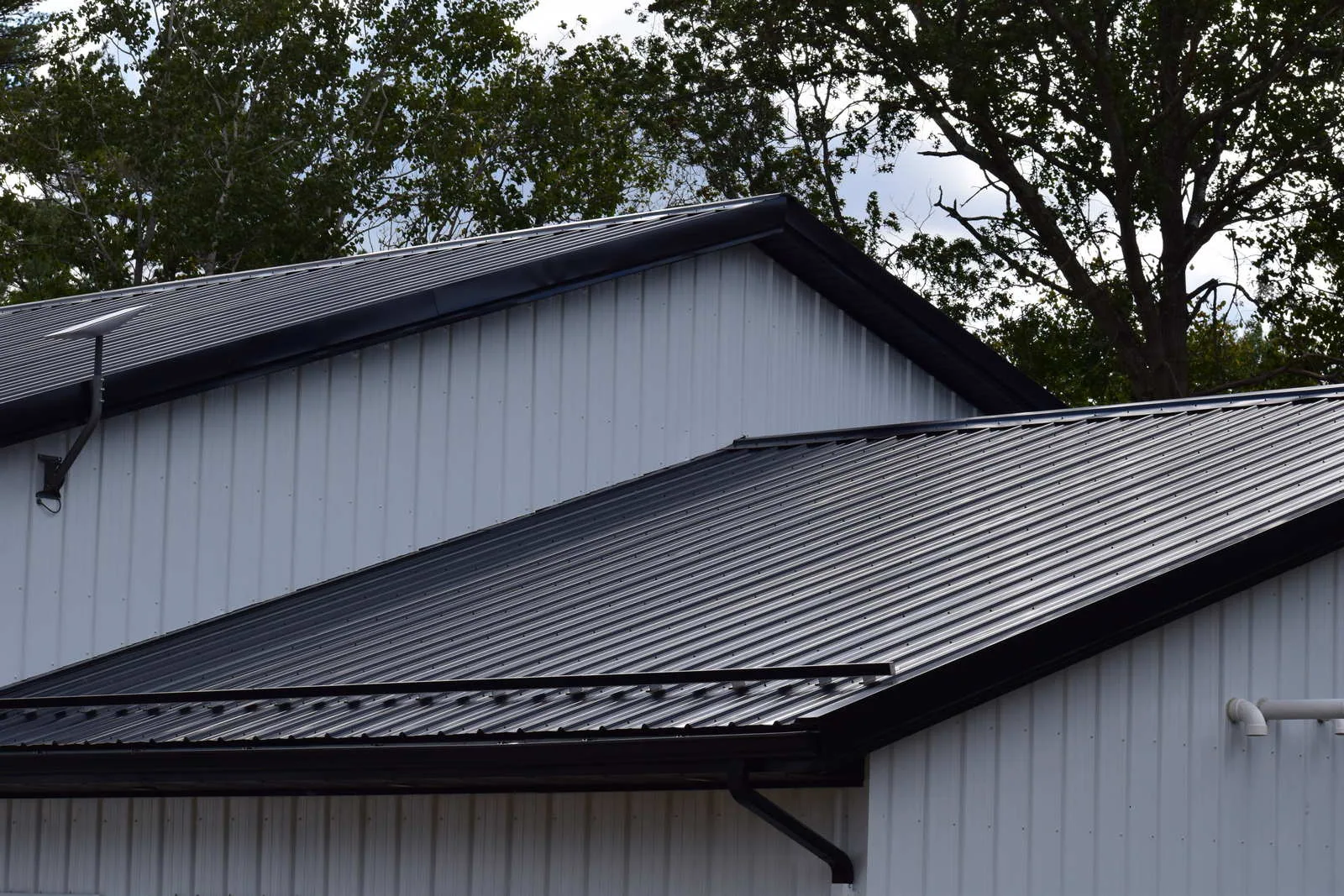
Long metal runs need close checks at sidelaps, fasteners, ridge caps, and changes in plane. A low-slope office or parts area tied to the hangar may have another assembly and its own drains and curbs. We identify each roof section separately, record the deck condition where accessible, and compare the observed defects with the interior report. When a leak cannot wait, our emergency roof repair response runs around the clock; temporary closure and end-of-shift protection are part of the plan.

Inspect the Span and Door Opening
Large doors create repeated movement at tracks, head trim, seals, and adjacent wall panels. We look for loose closures, displaced metal, failed sealant, and water entry at the point where the moving door system meets the stationary building. The roof detail above can be sound while the wall-to-roof transition is open, so we trace the path from exterior trim to the interior frame. Photos should show the full opening and a close view of the failed joint, not just a ceiling mark.
On the roof, panel laps and fasteners need a different repair than a single-ply membrane. We check whether fasteners have backed out, washers have compressed, seams have opened, or a previous patch has trapped water. A metal retrofit system may be considered when the existing roof can support the assembly and the geometry allows a sound tie-in. A warehouse roof shares long runs; hangar door clearance changes the sequence. A connected flex-industrial section may use another assembly.
Trace Drainage and Penetrations
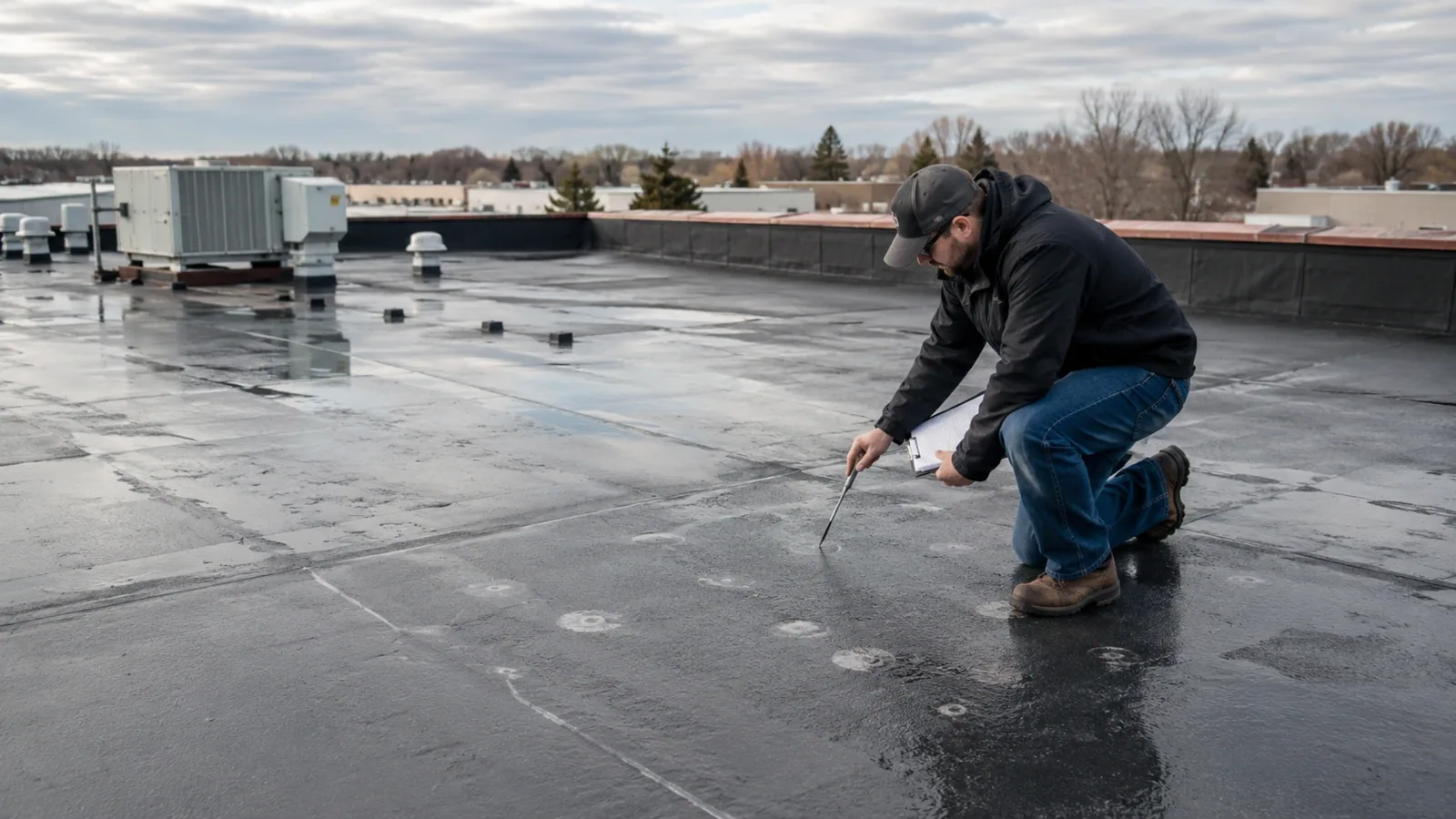
Water can enter at a ridge, curb, skylight, conduit, wall transition, or edge and travel before it reaches the floor. We inspect the roof plane above the report, then expand the walk to nearby seams, penetrations, and drainage outlets. A curb may need new flashing while the adjacent roof remains serviceable. If moisture extends below the surface, we use selective testing to distinguish a local detail failure from a wider insulation problem. The scope records what was visible and what needs an opening to confirm.
Murfreesboro averages roughly 89 days with minimum temperatures at or below freezing and 47.8 days reaching 90°F. That seasonal swing puts panel laps, fasteners, and sealant on the hangar walk list. It does not prove a leak; we photograph only conditions found at the actual bay or door section.
Plan Around Aircraft and Ground Crews
Before lifting materials, we confirm the approach route, aircraft movement restrictions, equipment shutdowns, and any clearance needed below the work. We set barriers, protect equipment and aircraft from dust or debris, and maintain a safe walk path for ground staff. If operations require a clear bay, we divide the project into sections and close each one before moving to the next.
Volunteer Training Site in Smyrna combines aviation-support, armory, maintenance, barracks, and warehouse buildings within one National Guard property. That mix makes door clearance and roof assembly questions distinct from a shop roof. The I-24 SMART Corridor links Nashville and Murfreesboro; for a Smyrna commercial property, we confirm the actual entrance, turning area, and staging point before delivery.
Choose a Repair Boundary
A repair is appropriate when the defect is isolated and the surrounding metal, membrane, and deck remain sound. We replace damaged trim or panels, rebuild a flashing, reseal a compatible joint, or repair a membrane detail without extending work into stable sections. If fasteners are failing across a broad area, moisture has spread, or the deck has lost capacity, a larger replacement scope may be needed. The decision follows the observed assembly and test results, not the building label.
Recovering a roof can avoid some tear-off disruption, but only when attachment and moisture conditions support it. For a long-span hangar, we check the substrate, movement at door and wall transitions, and the extra load and edge details before comparing options. A standing seam metal assembly or a TPO system may suit different roof areas; the tie-in at a low-slope connector remains its own detail. We show the included bays, closures, flashings, and exclusions in the written scope.
Record Each Roof Bay
We label photos by building face, bay, panel line, or door opening. The closeout record identifies the defect, repair, and any material left under observation. If a test cut finds wet insulation or a compromised deck, the crew photographs the opened layers and restores temporary protection while the owner reviews the added work.
Where a storm is reported, we inspect for physical signs such as punctures, displaced trim, split seams, or damaged attachments. One-inch hail was observed seven miles south of Murfreesboro on May 8, 2024. The event does not establish whether an individual hangar was struck. We document the roof condition we see and separate it from questions of cause or coverage. A commercial roof inspection can establish a baseline, and a condition report can keep future checks organized.
Set the Access Window
Send the affected bay, door position, reported leak time, prior repair records, and any operations window that limits overhead work. We will confirm access, inspect the matching roof section, and outline the repair boundary with photos. If an aircraft must move or an area cannot be closed, tell us before the visit so the work route can be planned safely. The estimate separates immediate water control from a longer-term roof decision.
For an active leak, call at any hour for emergency roof repair. For capital planning, compare the current assembly, deck condition, moisture findings, and access constraints before setting a replacement sequence. We can also review a connected office, workshop, or parts space as a separate section rather than assume the whole structure uses the same system. The crew will leave each opened area protected, with the next weather hold and return point made clear to the facility lead.
Commercial Roofing Questions
Can a hangar door stay usable during roof repairs?
That depends on the door movement and the roof section above it. We identify the lift path, open-door clearance, and time when the bay must remain available, then isolate the work area. If a closure or panel replacement crosses the door head, that phase needs a coordinated window.
How do you find a leak across a long roof span?
We start at the interior report, then inspect the roof bay above it and nearby ridge, sidelaps, penetrations, and drainage. Water may travel along a panel or framing line. Photos and a marked sketch keep the repair tied to the likely entry detail rather than the floor stain alone.
When does a metal roof need more than a fastener repair?
A few loose fasteners can be corrected locally if the panel and substrate are sound. Widespread back-out, open laps, corrosion, or wet insulation calls for broader testing. We document the pattern and compare repair with retrofit or replacement after checking attachment and edge conditions.
What access details should we share before mobilization?
Tell us about aircraft movement, gate or escort requirements, overhead clearances, equipment shutdowns, permitted staging, and any bay that must stay open. We use that information to place lifts, set the work zone, and protect personnel below the roof.
How will you handle a concealed deck problem?
If an opening reveals wet insulation or weak decking, we photograph the layers and stop at a stable boundary. We close the area against weather, then review the added scope with the owner before expanding beyond the agreed section.
Related Roofing Work
More commercial roofing work connected to Aircraft Hangar Roofing in Murfreesboro.
Coordinate the Hangar Roof Walk
Share the affected bay, aircraft schedule, access rules, and overhead clearances. We will inspect the corresponding roof section, document the door and edge details, and return a scope planned for safe access and a protected work zone.