Flex Industrial Roofing in Murfreesboro, TN
We repair and replace flex-industrial roofs in Murfreesboro, TN, separating office, shop, loading, and storage sections by assembly and access needs.
Flex Industrial Roofing
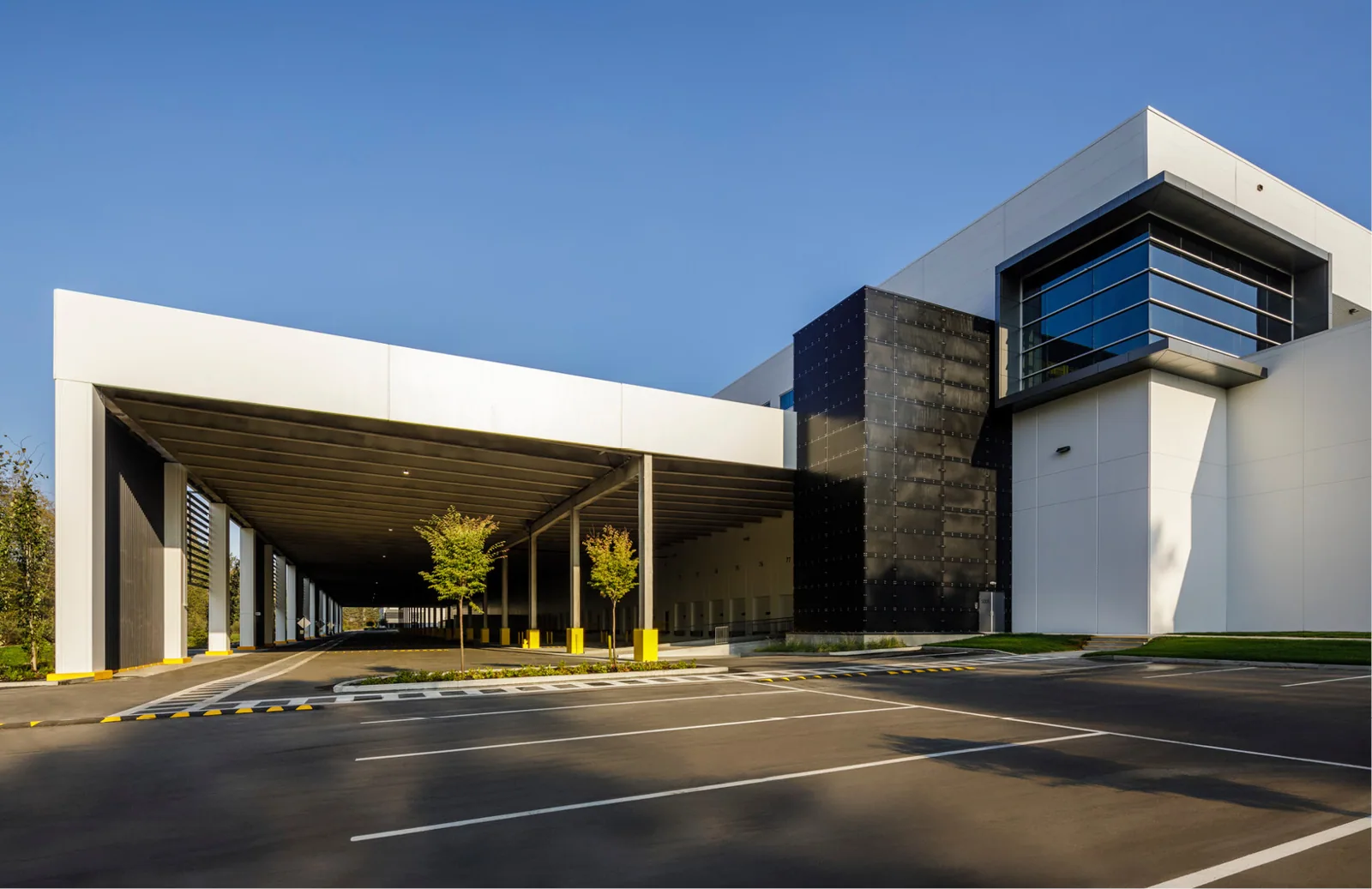
A flex building can put offices, light assembly, warehouse bays, and loading doors under one roof line. Those uses rarely share the same access window or interior protection needs. We map the building by tenant and roof section, then mark drains, equipment curbs, wall transitions, and earlier repairs. In Murfreesboro, TN, that walk tells us whether a leak sits above an occupied office, a shop floor, or a dock that cannot lose its loading window.
We identify the roof material and deck before discussing repair or replacement. Warm, wet seasons and freezing nights make drainage and tie-ins worth inspecting, but the roof condition has to show the need. Our scope records the visible defect and any test area separately. If a leak is active, our emergency roof repair response runs around the clock. We close each work area against weather before leaving and keep the owner clear on what remains open for the next visit.
Separate Office and Shop Roofs
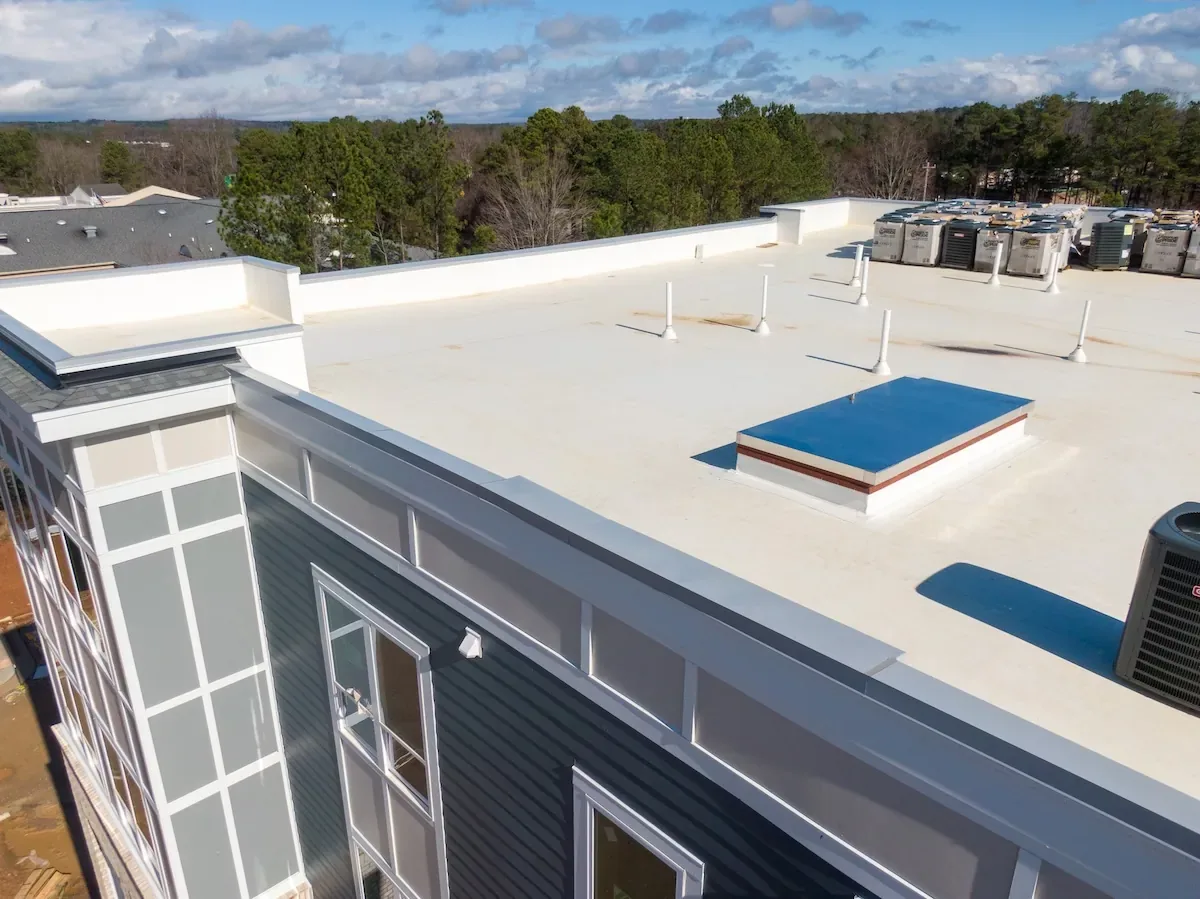
The office portion may carry rooftop units, exhaust, and more curbs than the storage wing. A production or assembly bay may have long, open roof spans with different lighting and ventilation penetrations. We inspect each assembly on its own terms: seams, fasteners, panel laps, membrane transitions, edge metal, and the condition at each wall joint. The warehouse roof section may have one roof type while the distribution bay beside it has another.
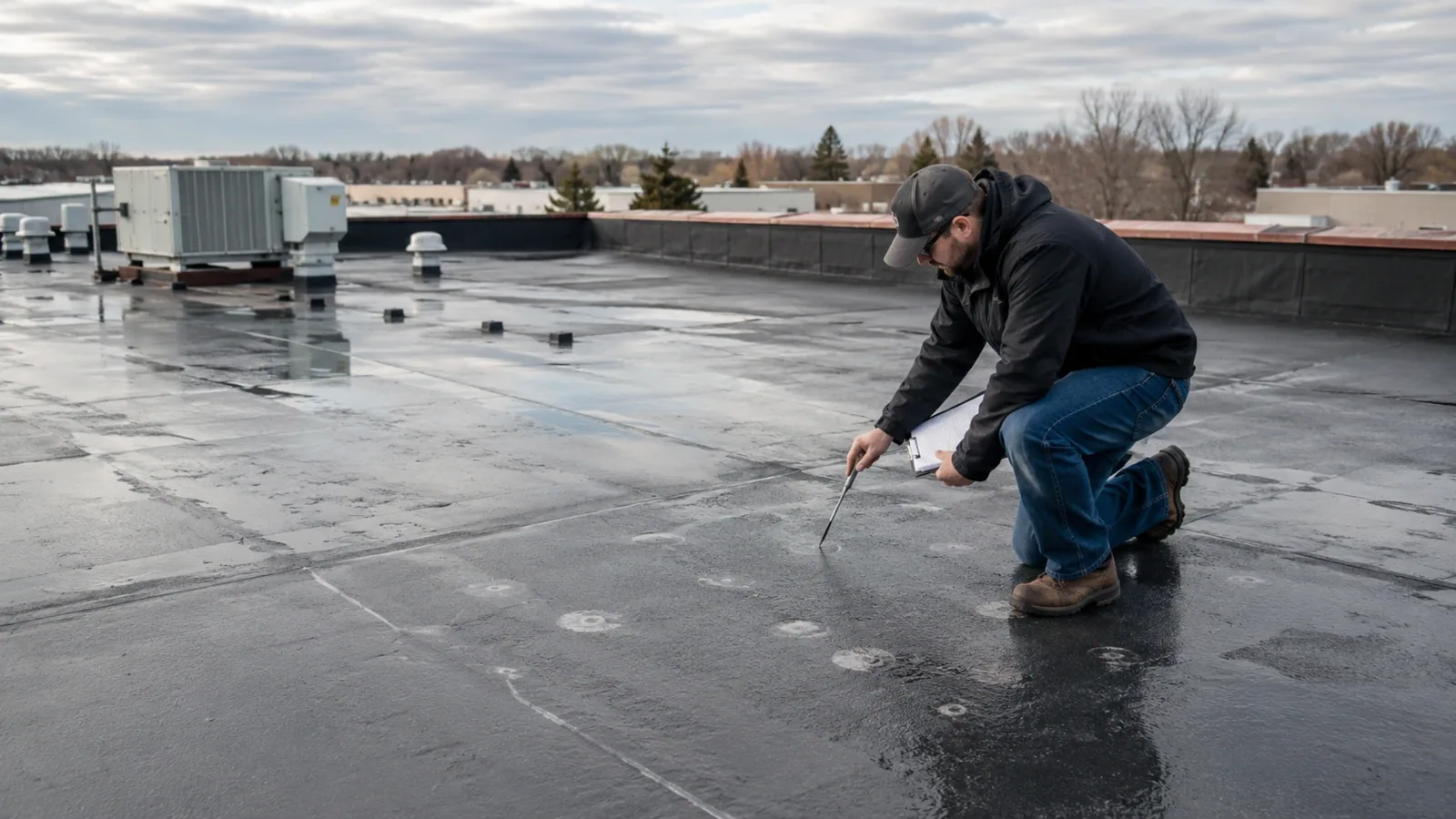
Interior reporting can blur those boundaries. A stain can travel along a beam or deck flute from a failed curb well away from the tenant's first observation. We start at the affected room, inspect above it, and extend the walk to adjacent seams and low areas. If several tenants share one roof, we label the photo and repair limit by bay, suite, or roof plane so the property manager can schedule access without treating a small defect as a building-wide failure.
Follow Drainage Through the Building
Roof water has to reach a drain, scupper, gutter, or eave without ponding around equipment or a patched seam. We trace the drainage path and check outlets, overflow routes, debris, low spots, and signs of repeated wetting. Murfreesboro averages 47.8 days reaching 90°F or higher and about 89 days with freezing-minimum temperatures. That seasonal swing puts fasteners, curb seals, and metal transitions on the industrial roof walk. A field check still determines whether anything moved.
Medical Center Parkway includes medical-commercial and office-park settings, where rooftop equipment and tenant continuity can affect access sequencing. We plan a roof walk around active offices and keep equipment clearances in view. A long-term weather history is not a substitute for testing insulation. If moisture appears likely, we can make targeted openings and show the layer condition. The manager then has a defined repair boundary, instead of a general recommendation to replace an entire multi-tenant roof without confirming how far the damage extends.
Set Repair Limits by Assembly
A localized repair may work when the seam, flashing, or fastener issue is confined and the nearby deck and insulation remain serviceable. We remove failed material, prepare the substrate, and install a compatible repair that ties into sound roofing. Coating is an option only when the existing surface, adhesion, drainage, and moisture conditions support it. It cannot stabilize a moving deck or dry wet insulation. Our proposal shows which roof plane is included and where the repair stops.
Replacement enters the discussion when wet materials recur across sections, the assembly has repeated failures, or the deck cannot hold a reliable attachment. A recover is considered after we check moisture, deck attachment, and drainage; wet layers may make tear-off the sounder option. A new system needs planned transitions at office walls, dock canopies, equipment curbs, and panel changes. A TPO roof system may suit a low-slope section, while metal may remain appropriate elsewhere. The scope names each area and tie-in rather than assuming one building label means one assembly.
Keep Tenants and Loading Moving
We agree on roof access, lift placement, material drops, and interior protection before mobilization. If a tenant operates a loading bay, the crew cannot stage pallets in the trailer path. If an office has customers or sensitive equipment below, we coordinate overhead work and set a weather hold before opening a roof section. Each daily phase identifies the active zone, the route that remains open, and the condition required before crews leave.
Veterans Parkway is a unified business-park corridor with clustered office, technology, and laboratory uses. For a flex property nearby, we still map access and staging at the actual building. We plan access at the property itself, then coordinate with the tenant lead and manager. For a roof spanning several uses, Veterans Parkway area work illustrates why clear staging and delivery windows matter across a business park.
Document the Decision
Each photo should identify a roof plane, curb, drain, edge, or repair. We attach records about visible moisture, open seams, membrane condition, and any layer exposed by a test cut. A condition report can distinguish service work from capital planning and help compare bids. If the roof has a warranty, we record the assembly and visible detail without promising what the manufacturer will approve. Owners can use the evidence to prioritize repairs while keeping tenant reports tied to the correct building area.
For a storm claim, we separate observed conditions from questions of cause and coverage. A July 2024 EF-0 tornado crossed Murfreesboro along a 3.38-mile path, with estimated peak winds of 75 mph. When a flex building reports storm effects, we inspect its panels and interior before setting repair scope. We photograph actual displaced metal, punctures, open seams, or wet insulation and identify the section inspected. Our roof condition reports make the record easier to act.
Schedule a Roof Walk
Share the tenant area, the first reported leak, any ceiling photos, and the hours when loading or production must continue. We will match the report to a roof plane, inspect nearby transitions, and set a repair limit from the findings. If the roof contains several assemblies, the written scope separates them rather than bundling them under a single replacement recommendation. Concealed conditions are identified so added work is reviewed before the crew expands into another bay.
Call for emergency roof repair if water is entering now. For planned maintenance or a capital decision, a commercial roof inspection can establish deck and moisture conditions. Tell us which doors, equipment, and dock lanes have to remain clear, and we will return a practical sequence with photos and a defined weather hold.
Commercial Roofing Questions
Should all tenants be moved out for a roof repair?
Usually not for a contained repair, but the affected tenant and interior space need protection. We define the work zone, confirm access below the roof, and set the noise or equipment window before mobilization. A broader tear-off may require a phased plan that the manager shares ahead of time.
How do you handle different roofs on one flex building?
We record each roof plane, system, penetration pattern, and drainage route separately. Office, shop, and warehouse sections may have different materials or deck conditions. The repair scope follows those boundaries and shows how each transition will be tied.
What does recurring water at one suite usually mean?
It is a clue to investigate, not proof that the whole roof has failed. We trace the water path above that suite, check adjoining seams and curbs, and test insulation where the surface suggests moisture. The next step depends on the extent found during the walk.
Can a coating fix a leaking industrial roof?
Only if the roof is a suitable candidate. We check adhesion, seams, wet material, drainage, and movement first. If the coating would bridge failed details or cover trapped water, we price the needed repair or replacement instead of applying a surface layer over an unresolved condition.
What should be in the work plan for a loading dock?
The plan should state where lifts and materials go, which lanes stay open, how debris is handled, and when the roof section is closed against weather. We coordinate those points with the tenant or dock lead so deliveries can continue outside the active work zone.
Related Roofing Work
More commercial roofing work connected to Flex Industrial Roofing in Murfreesboro.

Map the Work by Roof Section
Send the tenant layout, leak location, equipment list, and loading windows. We will inspect the matching sections, document the roof layers and drainage, and return a scope that names its repair limits and access plan.