Commercial Roofing on Broad Street, Murfreesboro, TN
Commercial roofing along Broad Street starts with the roof assembly and the access window. We inspect drainage, seams, and occupied-building work limits.
Broad Street
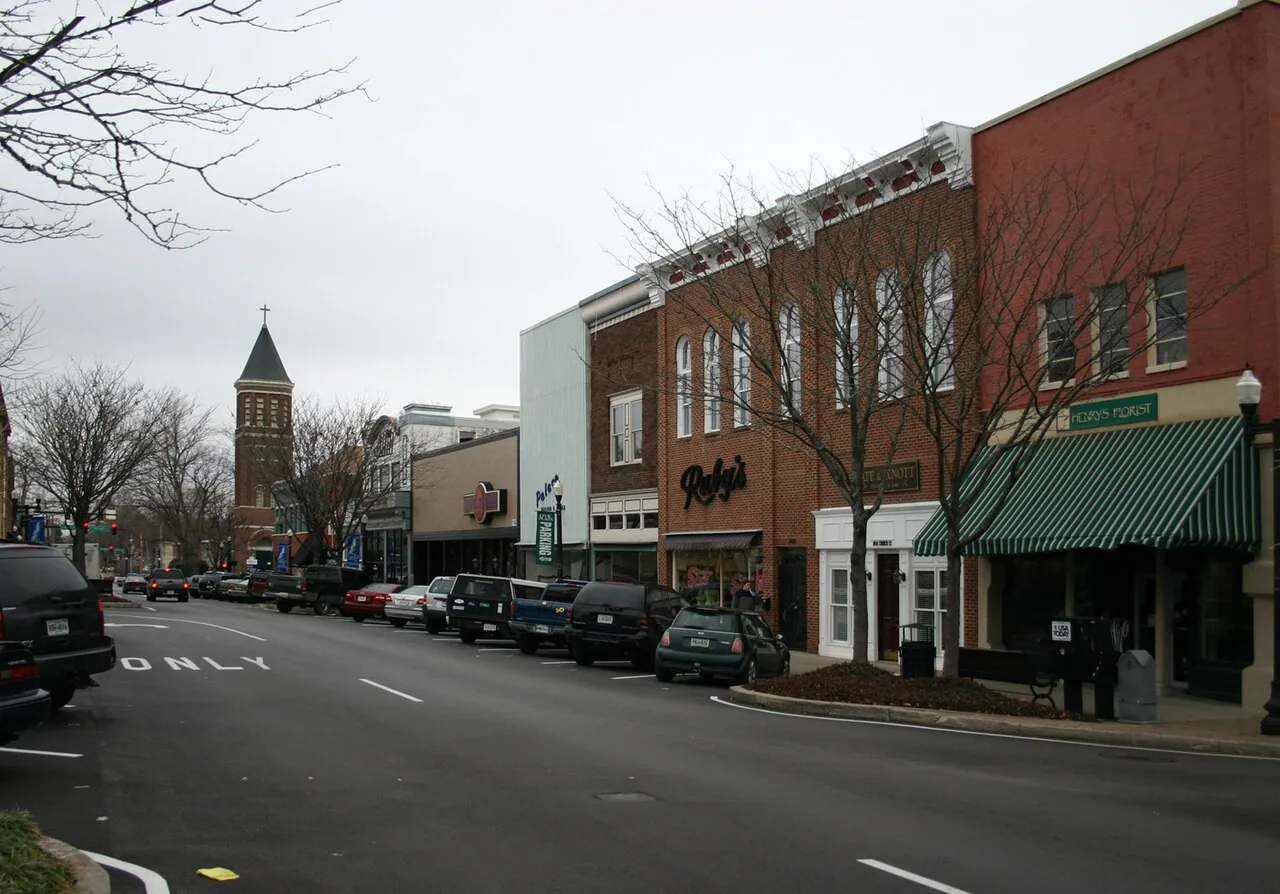
Broad Street is a city corridor between the downtown grid and the Historic Bottoms area. In Murfreesboro, TN, the proposed Town Creek daylighting and pedestrian bridge connect those sides of the street. Commercial roof work here starts with the building's actual access, staging, and occupancy, not assumptions from the district map. We walk the roof, identify the system and repair history, and mark the section where the owner needs a decision.
The first scope separates what is visible from what may be concealed. We photograph drains, seams, wall transitions, equipment curbs, and any prior patch that changes the roof surface. A closeout record or drawing can guide the inspection, but we verify it in the field. For related work around Historic Bottoms and downtown Murfreesboro, the roof plan still follows each property's access route and operating hours.
Set the work zone
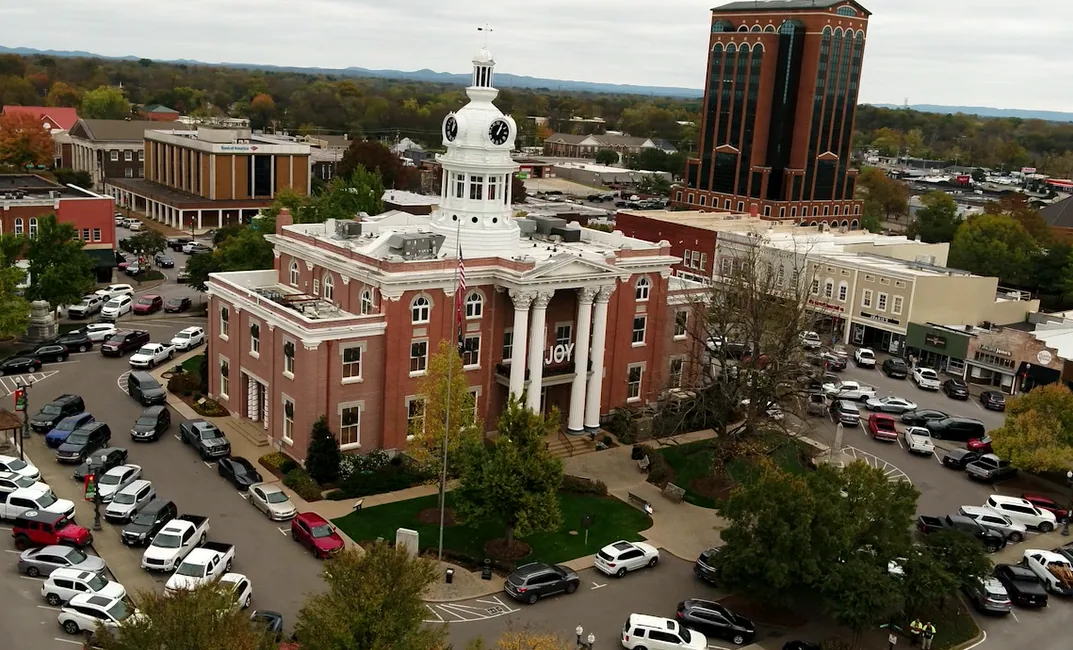
On an urban block, access and protection can be as important as roof area. We confirm the ladder or hatch route, where materials can be staged, what doors or drives must stay clear, and which occupants need notice. If the planned work affects a shared entrance or sidewalk edge, the facility contact helps set the delivery window and any temporary restriction. We mark the work zone before mobilization and leave drains and scuppers clear.
The city describes Broad Street as a link between downtown and Historic Bottoms through a planned pedestrian bridge and Town Creek improvements. That context makes coordination with nearby public areas relevant, but it does not tell us how a particular building is occupied. We confirm the actual route, roof access, and staging rules with the owner. Our occupied-building roof work can be phased so a defined section is open while the rest of the building stays in use.
Trace drainage through the roof
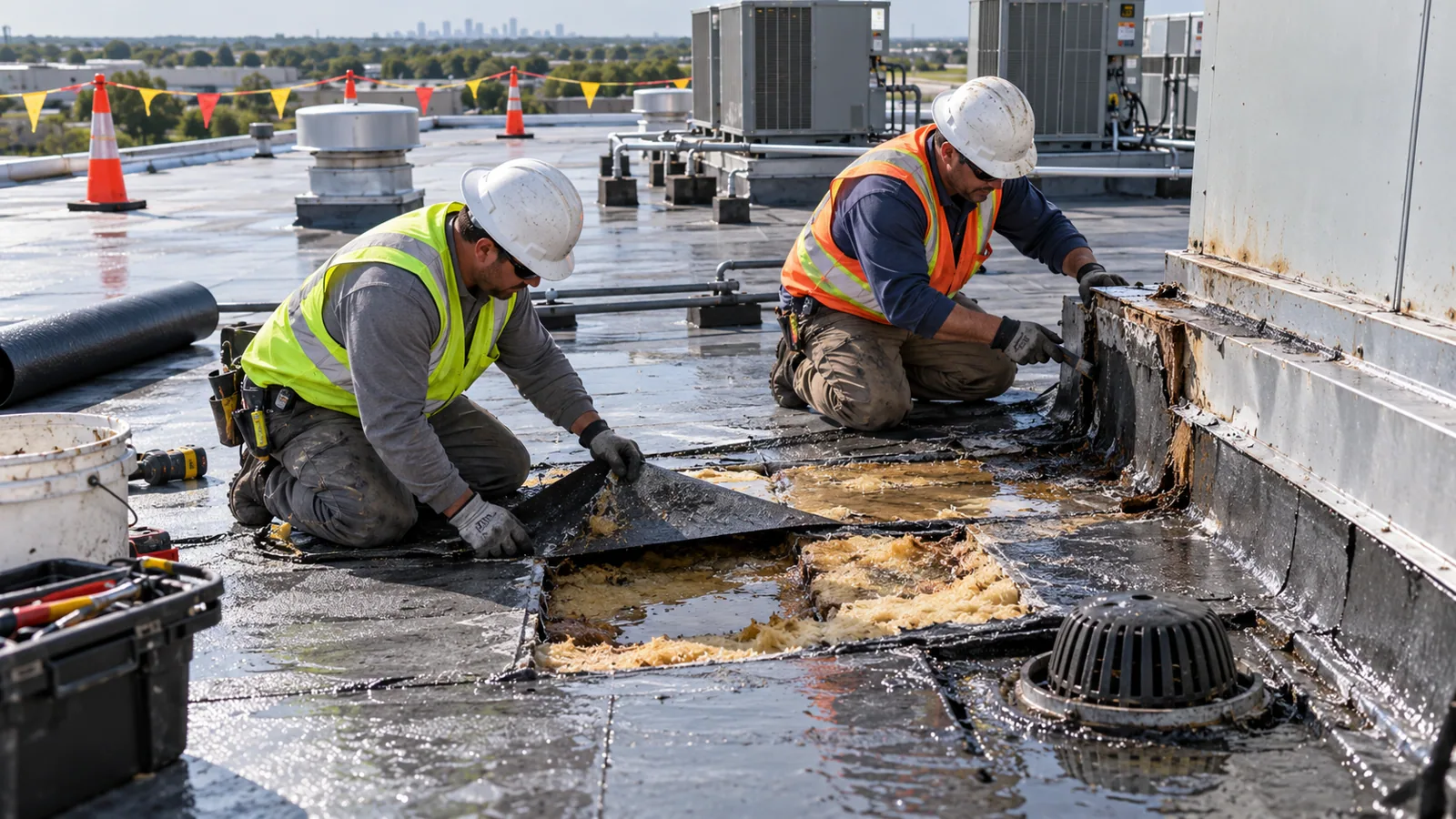
We follow each roof slope toward its outlet and check strainers, sumps, scuppers, overflow paths, and the membrane at the drain bowl. A blocked outlet, a failed flashing, and a low deck can all leave water in the same area, but they need different fixes. We photograph the condition before removing debris and record the path water can take beyond the visible pond. Interior stains are compared with the roof layout rather than treated as a point directly above the entry.
At the Murfreesboro 5 N observation site, normal annual precipitation totals 55.92 inches; the 30-year average includes measurable amounts on 134.5 days each year. That market-level pattern makes a repeatable drain check useful on Broad Street properties. It does not prove a specific roof has a drainage defect. We inspect actual slope, outlet capacity, and maintenance condition, then price cleaning separately from membrane or deck repair. If a curb or scupper is open, the drain and scupper repair scope identifies the detail and tie-in.
We also check whether an overflow path is open and where it discharges. A primary drain can be clear while the secondary route is blocked by debris or an old repair. The inspection records both outlets and records whether roof water could reach a wall or entrance if the primary path backs up. That observation helps the property contact prioritize maintenance without confusing it with a membrane replacement recommendation.
Inspect seams and wall details
At parapets and party-wall transitions, we inspect the membrane turn-up, termination, counterflashing, and metal joints for separation or movement. The same check applies at rooftop units, pipes, skylights, and any old repair that interrupts the field sheet. A patch can stop water only when the substrate is sound and the new material can bond to the existing roof. We mark the repair boundary and identify any area that needs a test cut before the owner approves a larger scope. If access stops short of a detail, that limitation stays in the report and the estimate.
Central Murfreesboro planning includes several land-use settings and recognizes the East Main Street Historic District. For a Broad Street roof project, that is a cue to ask about occupant access and work hours, not a basis for assuming a building's construction. It is not a claim about a specific building's construction or roof. We ask what must remain open below, how equipment can be protected, and when a noisy or dusty task can occur. For a closer look at leakage routes, our commercial leak repair service ties the water path to a photographed roof detail.
Price the right extent
A limited repair is appropriate when the failure is contained and the surrounding assembly remains serviceable. If multiple seams are opening, moisture extends beyond a patch, or the deck needs work, the scope can grow to a section replacement, recover, or tear-off. We compare each route by materials, labor, staging, demolition, insulation, and how long the building needs weather protection. Any test that could change the recommendation is identified before the estimate is final.
Covered commercial, industrial, and multifamily work in Murfreesboro is subject to the city's adopted 2024 codes and local amendments. Some roof-covering replacement scopes are listed as permit-exempt when deck and framing stay in place or the same system is reused, but the exact project and exceptions should be confirmed with the City. Our commercial roof inspection establishes the field condition, and a recover evaluation checks existing layers before an overlay is considered.
Leave a clear handoff
We plan the sequence around roof access, delivery times, weather, and the condition of the building below. Each shift has a defined section and a point where the roof is closed. If a weather hold interrupts, the open area is protected and the next person knows which condition must be checked before work resumes. We coordinate any rooftop equipment restriction with the facility contact so the roofer and service trade are not working against one another.
At closeout, dated photos show completed seams, flashings, drains, and any location that remains open for follow-up. The records identify what was repaired, what was not included, and what should be checked next. A manager can then revisit the same area without reconstructing it from a vague invoice. For broader planning, a marked roof condition report preserves the building record; for a different membrane, see Carlisle SynTec roof service or modified bitumen roofing. Schedule access with the person responsible for the property.
Commercial Roofing Questions
Does the Town Creek project change how a roof is inspected?
It does not change the roof check. It is a reason to confirm staging and public-area access for the property. We inspect the roof assembly, coordinate the route, and set a work zone with the site contact.
Can a leak be repaired without entering the occupied space?
Often, but the interior report can help trace the water path. We coordinate any ceiling or equipment access that is needed, then photograph the roof finding and set a repair boundary from the field evidence.
What if a drain is blocked during the walk?
We document its condition before cleaning and check the outlet again afterward. If water remains because of slope, insulation, or deck movement, we list that work separately from drain maintenance.
How do you protect a roof during an interrupted shift?
The crew closes the planned tie-in and secures the open work area before leaving. The closeout record identifies any check needed before the next shift starts.
When should we consider replacement instead of another patch?
Repeated failures, widespread moisture, poor attachment, or a deteriorated deck can make a larger scope more practical. We compare repair, recover, and tear-off options with the roof conditions and access plan.
Related Roofing Work
More commercial roofing work connected to Broad Street in Murfreesboro.

Plan a Broad Street roof walk
Share the building access rules, current leak report, and any roof plan. We will inspect the assembly, identify the repair boundary, and return a written scope with the work window and closeout steps.