
National Guard Armory Roofing in Murfreesboro, TN
We inspect and repair armory roofs in Murfreesboro, TN, planning around controlled access, occupied training areas, equipment curbs, and secure work zones.
National Guard Armory Roofing
An armory roof covers more than a drill floor. Readiness rooms, offices, storage, maintenance areas, and vehicle bays may sit under different roof sections, each with its own access controls and operating window. We start with the authorized facility contact and map the roof areas that can be inspected. In Murfreesboro, TN, the scope identifies the assembly, entry point, staging plan, and the work zone the facility can release before anyone moves material onto the roof.
We check seams, fasteners, edge metal, equipment curbs, drains, and prior repairs, then tie the findings to a bay or building section. The nearby Volunteer Training Site in Smyrna is a Tennessee Army National Guard installation with several support-building types, including armory, maintenance, barracks, warehouse, and aviation-support uses. That is regional building context, not a claim about a specific roof or prior work.
Confirm Access Before the Roof Walk
Armory work begins with the person who can approve entry and identify the buildings available for inspection. We confirm escort rules, badging, vehicle routes, overhead clearances, photography limits, and areas that must remain in operation. Those requirements can change where a lift sets or how a crew reaches a roof hatch. We do not assume a gate process from another facility.
Once access is confirmed, we separate the drill, storage, office, and maintenance roof areas. Each can have a different deck, membrane, metal panel, or repair history. A barracks roof may need a quieter occupied-room sequence, while a hangar roof adds door clearance and large-span details. We keep those building types distinct in the walk records instead of treating the whole installation as one uniform assembly.
Inspect the Assembly at Each Building
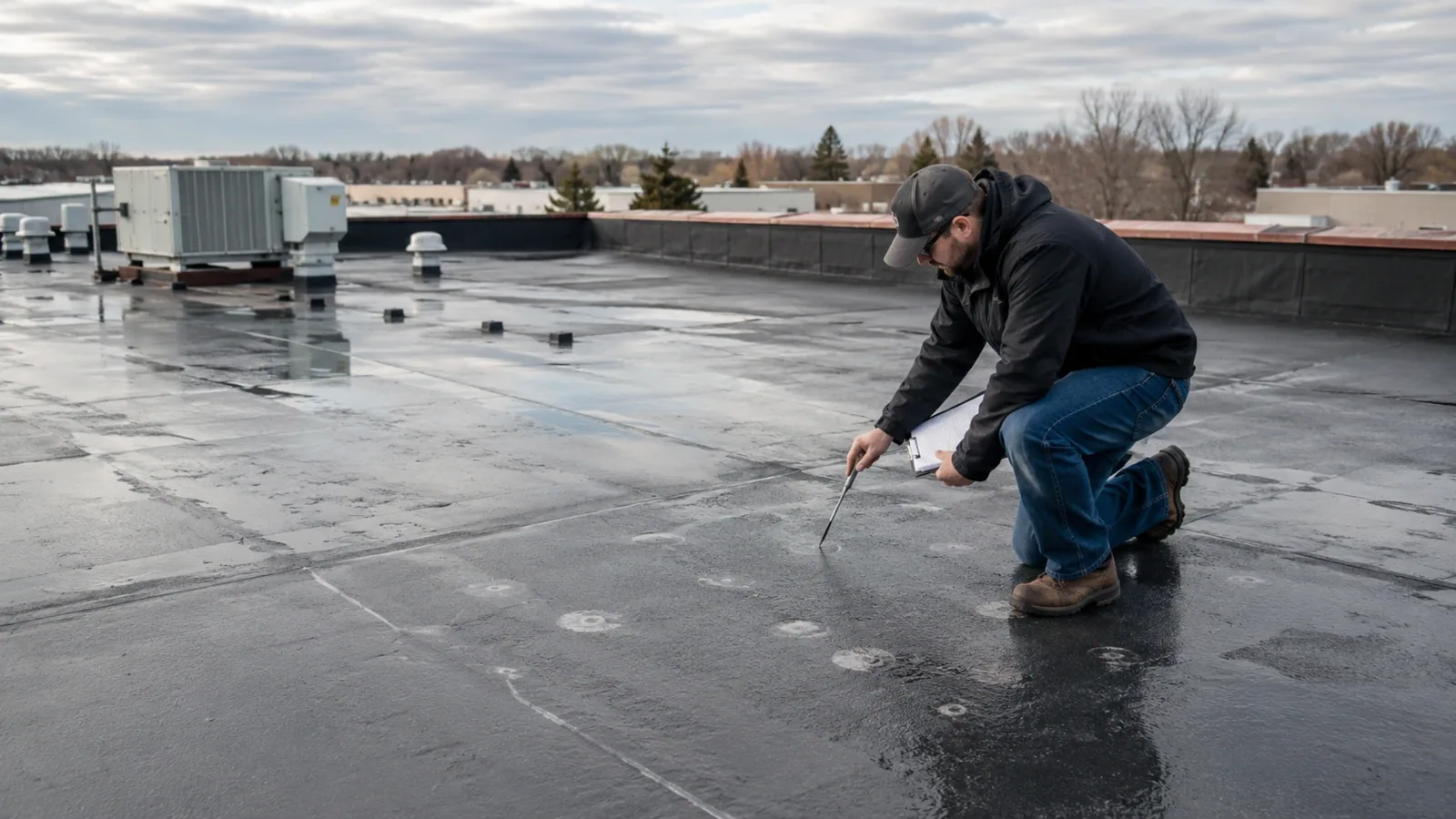
A low-slope drill or administration building often has drains, parapets, curbs, and multiple membrane seams to check. A metal maintenance bay may have long panel laps, ridge closures, fastener rows, and large openings. We identify how each assembly sheds water, then inspect the details most likely to interrupt that path. A leak in one room may have moved along a deck flute or conduit before appearing indoors, so the first stain does not define the repair boundary.
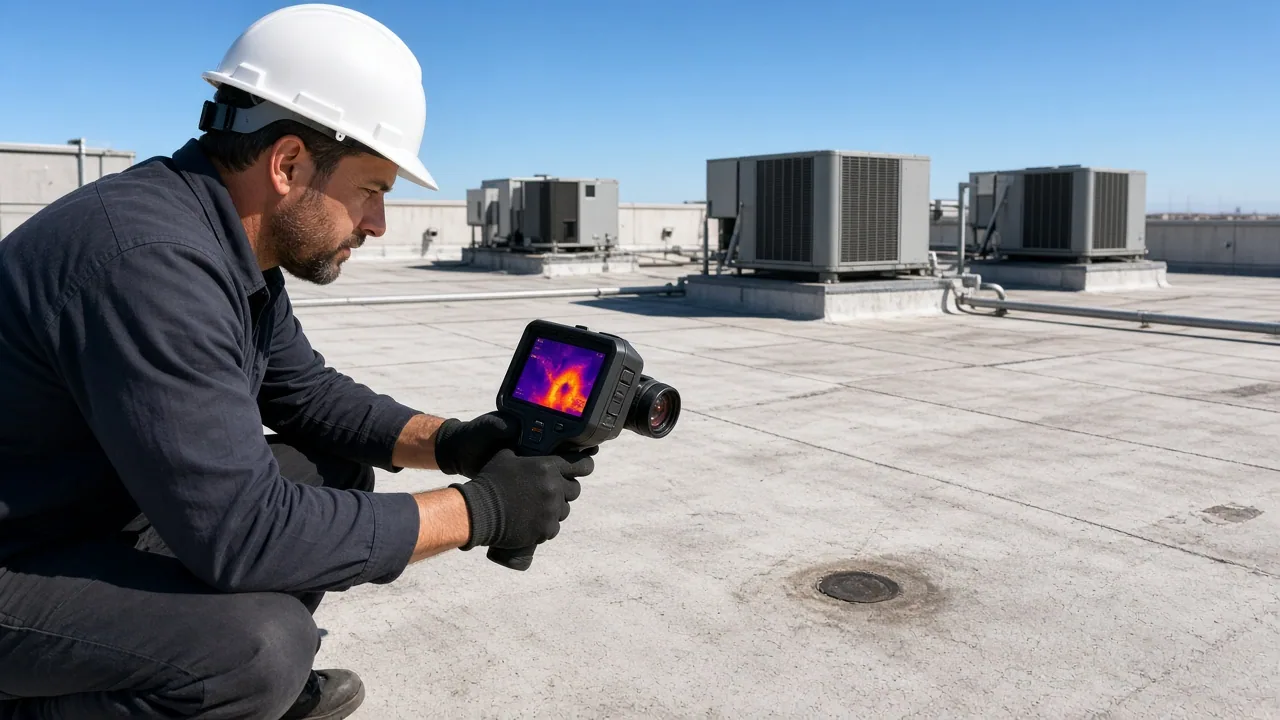
Construction at Volunteer Training Site in Smyrna spans mid-century buildings and later expansion. We record the installed roof layers and prior repairs on each building, then photograph any opening before setting the work scope. We photograph the roof, visible layers, and any test location. A commercial roof inspection can separate suspected from confirmed wet areas.
Check Drainage and Storm Evidence
One-inch hail was reported seven miles south of Murfreesboro on May 8, 2024. After a reported event, we inspect the released armory roof for displaced edge metal, punctures, or open seams, then record the actual building and section. That observation does not establish damage at this facility.
After a reported hail or wind event, we inspect metal panels, membrane, edge securement, curbs, and wall transitions for physical change. We can photograph displacement, punctures, separated flashing, and any interior effect for the facility contact to review. Keep the inspection tied to authorized roofs and permitted photography. For active water entry, our emergency response is available around the clock, subject to the facility's access approval.
Set the Repair Boundary
We identify the failed detail, prepare the substrate, and install a compatible flashing or seam repair when the surrounding roof and deck remain sound. If moisture extends into insulation or the deck is compromised, the scope may need to reach another bay. We photograph the opened layer, protect the area against weather, and stop at a stable boundary while the facility contact reviews the added work.
For replacement, we check attachment, deck, drainage, and transitions before comparing tear-off with a recover. The proposal separates tear-off, insulation, roof system, access controls, and phasing. Commercial roof replacement needs an approved section plan. A military installation roofing plan addresses access, sequencing, and daily closeout for the released section. Product and warranty terms are tied to the specified system.
Coordinate the Work Zone
A material delivery cannot block a vehicle bay or emergency route. We confirm the staging point, lift path, roof hatch, security boundary, and daily closeout requirement before crews arrive. If work takes place near occupied training or administrative space, we agree on the noise window and interior protection.
The I-24 SMART Corridor links Nashville and Murfreesboro through freeway, arterial, and connector routes. The facility sets the approved arrival road, gate, and delivery window for staged equipment. We keep the site plan narrow: which building is released, which roof plane is active, who can authorize a change, and where the crew can set materials. A Smyrna area roof walk can cover nearby commercial properties, while a named installation is visited only with its own permission and entry instructions.
Keep Closeout Useful
Photos are labeled by building, roof section, and detail so maintenance staff can match the repair to the right asset. The written scope records visible conditions, test openings, material installed, and any item left for monitoring. If the facility has multiple buildings, we list them separately rather than combine different assemblies into one condition statement.
Before the walk, gather earlier leak records, drawings, roof warranty information, and any access or photography instructions. Our roof condition report can organize current findings and near-term priorities for the facilities team. If the repair is covered by an insurance process, we provide dated observations and photos, while cause and coverage remain separate determinations. A clear record lets the authorized contact decide whether to patch one detail, return for testing, or budget a larger project.
Arrange an Authorized Inspection
Tell us which building is available, who approves access, what roof area is affected, and whether a storm or interior leak prompted the call. We will confirm the visit requirements before setting the roof walk. The inspection follows the designated route, identifies the assembly and visible condition, and returns a scope with the included work area. If a restriction limits photography or access, we document only what the facility allows.
Call for emergency roof repair if water is entering an occupied or equipment area. For planned work, share the operating calendar, delivery limitations, and any escort or badging lead time. We will lay out staging, the daily weather hold, and the return-to-service checks before the crew opens a roof section. Contact us to coordinate the roof walk with the facility's authorized representative and identify the first building to review.
Commercial Roofing Questions
What information is needed before an armory roof inspection?
We need the authorized access contact, building or roof section available, operating restrictions, and any escort or photography rules. Share prior leak records and roof records if they can be released. We confirm entry and staging details before scheduling a crew.
Can a roof repair happen while training continues?
It can when the facility releases a safe work zone and the roof section can be isolated. We coordinate noise, overhead protection, vehicle paths, and daily closure with the authorized contact. If the operation cannot release that area, the sequence moves to another approved section or window.
Does the Smyrna training site show what an armory roof needs?
It shows that the regional National Guard property includes several building uses, but it does not establish the roof assembly or condition at another armory. We inspect the actual structure, access rules, deck, drainage, and transitions before recommending work.
What if moisture is found during a test opening?
We photograph the layer condition, make the opening weather-tight, and stop at the agreed boundary. The facility contact reviews the added area before we expand the repair. The revised scope identifies insulation or deck work separately from the original detail repair.
Can you provide a multi-building roof condition record?
Yes. We label findings by building and roof section, with photos, test results, visible defects, and recommended next steps. Access limits are recorded so the facilities team can tell which areas were inspected and which need a separate visit.
Related Roofing Work
More commercial roofing work connected to National Guard Armory Roofing in Murfreesboro.
Coordinate with the Facility Contact
Provide the approved access lead, roof section, operating limits, and available drawings. We will confirm entry requirements, inspect only the released area, and return a written scope with labeled photos and a clear work boundary.