
Duro-Last Commercial Roofing in Murfreesboro, TN
Inspect a Duro-Last commercial roof in Murfreesboro before repair or replacement. We check PVC seams, flashing, drainage, prior patches, and deck conditions.
Duro-Last Commercial Roofing
A PVC roof needs careful work at the seams, penetrations, and transitions. On a Duro-Last system, we inspect the installed sheet and prior repairs before choosing a repair detail. We check the field membrane, perimeter, drain bowls, equipment curbs, and the layers below where access allows. In Murfreesboro, TN, recurring rain makes drainage worth checking during the same visit. The scope begins with the roof condition and the building's operating window.
We compare field observations with available closeout records, then mark each area that needs work. A roof plan may be out of date after equipment changes or later patches, so we verify the route from the access point to the affected section. Commercial corridors such as North Rutherford Boulevard and Greenland Drive have varied surrounding uses; neither determines what a single building's roof contains. For membrane comparisons, see our PVC roof system work.
Inspect the welded joints
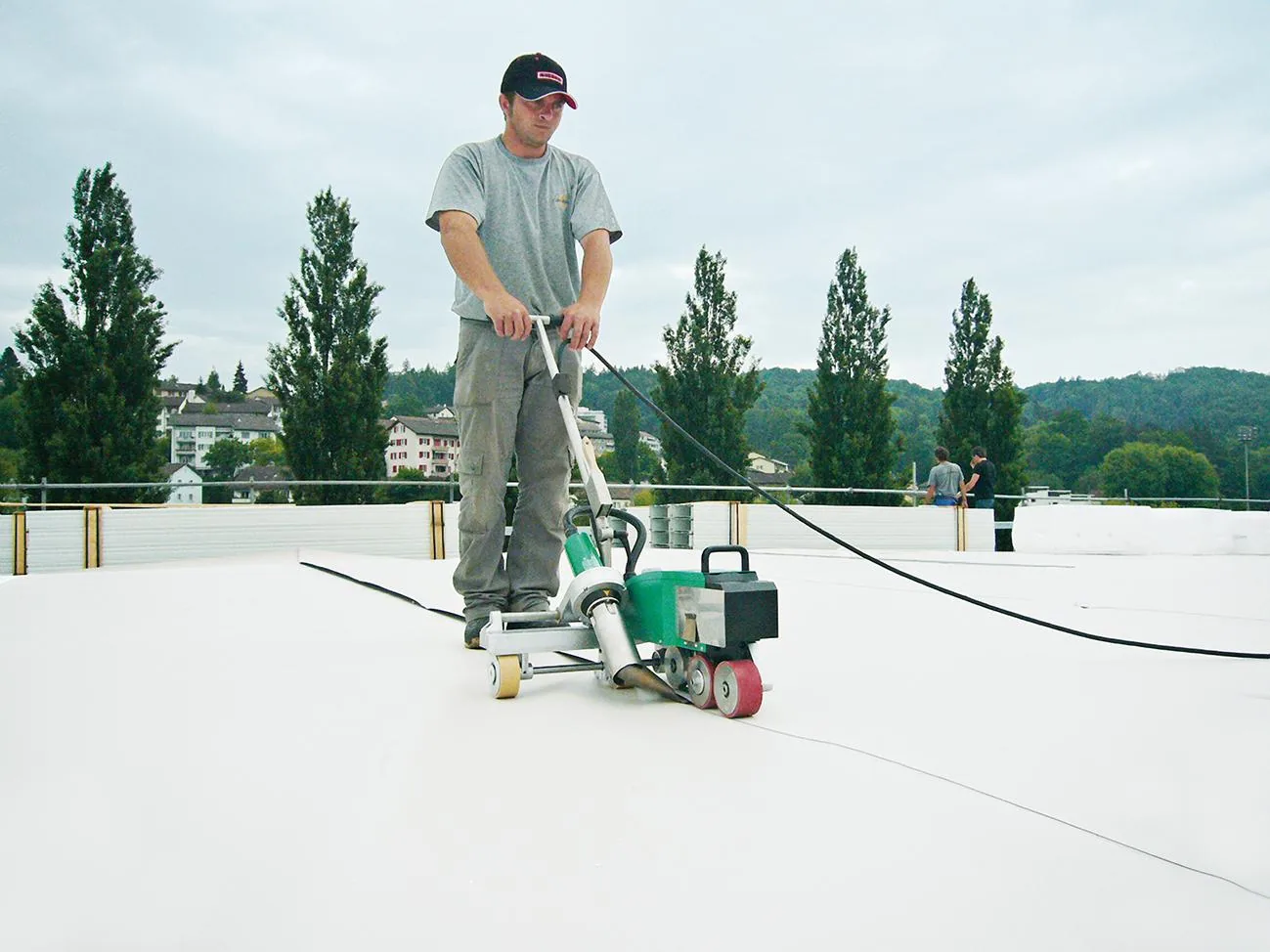
We check whether seams remain bonded, whether the sheet is clean enough for repair, and whether previous patches overlap the affected area. At corners, drains, and pipe boots, the membrane turns or changes shape, which calls for a detail-specific repair. A probe test can help find a weak edge that is not obvious from a roof-level view. We photograph the seam, mark its location, and define the repair limit where sound material remains.
If a seam failure continues across a longer run, a small patch may not be the right answer. We compare the affected length with the surrounding roof condition and check whether moisture has moved below the sheet. Any test cut is located to answer a question about insulation or deck condition. We do not price the entire field as damaged because one seam opened. The repair record explains what can be fixed now and what observation would justify a broader section.
We also check whether the sheet has enough clean, sound material around the defect for a new weld. A patch that lands on a previous repair or contaminated surface can fail at the new edge. Where the repair history is unclear, we test a small prepared area and record the result before deciding whether to enlarge the work zone. The owner can see why the chosen boundary is practical.
Check curbs and perimeter
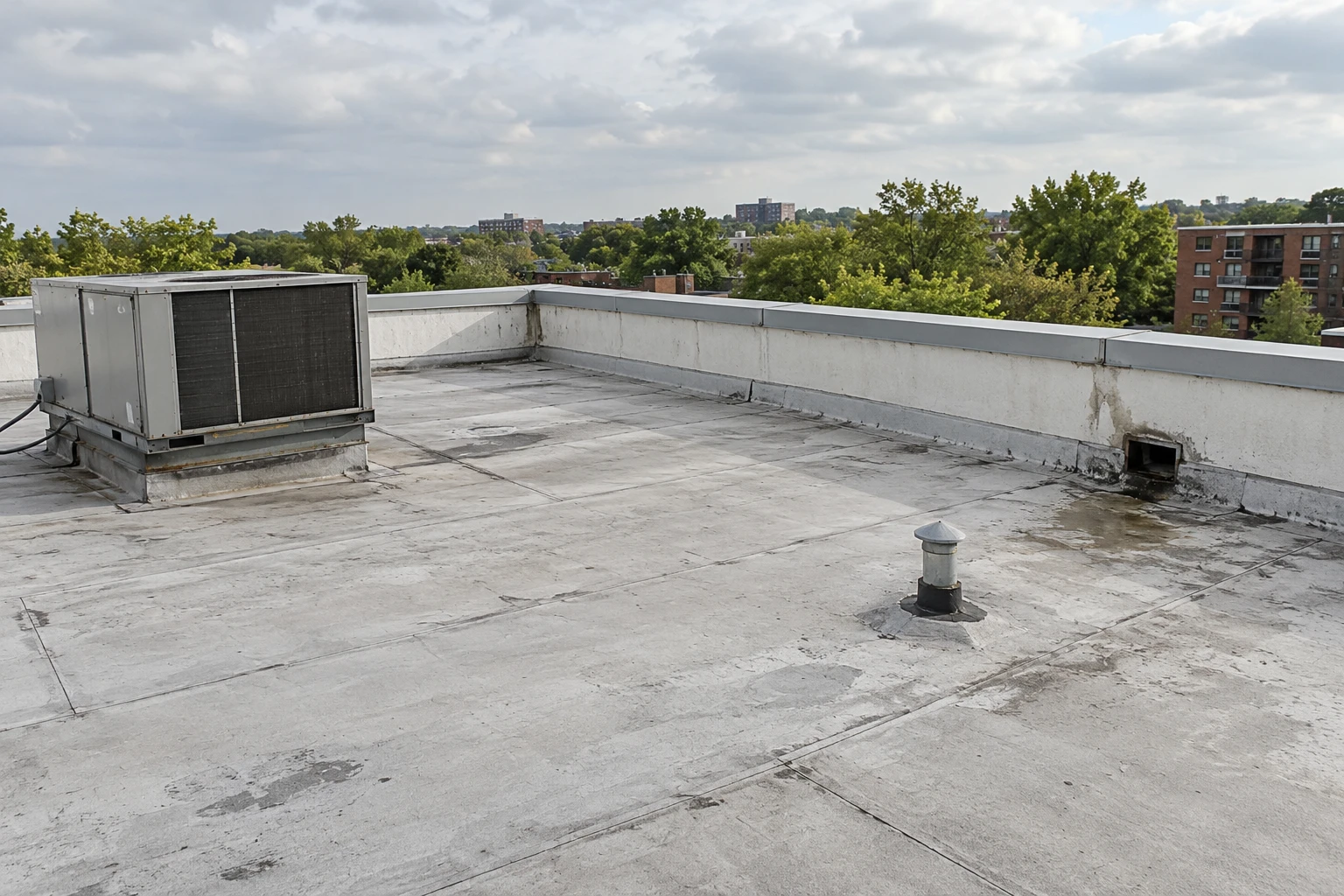
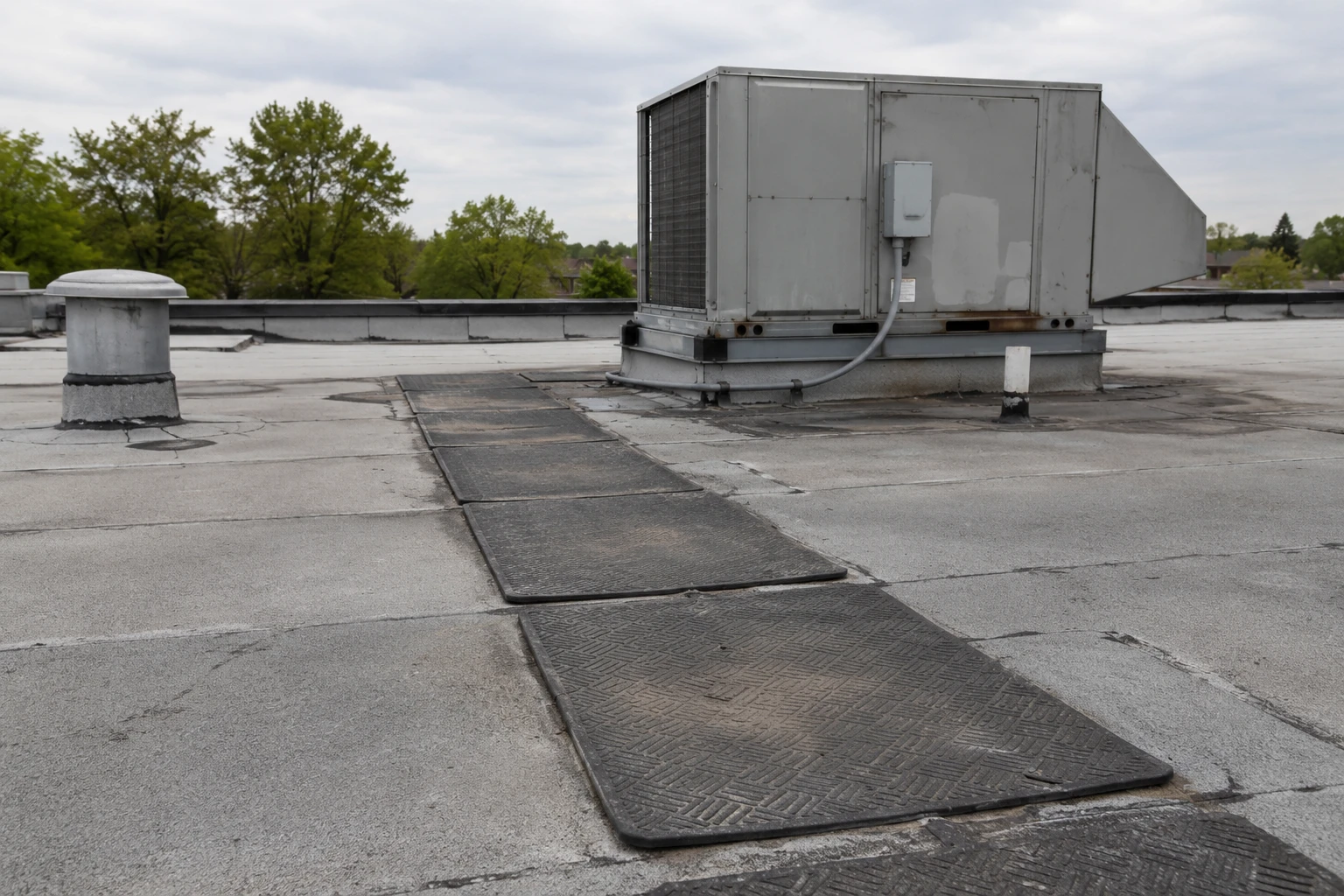
Water can enter where the membrane meets a wall, equipment curb, parapet, or metal edge. We inspect the vertical turn-up, securement, counterflashing, and adjacent sealant, then check for movement or damage from later trade work. At a rooftop unit, we look for a boot or flashing that has pulled away, a clamp that has loosened, or a support that has shifted. The repair needs to restore the whole connection, not only cover the visible gap.
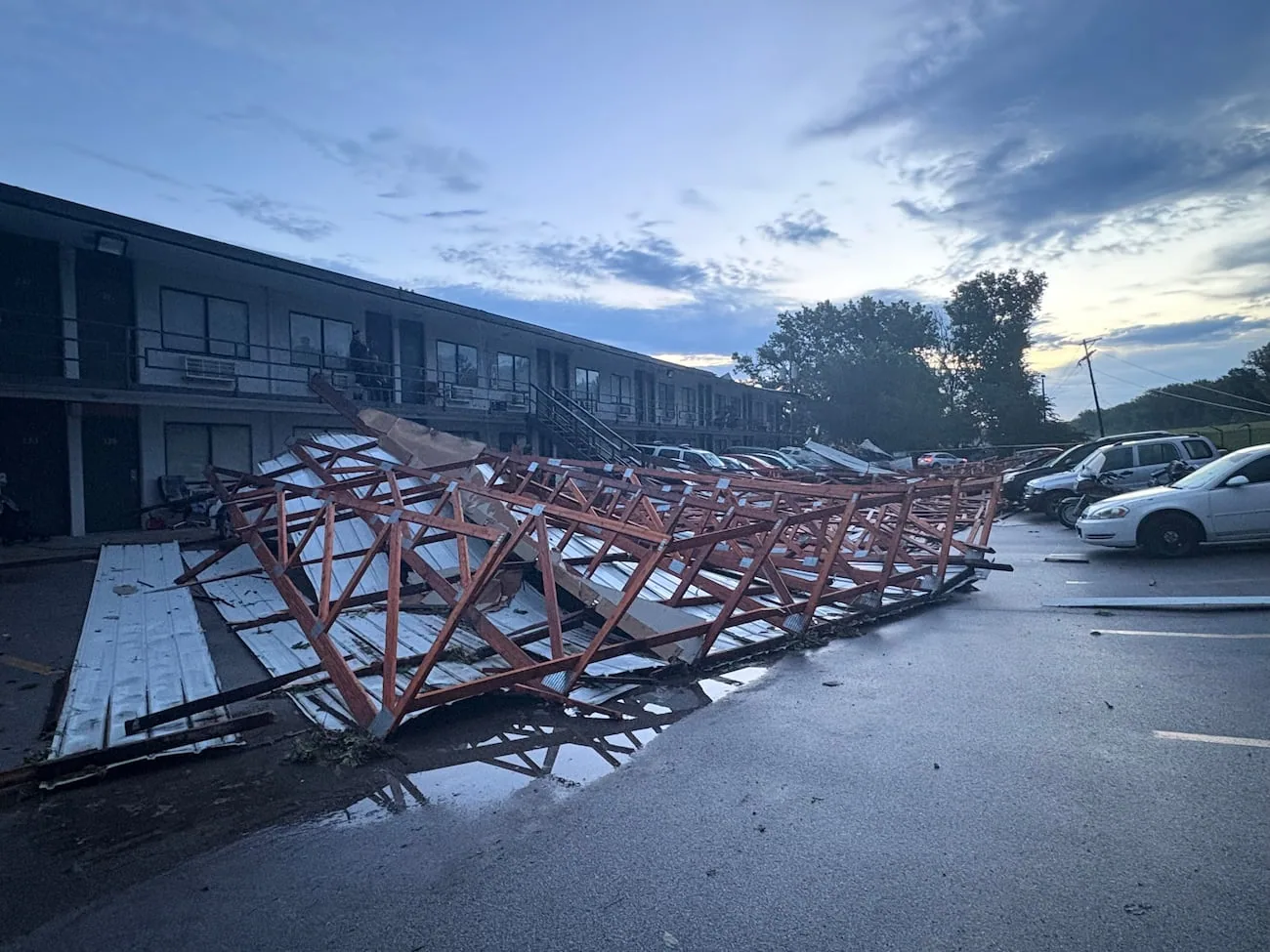
Local storm records are a reason to inspect after an event, but not proof of damage at an individual roof. During the July 2024 Murfreesboro tornado, the wider event report included minor roof damage. We still verify the actual edge, sheet, and flashing before calling for repair. We photograph any displaced metal or open seam and separate storm-related evidence from ordinary wear. Our wind damage roof service uses that field record to set a repair boundary and track any follow-up work.
Keep outlets clear
At each drain, we inspect the bowl, strainer, sump, overflow, and membrane connection. A blocked path can hold water around a detail; a low area caused by a deck or insulation issue needs a separate correction. We record debris and standing water before cleaning so the owner can see what changed. If a scupper discharges into a blocked leader, the roof work may require coordination below the deck as well as at the membrane.
The Murfreesboro 5 N climate record totals 55.92 inches of average annual precipitation; 134.5 days each year register at least 0.01 inch. A regular drain check is useful under that pattern, while the roof's slope and outlet condition remain property-specific. We do not treat a rainfall number as evidence of a leak. When an interior report comes in, we match its location to the roof geometry and photograph the likely water path. A drain and scupper repair can then be scoped with its membrane and overflow work.
Choose repair, recover, or replacement
A repair suits a limited defect when the sheet and substrate around it are sound. A recover may keep the existing assembly in place, but moisture, attachment, deck, weight, and code review all affect that choice. A tear-off exposes concealed conditions and can correct broader defects, with more demolition and dry-in work. We present the options separately, identify what each includes, and list any test or approval needed before scheduling.
For covered commercial, industrial, and multifamily work in Murfreesboro, the city has adopted the 2024 Existing Building Code with local amendments. The ordinance lists permit exemptions for some roof-covering replacement situations depending on whether deck or framing is replaced and whether the same system is used. The City should confirm how the actual project scope fits those rules. Our recover and overlay review documents layers and attachment before a second membrane is considered. A marked roof report also gives the owner a stable comparison point for repair versus replacement.
Protect the shift below
Before materials arrive, we confirm roof access, lift and staging locations, delivery timing, tenant hours, exhaust equipment, and any space that cannot be interrupted. Each phase identifies the work zone, path of travel, and the tie-in that must be closed before the crew leaves. If a weather hold changes the schedule, we keep the roof protected and confirm the next access window with the building contact. The plan is written for the actual site.
A medical office, warehouse, and civic building have different roof access needs, even when all are within the city. We ask who controls the hatch or key, where deliveries can queue, and what equipment needs clearance. After work, closeout photos show the repaired seam, curb, drain, or perimeter detail. We record the materials installed and any condition that remains for a future visit. For another PVC system, review Sika Sarnafil membrane service or Versico roof repairs. A field walk can begin with the leak report and the roof plan.
Commercial Roofing Questions
Can you weld a repair onto an existing Duro-Last sheet?
We check the sheet condition, seam, substrate, and surface preparation first. A test weld can confirm whether the material around the defect accepts the repair; the scope ends at sound sheet and a defined transition.
Should we open the roof to look for wet insulation?
A test cut is considered when concealed moisture could change the repair or recover decision. We choose the location with the owner, document the layers, and close the opening after inspection.
Will replacing one drain stop the leak?
Only if the drain connection is the confirmed water path. We inspect the bowl, membrane tie-in, slope, overflow, and nearby seams before pricing that repair so a deck or low-area issue is not missed.
Can roofing work happen during normal building hours?
The sequence depends on access, equipment, tenant activity, deliveries, and noise limits. We coordinate a loading window and daily weather-tight stop with the facility lead before the work begins.
What changes the choice between a repair and a recover?
Moisture, deck condition, attachment, added weight, and the code review can change whether an overlay is suitable. We record those conditions and separate unresolved tests from the priced options.
Related Roofing Work
More commercial roofing work connected to Duro-Last Commercial Roofing in Murfreesboro.
Walk the PVC roof before setting scope
Provide the roof records and coordinate an access window. We will inspect the sheet, seams, drains, and transitions, then return repair and replacement options tied to field findings.